



Aluminum Fence Panels for Stadium Concourses: A Direct Answer
Aluminum fence panels are the preferred barrier solution for stadium concourses because they combine high-security performance, low maintenance, and design flexibility for high-traffic public venues. FstopMetal’s aluminum fencing systems—including the C300 high-security series with anti-climb and anti-shear features—are engineered for the demanding environment of modern stadiums, offering durable perimeter and crowd-control barriers that meet international quality standards.
Why Stadium Concourses Demand Purpose-Built Aluminum Fencing
Stadium concourses present a uniquely challenging environment for barrier systems. Thousands of spectators move through narrow walkways, seating ramps, and entry corridors during events, creating continuous mechanical stress on any installed fencing. Unlike residential or light-commercial applications, stadium concourse fencing must withstand aggressive contact, resist tampering, and maintain structural integrity under repeated impact loads throughout the lifecycle of the facility.
Aluminum fencing addresses these demands through material properties that steel and wrought iron cannot match at comparable maintenance levels. The 6063-T5 and 6063-T6 aluminum alloys used in FstopMetal’s fence systems provide high strength-to-weight ratios, meaning panels can be engineered for maximum security performance while remaining manageable during installation and replacement. This is particularly relevant for stadium projects where concourse fencing may span long linear distances and require frequent access for maintenance or event reconfiguration.
The surface treatment options available for stadium-grade aluminum fencing include powder coating, anodizing, and PVDF finishes, each offering different levels of abrasion resistance and color retention. Powder-coated panels in the 60 to 80 micron range are particularly well suited to concourse environments where scuffing from footwear, equipment, and crowd movement is constant. These finishes are selected to resist the chemical exposure from cleaning regimens that stadium operators must follow between events.
Aluminum Fence Panel Systems Suited to Stadium Applications
FstopMetal offers several aluminum fence product series that map directly to the layered security and aesthetic requirements of stadium concourse design.
| Product Series | Concourse Application | Key Characteristics |
|---|---|---|
| C300 High-Security | Perimeter barriers, restricted-access zones, VIP corridor separation | Anti-climb design, anti-shear hardware, highest security rating |
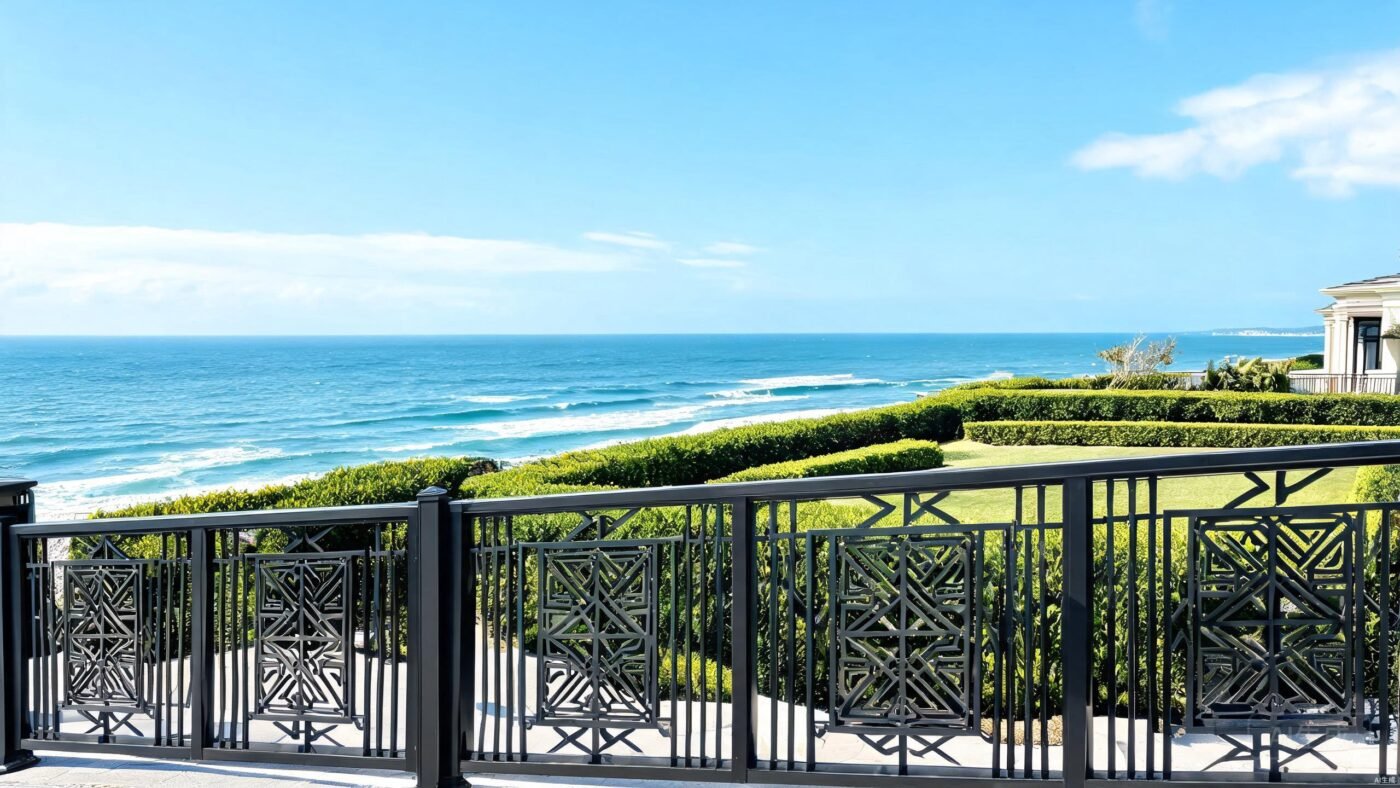
| B200 Decorative | Spectator-facing barriers, concourse dividers, aesthetic perimeter | Forged-iron aesthetic, decorative infill patterns, high visual appeal |
| A100 Classic | General concourse crowd control, temporary barrier zones | Traditional horizontal-bar design, cost-effective for large linear runs |
| Smart Fence 2026 | Integrated security zones, smart-stadium infrastructure | IoT-enabled, solar lighting integration, monitoring-ready |
The C300 high-security series is the primary recommendation for stadium applications where concourse fencing must prevent unauthorized access to restricted areas such as player tunnels, broadcast zones, and equipment rooms. Its anti-climb geometry and reinforced hardware make it suitable for the highest-threat zones within a stadium complex.
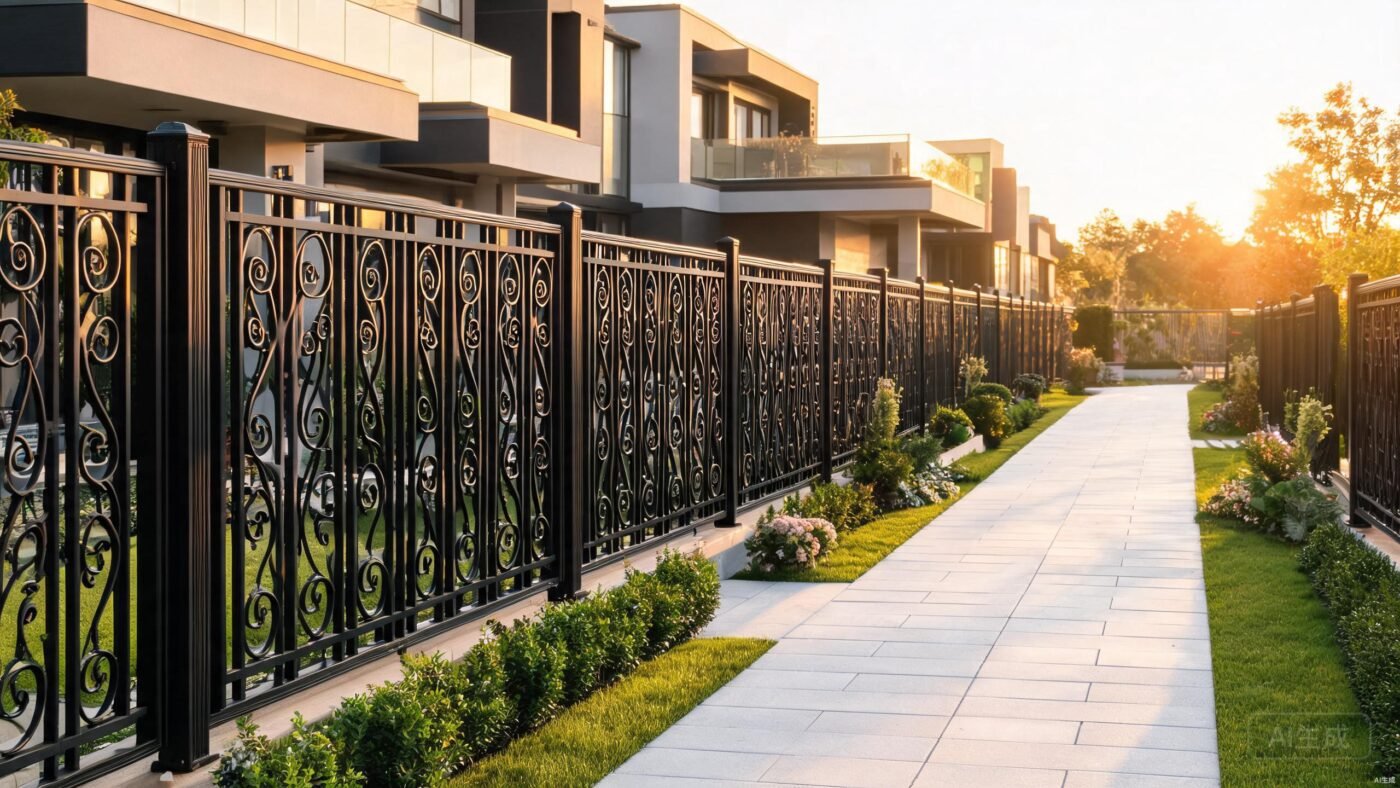
For spectator-facing applications where the visual impression matters as much as security, the B200 decorative series provides a forged-iron aesthetic without the ongoing maintenance burden of traditional wrought iron. Stadium architects frequently specify this series for concourse railings and balcony barriers where the fencing is visible to the public throughout the venue.
The Smart Fence 2026 series represents the intersection of physical security and stadium technology infrastructure. With IoT integration capabilities and solar lighting interfaces, this series supports the growing demand for smart-stadium environments where fencing systems communicate with access-control and surveillance platforms.
Technical Specifications That Matter in Stadium Environments
When specifying aluminum fence panels for stadium concourses, several technical parameters directly influence long-term performance and total cost of ownership.
Material Grade and Structural Performance
Aluminum alloy 6063 in T5 or T6 temper provides the structural baseline for stadium-grade fencing. The T6 temper offers higher yield strength, which is advantageous for fence panels spanning longer distances between posts without intermediate support. Stadium concourse fencing typically requires panel spans that exceed those found in residential applications, making the T6 temper specification a practical choice for high-traffic barrier runs.
Surface Finish and Durability
Stadium concourses expose fencing to UV radiation, cleaning chemicals, and physical abrasion at rates far beyond normal commercial environments. Powder-coated finishes in the 60 to 80 micron thickness range deliver the durability required for these conditions. PVDF finishes provide additional chemical resistance for areas where aggressive cleaning agents are used as part of stadium hygiene protocols. The choice of finish directly affects the maintenance schedule and replacement cycle of concourse fencing.
Sustainability and Environmental Compliance
Modern stadium projects increasingly require sustainability documentation as part of their procurement process. FstopMetal’s aluminum fencing products incorporate up to 75 percent recycled aluminum content, and EPD certification is available for projects that require environmental product declarations. The 100 percent recyclability of aluminum at end of life is also relevant for stadium operators planning long-term facility management and eventual renovation cycles.
Acoustic and Visibility Considerations
Concourse fencing design must balance security with sightlines. Open-bar and perforated panel designs maintain visibility for security personnel monitoring crowd movement while still providing physical separation. This is a critical requirement in stadium design where security teams need unobstructed views of spectator areas through and around barrier systems.
Installation and Maintenance Advantages for Stadium Operators
Stadium operators manage tight turnarounds between events, and fencing systems that require frequent maintenance or lengthy replacement procedures create operational risk. Aluminum fence panels offer several advantages in this context.
The lightweight nature of aluminum fencing compared to steel or wrought iron alternatives reduces installation time and allows existing concourse structural elements to support barrier systems without reinforcement. This is particularly valuable for stadium renovation projects where structural capacity of existing concourse edges may be a limiting factor.
Maintenance requirements for aluminum fencing in stadium environments are minimal. Unlike steel fencing that requires periodic painting or coating repair, powder-coated and PVDF-finished aluminum panels maintain their appearance and corrosion protection throughout their service life with only routine cleaning. The low maintenance frequency aligns with the operational reality of stadium facilities that must return to full service between events with minimal downtime.
For stadium projects requiring temporary or reconfigurable barrier solutions, aluminum fence panels can be designed as removable systems that allow concourse layouts to be adapted for different event types without permanent modification to the facility structure.
Frequently Asked Questions
What aluminum fence panel series is recommended for stadium concourse security barriers?
The C300 high-security series is the primary recommendation for stadium concourse applications requiring anti-climb and anti-shear performance. For spectator-facing decorative barriers, the B200 series provides a forged-iron aesthetic with aluminum durability. The A100 classic series is suitable for general crowd-control applications where cost efficiency is a priority across long linear runs.
Can aluminum fence panels be integrated with stadium smart-technology systems?
Yes. FstopMetal’s Smart Fence 2026 series includes IoT integration capabilities and solar lighting interfaces, designed to connect with stadium access-control, surveillance, and lighting management platforms. This series supports the infrastructure requirements of smart-stadium deployments where fencing is part of a broader technology ecosystem.
What surface finish options are available for aluminum fencing in high-traffic stadium environments?
Three primary finish options are available: powder coating at 60 to 80 microns, anodizing at 15 to 25 microns, and PVDF finishes at 25 to 30 microns. Powder coating is the most common specification for stadium concourse applications due to its abrasion resistance and color retention under heavy use and aggressive cleaning regimes. PVDF finishes provide enhanced chemical resistance for areas with frequent sanitization requirements.
How does the recycled content of aluminum fencing factor into stadium sustainability requirements?
FstopMetal aluminum fencing products contain up to 75 percent recycled aluminum, and EPD certification is available for projects requiring environmental product declarations. Aluminum is 100 percent recyclable at end of life, which supports stadium operators in meeting sustainability targets and lifecycle-assessment requirements for facility management.
What certification standards apply to FstopMetal aluminum fence panels for international stadium projects?
FstopMetal aluminum fencing products are manufactured under ISO 9001 quality management systems and carry CE certification for European market compliance. SGS certification is also available for quality verification. Products comply with relevant ASTM and EN international standards, supporting specification by architects and engineers across North American and European stadium projects.