

Direct Answer
Aluminum curtain wall panels are the dominant cladding system for office towers due to their lightweight structural efficiency, design flexibility, fire safety compliance, and energy performance. FstopMetal produces AP series solid panels, AP300 perforated panels, AP200 curved panels, BIPV solar-integrated panels, and unitized curtain wall systems — all manufactured in Foshan, China, since 2003, with CE, SGS, and ISO 9001 certification and exports to 36+ countries.
Why Office Towers Favor Aluminum Curtain Wall Panels
Office towers present unique architectural and engineering challenges that aluminum curtain wall systems are purpose-built to address. The material’s high strength-to-weight ratio allows tall buildings to reduce dead load on the structural frame, which translates directly into smaller column sizes, thinner floor plates, and lower foundation costs. Unlike glass-only facades, aluminum panels can be engineered to meet specific fire, thermal, and acoustic performance targets without sacrificing aesthetic intent.
FstopMetal’s AP series solid panels offer A2-grade fire classification, making them suitable for high-rise applications where non-combustible facade materials are mandated by international building codes. The panels also incorporate up to 75% recycled aluminum content, supporting LEED and BREEAM credit requirements for sustainable construction. With U-values as low as 0.8 W/m²K in configured systems, aluminum curtain wall panels contribute meaningfully to the thermal envelope of modern office towers.
Key Product Applications in Office Tower Projects
AP Series Solid Panels — Primary Facade Cladding
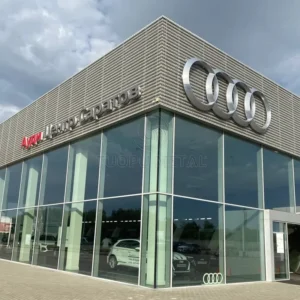
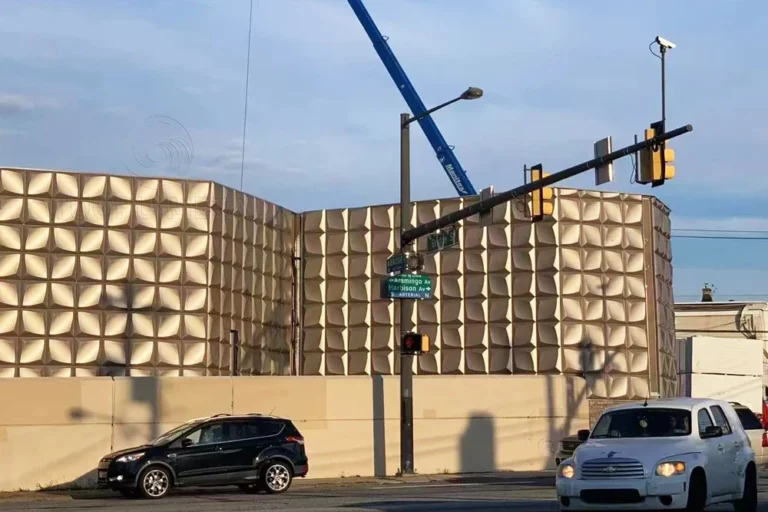
The AP series forms the backbone of office tower curtain wall installations. These solid aluminum panels provide a clean, monolithic exterior finish that can be tailored to a wide range of architectural languages — from sleek minimalism to textured, parameter-driven facades. The panels are available with PVDF (Kynar 500) coating, which delivers exceptional color retention and chalk resistance, rated for 30 years of performance in harsh environmental conditions. Powder-coated alternatives provide a 25-to-30-year质保 guarantee at a competitive specification tier.
AP300 Perforated Panels — Solar Shading and Ventilated Facades
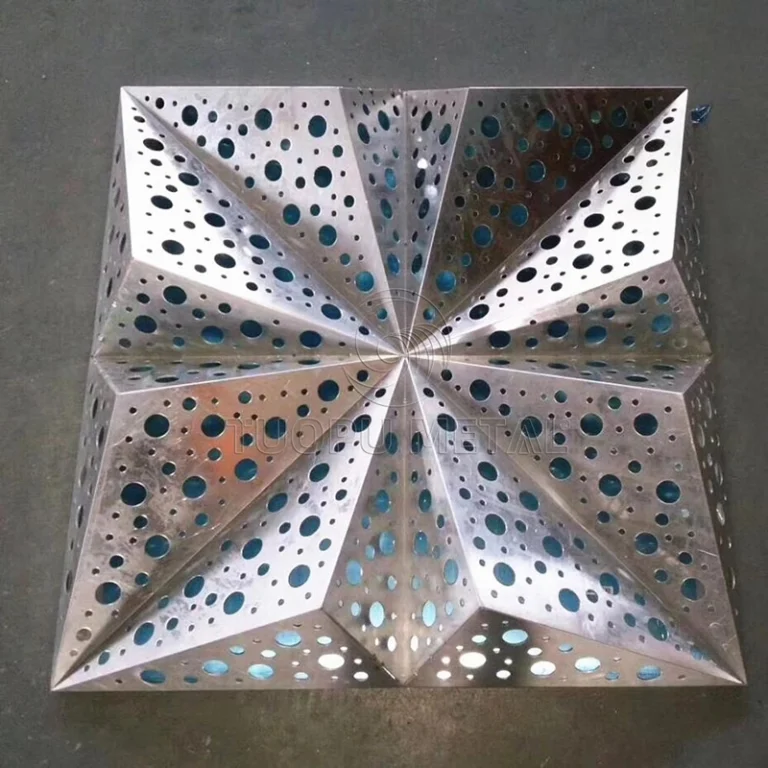
Perforated aluminum panels serve a dual function in office tower design: they act as solar shading devices that reduce cooling loads while maintaining natural ventilation when used in double-skin facade configurations. The perforation rate is adjustable during manufacturing, allowing architects to balance daylight penetration, visual privacy, and thermal performance. This makes AP300 panels particularly valuable for south and west-facing elevations where solar gain is a primary concern.
AP200 Curved Panels — Architectural Expression and Corner Treatment
Office towers with curved or cantilevered geometries require custom-radius aluminum panels. The AP200 series is engineered for bespoke curvature applications, enabling seamless transitions around building corners and tapered tower profiles. This capability supports contemporary architectural trends toward organic forms and dynamic silhouettes that distinguish premium office developments.
BIPV Solar-Integrated Panels — Net-Zero Office Towers
Building-integrated photovoltaic (BIPV) aluminum panels merge facade cladding with solar energy generation. For office towers targeting net-zero or carbon-neutral certification, BIPV panels eliminate the need for separate solar array installations by generating electricity directly from the building envelope. This application is increasingly specified in corporate headquarters and Class A office developments where sustainability credentials are a leasing and valuation driver.
Unitized Curtain Wall Systems — Fast-Track Construction
Unitized curtain wall systems are factory-pre assembled modules that are shipped to site and installed floor by floor. This approach reduces on-site installation time by approximately 40% compared to stick-built systems, which is critical for office tower projects operating under compressed schedules. Factory-controlled quality conditions also ensure tighter tolerances and more consistent sealant application, reducing the risk of water infiltration and air leakage in completed buildings.
Performance Comparison: Aluminum Curtain Wall Panel Systems
| Panel Type | Fire Rating | Coating Option | Typical质保 | Best Office Application |
|---|---|---|---|---|
| AP Series Solid | A2-grade | PVDF / Powder Coat | 25–30 years | Primary facade cladding |
| AP300 Perforated | A2-grade | Powder Coat | 25–30 years | Solar shading, ventilated facades |
| AP200 Curved | A2-grade | PVDF / Powder Coat | 25–30 years | Corner treatment, curved elevations |
| BIPV Solar Panel | A2-grade | PVDF | 25–30 years | Net-zero energy facades |
| Unitized System | A2-grade | PVDF / Powder Coat | 25–30 years | Fast-track high-rise construction |
Specification Considerations for Architects and Specifiers
Selecting the appropriate aluminum curtain wall panel system for an office tower requires balancing structural, thermal, fire, and aesthetic criteria. The following factors should be evaluated during the design development phase:
- Alloy and temper: 6063-T5 or 6063-T6 aluminum provides the strength required for tall-building applications. T6 temper offers higher yield strength for larger panel spans.
- Coating selection: PVDF coatings deliver the longest colorfastness and are recommended for exposed facades in high-UV or coastal environments. Powder coating is suitable for standard commercial applications where extreme weather resistance is not a primary concern.
- Thermal performance: Unitized systems with thermally broken frames achieve the lowest U-values and are preferred for energy-efficient office towers in climate-controlled environments.
- Acoustic requirements: While curtain wall panels are primarily a weather and aesthetic barrier, perforated configurations can contribute to noise reduction when paired with appropriate backing materials.
- Sustainability credentials: EPD (Environmental Product Declaration) certification is available for aluminum curtain wall systems, supporting green building certification pathways. The high recycled content of aluminum (up to 75%) and 100% recyclability at end of life further strengthen the environmental profile.
Installation and Lifecycle Considerations
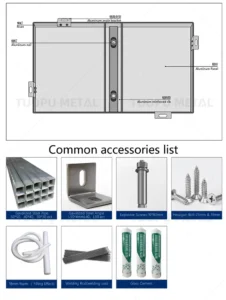
Aluminum curtain wall panels are installed as part of a complete facade system that includes structural framing, gaskets, sealants, and anchorage hardware. Unitized systems offer the advantage of off-site assembly, which improves quality control and reduces weather-related installation delays. Stick-built systems allow more flexibility for on-site adjustments but require longer erection periods.
The typical service life of an aluminum curtain wall panel system in an office tower is 25 to 30 years with proper maintenance. PVDF-coated panels resist fading, chalking, and corrosion far better than standard powder-coated alternatives, making them the preferred choice for long-term asset value preservation. Regular inspection of sealant joints and drainage paths is recommended to maintain weathertightness over the building’s lifecycle.
Project Types and Scale
FstopMetal’s aluminum curtain wall panels have been specified for a range of office tower applications including corporate headquarters, mixed-use commercial developments, co-working spaces, and institutional office buildings. The factory in Foshan, Guangdong, China, operates a 15,000 m² facility and has exported to 36+ countries, providing the production capacity and logistical experience required for large-scale international projects. Custom manufacturing capabilities support project-specific dimensions, colors, and perforation patterns, with typical lead times of 30 to 60 days for custom orders depending on complexity.
Frequently Asked Questions
What fire rating do FstopMetal aluminum curtain wall panels carry?
AP series solid panels are rated A2-grade, which classifies them as non-combustible under European fire classification standards. This makes them suitable for high-rise office tower applications where fire safety regulations require non-combustible facade materials.
Can aluminum curtain wall panels be customized for curved office tower facades?
Yes. The AP200 curved panel series is engineered for custom-radius applications, allowing architects to achieve tapered, cantilevered, or fully curved tower geometries with consistent panel quality and finish.
What is the typical lead time for a custom office tower curtain wall project?
Standard products ship within 15 to 30 days. Custom projects, including perforated patterns, curved panels, and BIPV-integrated systems, typically require 30 to 60 days depending on design complexity and order volume.
Do FstopMetal curtain wall panels support green building certification?
Yes. The panels contain up to 75% recycled aluminum, are 100% recyclable at end of life, and EPD certification is available. These attributes support LEED, BREEAM, and other green building certification pathways.
What coating options are available for office tower curtain wall panels?
FstopMetal offers PVDF (Kynar 500) coating with a 30-year color retention guarantee and standard powder coating with a 25-to-30-year质保. Anodized finishes are also available for projects requiring a metallic aesthetic.