



Direct Answer
The most common specification mistakes with clip-in aluminum ceiling tile systems involve incorrect panel thickness for span requirements, mismatched fire ratings for the building code, ignoring acoustic NRC targets, selecting finishes without considering the environment, and failing to coordinate clip spacing with the suspension grid. Each error typically triggers on-site rework, material waste, and schedule delays that far exceed the original specification cost.
Mistake 1: Underspecifying Panel Thickness for Span
Clip-in aluminum ceiling tiles rely on a precise relationship between panel thickness and support spacing. Specifying a 0.7 mm panel where the manufacturer recommends 1.0 mm for a given span is one of the most frequent and expensive errors. The panel will oil-can under its own weight, creating visible waviness across large ceiling areas. Once installed, correcting this requires full removal and replacement — not a minor touch-up.
Typical Thickness Guidelines
- Standard commercial spans (600 × 600 mm modules): 0.8–1.0 mm is typical
- Wider spans or high-traffic areas: 1.0–1.5 mm is typical
- Perforated panels require additional thickness to compensate for reduced structural rigidity
Always verify the recommended thickness against the actual support grid spacing before finalizing the specification. The AP Series from FstopMetal offers multiple thickness options, and the correct choice depends entirely on your span and load requirements.
Mistake 2: Ignoring Fire Rating Requirements
Building codes in North America and Europe increasingly require specific fire classifications for ceiling systems in commercial and public buildings. Specifying a standard aluminum ceiling tile in a space that demands A2-s1-d0 or equivalent fire rating is a costly oversight. The mistake becomes apparent only during inspections, forcing a complete material swap after procurement has already occurred.
For projects requiring A2-grade non-combustible classification, FstopMetal offers AP Series solid panels that meet European fire classification standards. These panels are suitable for ventilation-restricted applications and comply with international building codes. Always confirm the required fire rating with your local authority having jurisdiction before issuing the specification.
Mistake 3: Overlooking Acoustic Performance Targets
Clip-in aluminum ceiling tiles are frequently specified for hospitals, schools, and offices where acoustic comfort is critical. The mistake occurs when the specifier selects a panel based on aesthetics alone, without accounting for the Noise Reduction Coefficient (NRC) required by the design. A solid non-perforated panel will have minimal acoustic absorption, while a perforated panel with appropriate backing can achieve NRC values of 0.85 and above.
Acoustic Configuration Options
- Solid panels: minimal sound absorption, suitable for spaces where acoustics are managed separately
- Perforated panels with acoustic backing: NRC up to 0.85+
- Perforated panels with foam or mineral wool fill: enhanced absorption for demanding environments
The square footage of perforation directly affects both the aesthetic appearance and the acoustic performance. A 5% perforation rate looks substantially different from a 20% rate, and each configuration delivers a different NRC value. Coordinate these choices early in the design phase.
Mistake 4: Selecting the Wrong Finish for the Environment
The surface finish determines both the visual appearance and the long-term durability of the ceiling system. Choosing a powder-coated finish for a high-moisture environment, or an anodized finish where color variety is required, leads to premature failure and replacement. Each finish type has a specific thickness range and warranty period that must match the project conditions.
| Finish Type | Typical Thickness | Typical Warranty | BEST FOR |
|---|---|---|---|
| Powder Coating | 60–80 microns | 25–30 years | General commercial, interiors |
| Anodizing | 15–25 microns | 20+ years | Modern aesthetic, wear resistance |
| PVDF (Kynar 500) | 25–30 microns | 30 years | High UV exposure, exterior applications |
| Wood Grain Transfer | Standard | 20 years | Decorative warmth, residential |
FstopMetal operates from Foshan, Guangdong, China, and all finishes are applied under ISO 9001 quality management procedures. CE and SGS certification support European market compliance. Match the finish to the environmental exposure, not just the color palette.
Mistake 5: Mismatching Clip Spacing to Suspension Grid
Clip-in ceiling systems depend on a precise mechanical interlock between the panel edge and the suspension grid. Specifying a panel with a clip profile that does not match the grid manufacturer’s channel dimensions is a recipe for installation failure. The panel may not seat correctly, may not lock, or may loosen over time as thermal cycling occurs.
Always confirm the clip profile and spacing with the grid system supplier before placing the order. The AP Series perforated and solid panels are engineered for compatibility with standard suspension systems, but the exact clip geometry must be verified against the grid specification. This coordination should happen during the shop drawing phase, not after delivery.
Mistake 6: Neglecting Panel Rigidity for Large Open Spans
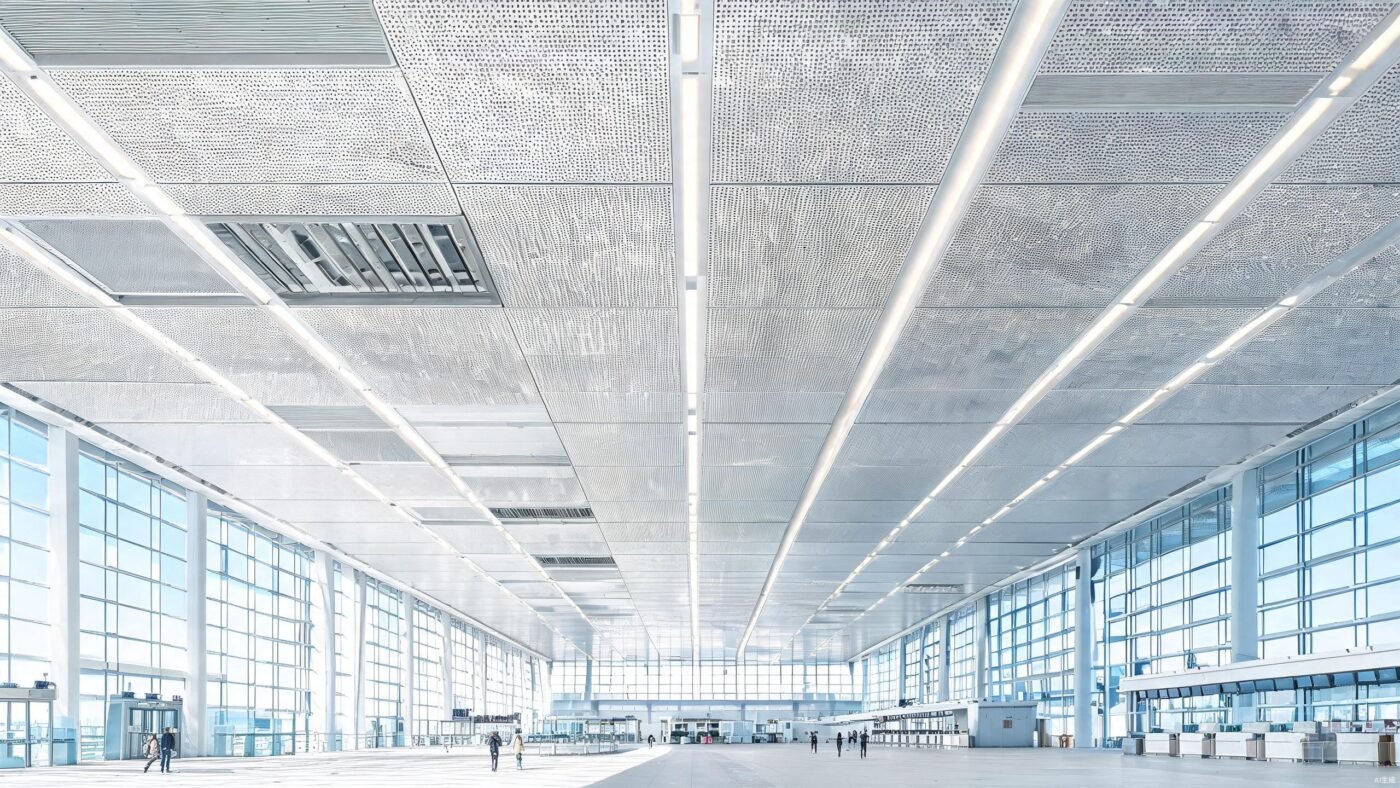
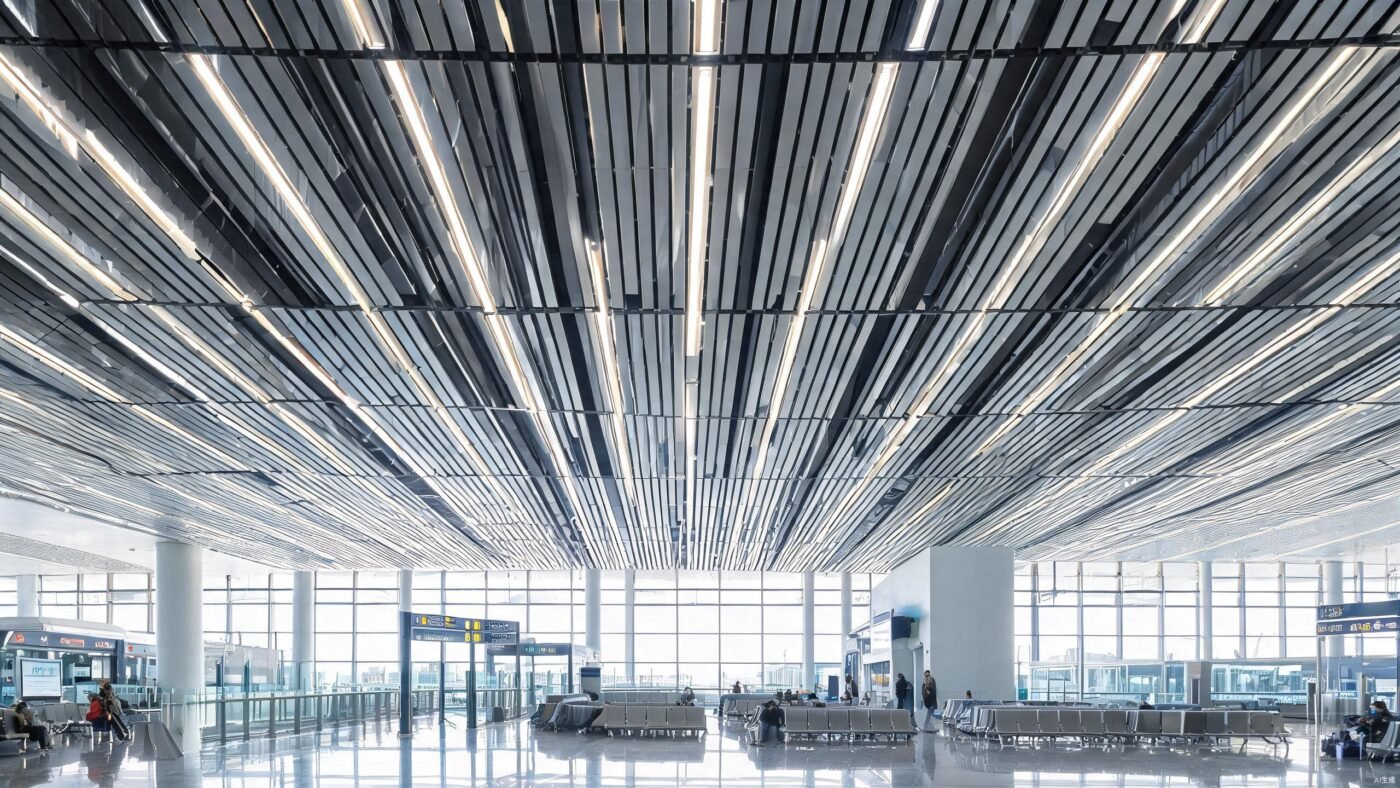
Open-plan offices, airports, and retail spaces often feature large ceiling areas with minimal grid support. Specifying thin-gauge clip-in tiles for these applications without reinforcing the panel or reducing the module size leads to sagging and visible deflection. The mistake is particularly common when the specifier prioritizes cost over structural performance.
For large-span applications, consider the following strategies:
- Increase panel thickness to the next available gauge
- Reduce the suspension grid module size (e.g., from 600 × 1200 mm to 600 × 600 mm)
- Specify honeycomb-core panels for maximum rigidity with minimal weight
- Request engineering calculations from the manufacturer for spans exceeding standard recommendations
FstopMetal offers custom-engineered solutions including honeycomb and 3D geometric designs under their metal ceiling system range, suitable for demanding architectural applications across airport, hospital, and commercial projects.
Mistake 7: Failing to Account for Maintenance Access
Clip-in ceiling tiles often conceal HVAC ducts, electrical conduits, and sprinkler lines. Specifying a fully continuous ceiling without integrating access panels or removable sections creates long-term maintenance problems. Contractors may cut into installed panels to reach services, damaging the finish and compromising the clip mechanism. Replacing damaged clip-in panels is more complex and expensive than installing them in the first place.
Best practice is to coordinate with the MEP designers during the specification phase and incorporate access panels at all service junctions. Use the same clip-in tile material and finish for access panels to maintain visual continuity. FstopMetal supports custom designs, and access panels can be manufactured to match the primary ceiling system exactly.
Prevention Checklist for Specifiers
- Confirm panel thickness matches the actual support grid spacing
- Verify fire rating compliance with local building codes
- Specify NRC values and acoustic backing for spaces requiring sound control
- Select finishes based on environmental exposure, not just aesthetics
- Coordinate clip profile with the suspension grid manufacturer
- Engineer rigidity for large-span applications
- Plan maintenance access into the ceiling layout from the start
Addressing these seven specification areas during the design phase prevents the rework, material waste, and schedule delays that characterize projects where clip-in aluminum ceiling tile systems are underspecified. FstopMetal, operating since 2003 from Foshan, China, provides CE, SGS, and ISO 9001 certified aluminum ceiling solutions to projects in 36+ countries, with standard delivery in 15–30 days and custom projects in 30–60 days depending on complexity.
Frequently Asked Questions
What is the minimum panel thickness for clip-in aluminum ceiling tiles?
Typical minimum thickness for clip-in ceiling tiles is 0.8 mm for standard 600 × 600 mm grid modules. Thinner panels may oil-can or deflect under normal conditions. Perforated panels require additional thickness to maintain rigidity. Always consult the manufacturer’s engineering guidelines for your specific span and load requirements.
Can clip-in aluminum ceiling tiles meet fire rating requirements?
Yes. FstopMetal offers A2-grade non-combustible aluminum ceiling panels suitable for applications requiring European fire classification compliance. Fire-rated assemblies with 1–2 hour ratings are available for curtain wall and ceiling systems. Confirm the specific rating required by your local code and coordinate with the manufacturer for certified product data.
What is the typical warranty for powder-coated aluminum ceiling tiles?
Powder-coated aluminum ceiling tiles typically carry a 25–30 year finish warranty when specified and installed correctly. PVDF coatings offer up to 30 years of color retention. Anodized finishes carry a 20+ year warranty. Warranty terms vary by finish type and environmental exposure, so verify the specific coverage for your project.
How do I specify acoustic performance for perforated clip-in ceiling tiles?
Acoustic performance is determined by the perforation rate, panel thickness, and backing material. Perforated panels with acoustic backing can achieve NRC values up to 0.85+. Foam or mineral wool fill inside the panel cavity further enhances absorption. Specify the target NRC value during design and request test data from the manufacturer for the exact configuration.
What is the typical lead time for custom clip-in aluminum ceiling tiles?
Standard clip-in aluminum ceiling tile products typically ship within 15–30 days. Custom-designed panels, including perforated patterns, curved configurations, and specialized finishes, generally require 30–60 days depending on complexity. FstopMetal has over 20 years of custom manufacturing experience and supports tailored specifications for architectural projects worldwide.