



What Are Clip-in Aluminum Ceiling Tiles and Why Do Buyers Choose Them
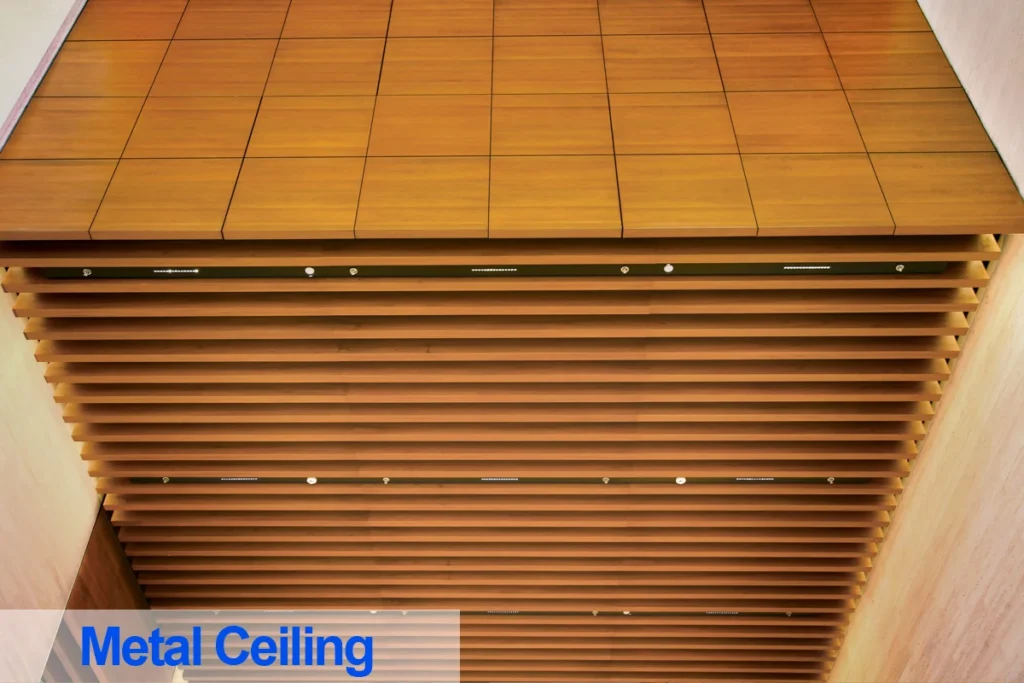
A clip-in aluminum ceiling tile is a panel with a pre-formed interlocking edge that snaps into a matching grid or carrier system without visible fasteners. The result is a clean, monolithic ceiling plane that can be removed and reinstalled panel by panel for maintenance access to ceilings, plenums, and risers. Architects and contractors specify them for airports, hospitals, retail centers, and offices because the system combines rapid installation, modularity, and a range of acoustic and aesthetic options.
When you order clip-in aluminum ceiling tiles as an OEM or factory-direct project, you are not buying a standard catalog SKU. You are commissioning a panel system that must meet a defined set of specifications, pass sample approval, and ship with full documentation. This article is a practical checklist for that process.
OEM Specifications to Lock Down Before You Place an Order
Factory-direct clip-in ceiling orders vary by geometry, finish, and performance requirement. The following specification blocks are the ones that most commonly determine price, lead time, and fit-on-site. Confirm each one in writing before production begins.
Alloy and Temper
- Standard architectural alloy: 6063
- Heat-treated temper options: T5 or T6, selected when higher stiffness or tighter flatness tolerances are required
- Typical thickness range for clip-in panels: 0.7 mm to 1.5 mm, chosen based on span and wind/load requirements
Ask the supplier to confirm the alloy and temper on mill test documentation, not just in the quotation.
Surface Treatment
Clip-in ceiling tiles are commonly finished by one of the following processes. Each has different thickness, durability, and cost characteristics.
- Powder coating: typical dry film thickness 60 to 80 microns
- Anodizing: typical film thickness 15 to 25 microns
- PVDF coating: typical dry film thickness 25 to 30 microns
- Wood grain transfer: applied over a base coating for decorative mimicry
Request the specified finish process, target micron range, color standard reference, and gloss level. Color matching across multiple batches is a common risk if these details are not fixed before production.
Geometry and Clip Profile
The clip-in edge profile is the most project-specific element. Common configurations include:
- Standard square or rectangular tile formats
- Perforated patterns with adjustable open area ratios
- Curved or radiused panels when the design calls for it
- Custom honeycomb or 3D geometric forms
Ask the supplier to provide 2D shop drawings and 3D model files for your review. The clip edge must match the carrier grid you are installing into, and field modifications are costly compared with getting the profile right at source.
Acoustic and Fire Performance Requirements
Acoustic performance for clip-in ceiling systems is typically achieved by combining perforated panels with an acoustic backing. Key configuration options include:
- Perforated face panels paired with acoustic backing materials
- Foam or mineral wool infill behind the panel for higher sound absorption
- NRC targets up to 0.85 and above when properly configured
For fire performance, requirements vary by jurisdiction and project type. You should ask the supplier to provide third-party test reports aligned with the applicable standard for your market, and verify that the reported results cover the exact panel construction and finish you are ordering.
How Factory-Direct Clip-in Ceiling Tile Orders Work
A factory-direct OEM order for clip-in aluminum ceiling tiles generally follows a structured workflow. Understanding each stage helps you plan procurement, site readiness, and quality checks.
Stage 1: Technical Inquiry and Specification Finalization
You submit a request for quotation that includes panel dimensions, clip profile, alloy and temper, finish type, color, perforation pattern, acoustic requirements, and estimated quantities. The supplier reviews the package and may request shop drawings or a site survey if the project has complex geometry.
Stage 2: Quotation and Commercial Terms
The supplier issues a formal quotation covering unit pricing by specification, tooling or profile costs if applicable, sample charges, packaging method, export documentation, and incoterms. At this stage you should also confirm the quality inspection points, sample approval process, and after-sales documentation requirements.
Stage 3: Engineering and Shop Drawing Approval
Before production starts, the supplier prepares detailed shop drawings showing panel dimensions, clip edge details, perforation layouts, and mounting interfaces. These drawings should be reviewed and signed off by your design team. Any changes after approval may trigger revisions and re-approval.
Stage 4: Sample Production and Approval
Most factory-direct orders require a pre-production sample. The sample should be manufactured using the same alloy, finish, and clip profile as the full order. Inspect the sample for:
- Dimensional accuracy and clip engagement
- Surface finish quality, color consistency, and gloss level
- Perforation pattern alignment and edge cleanliness
- Flatness and rigidity for the specified thickness
Retain an approved sample as the reference standard for the full production run.
Stage 5: Production and In-Process Quality Checks
Once the sample is approved, production begins. Key in-process checks include material certification verification, finish thickness measurement, dimensional inspection of clip edges, and visual quality control. Request periodic production updates and photos if the order is large or time-sensitive.
Stage 6: Final Inspection and Export Packing
Before shipment, the supplier should perform a final inspection against the approved sample and shop drawings. Packaging must protect the panels from damage during transit. Typical export packing includes protective film, corner guards, and palletization or container loading plans that maximize volume while preventing panel deformation.
Stage 7: Shipping and Documentation
Factory-direct orders from Foshan, China typically ship via sea freight. Confirm the packaging configuration, container loading plan, and documentation package before dispatch. Required export documents usually include commercial invoice, packing list, certificate of origin, and any test or compliance reports requested by your market.
Quality Verification Checklist for Buyers
When evaluating a clip-in aluminum ceiling tile supplier, use this checklist to verify capability and compliance before committing to a production order.
- Alloy and temper documentation: Mill test certificates or material passports for the specified 6063 alloy and T5/T6 temper
- Surface finish verification: Measured coating or film thickness in microns, color match against approved standard, and adhesion test results
- Third-party test reports: Acoustic performance reports, fire performance reports, and corrosion resistance tests from accredited laboratories, aligned with the standards required by your jurisdiction
- Certifications to request: ISO 9001, CE, and SGS, confirming the supplier operates under a documented quality management system and meets relevant product standards
- Shop drawing and CNC capability: Evidence of engineering support, CNC fabrication for clip profiles, and ability to produce custom geometries
- Sample policy: Clear procedure for sample request, cost, lead time, and approval process
- Packing and container loading plan: Documented packaging method and loading configuration to prevent transit damage
- After-sales documentation: Installation guides, maintenance instructions, and replacement panel procedures
Cost Drivers and Specification Trade-offs
Factory-direct clip-in aluminum ceiling tile pricing is driven by specification choices rather than a single unit cost. The main cost drivers include:
- Alloy and temper selection, with heat-treated temper generally commanding a premium
- Panel thickness, where thicker gauges increase material cost and affect handling
- Surface finish type and micron thickness, with PVDF and multi-layer systems typically costing more than standard powder coating
- Perforation complexity, where custom patterns and high open-area ratios require additional tooling and processing
- Clip profile customisation, since non-standard edges may involve dedicated tooling
- Acoustic backing and infill configuration, which add material and assembly steps
- Order quantity, with larger volumes generally improving unit economics
- Export packing and documentation requirements for your target market
When evaluating quotes, compare apples to apples by ensuring each supplier is pricing the same alloy, thickness, finish, and clip profile. Specification trade-offs should be documented so you understand the performance and cost impact of each change.
Frequently Asked Questions
What information do I need to provide to get an accurate OEM quote for clip-in aluminum ceiling tiles?
Provide panel dimensions, clip edge profile or reference drawing, alloy and temper requirement, surface finish type and color, perforation pattern and open area ratio, acoustic backing preference, estimated quantity, and target delivery market. The more detail you include upfront, the more accurate the quotation will be.
How do I verify a supplier’s quality and compliance before placing a factory-direct order?
Request material certifications, third-party test reports for acoustic and fire performance, proof of ISO 9001, CE, and SGS certifications, a sample production and approval process, shop drawing capability, and export packing documentation. Cross-check each document against your project specifications and local code requirements.
Can FstopMetal produce custom clip profiles and perforation patterns for OEM projects?
Yes. Custom clip-in profiles, perforation layouts, curved panels, and acoustic configurations are part of the factory-direct offering. Provide your drawings or reference samples, and the engineering team will review feasibility, tooling requirements, and production capability before approval.
What is the typical sample process for clip-in aluminum ceiling tiles?
The standard process involves submitting your specification package, receiving a sample quotation, approving sample cost and lead time, manufacturing a pre-production sample, inspecting it against your approved reference, and signing off before full production begins. Retain the approved sample as the quality benchmark for the order.
How should I plan container loading and after-sales documentation for an international factory-direct order?
Request a container loading plan that shows packaging configuration, protection method, and volume utilization before production starts. For after-sales documentation, confirm that the supplier will provide installation guides, maintenance instructions, replacement panel procedures, and any compliance or test reports required by your market authority.
For project inquiries, specification support, and factory-direct ordering, contact TOP METAL & TUORUNDA. Reach Jimmy on WhatsApp: +86-139-2919-8578 or sales2@trdoutdoor.com.
Talk to Our Team
Planning a project or comparing suppliers? Send us your drawings, panel schedule or quantity list and we will come back with a specification proposal and a budget range for your review.
- Company: TOP METAL & TUORUNDA
- Contact: Jimmy
- WhatsApp: +86-139-2919-8578
- Email: sales2@trdoutdoor.com