

Direct Answer
The seven most common specification mistakes on aluminum pergola projects are: selecting the wrong alloy temper for span requirements, ignoring coating thickness for coastal environments, omitting structural load calculations for snow and wind, specifying incorrect drainage slopes, overlooking thermal expansion gaps, choosing incompatible accessories, and neglecting factory finish quality audits. Each error can trigger on-site rework, warranty disputes, or premature coating failure.
Mistake 1: Wrong Alloy and Temper Selection for Structural Spans
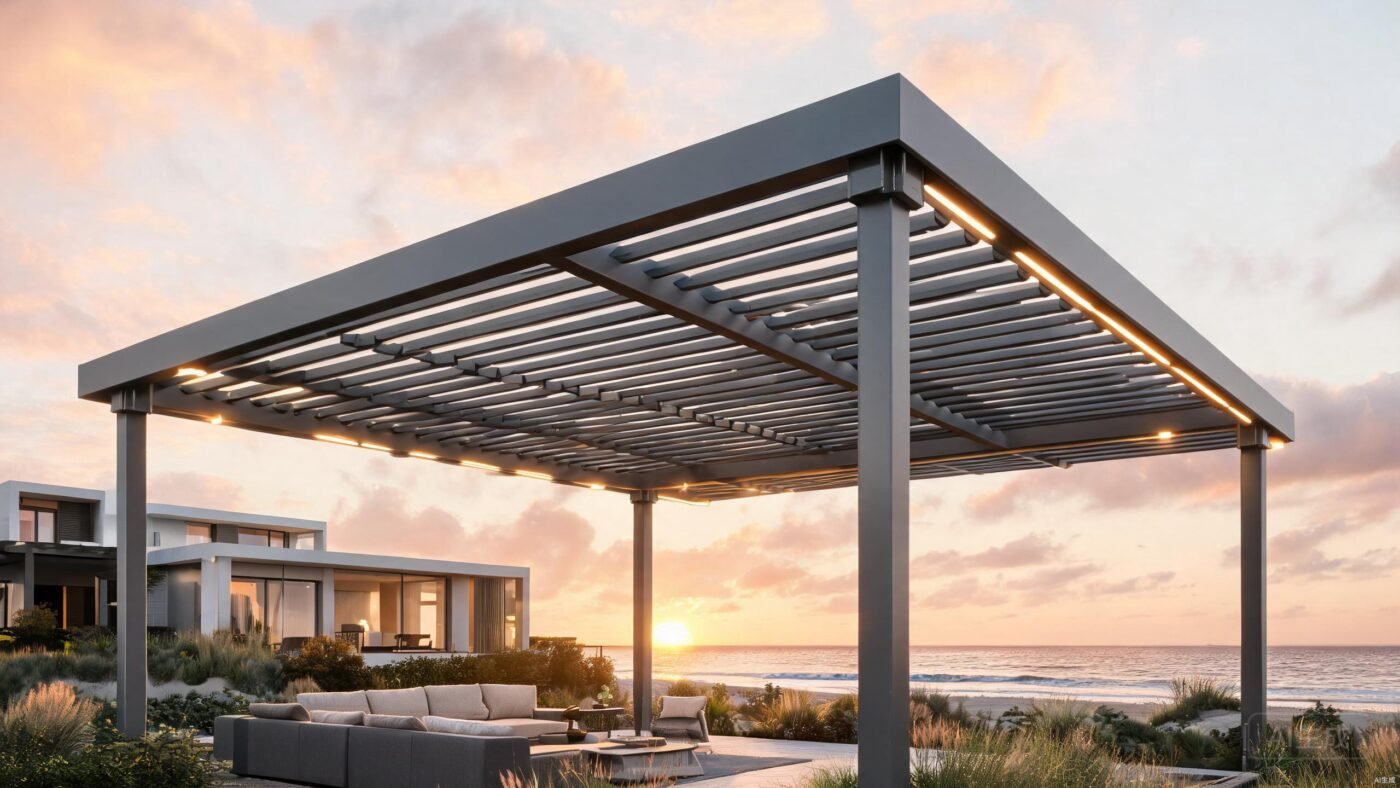
Aluminum 6063 is the standard architectural grade, but the temper designation determines whether a pergola beam will deflect or fail under load. The 6063-T5 temper is solution heat-treated and naturally aged, suitable for moderate spans and residential applications. The 6063-T6 temper receives artificial aging after solution heat treatment, delivering higher yield strength and stiffness. Specifying T5 where T6 is required is a frequent error that leads to sagging rafters and failed load tests.
How to specify correctly
- For spans up to 3 meters in low-wind zones: 6063-T5 is typically adequate
- For spans above 3 meters or high-wind/snow regions: specify 6063-T6
- Always include a structural calculation from a licensed engineer in the submittal package
- Confirm the mill test certificate matches the specified temper before shipment
Mistake 2: Under-specifying Coating Thickness in Aggressive Environments
Surface coating selection is the single biggest factor in long-term pergola appearance and corrosion resistance. Three coating pathways exist, and each has a different thickness range and service life. Choosing the wrong one for the project environment causes fading, chalking, or premature substrate corrosion within five to ten years.
| Coating Type | Typical Thickness | Warranty Range | Bested Environment |
|---|---|---|---|
| Powder Coating | 60–80 microns | 25–30 years | Most climates, standard coastal |
| PVDF (Kynar 500) | 25–30 microns | 30 years | Severe coastal, high UV, industrial |
| Anodizing | 15–25 microns | 20+ years | Decorative interiors, mild climates |
| Wood Grain Transfer | Standard | 20 years | Residential aesthetic applications |
Many contractors specify standard powder coating for projects within one kilometer of saltwater and then wonder why the finish degrades. For coastal or high-UV locations, PVDF coating is the technically correct choice despite higher upfront cost. The life-cycle cost advantage of PVDF in these environments is well documented.
Mistake 3: Omitting Snow and Wind Load Calculations
An aluminum pergola is a structural element exposed to the full force of wind and precipitation. Specifying a pergola without referencing the local building code load requirements is a mistake that appears on nearly every rework report. The G100 modern cantilever series, the G200 traditional series, and the G300 motorized louvered series each have different load capacities based on beam depth, wall thickness, and support configuration.
Key specification requirements
- Reference the project’s governing code (IBC, Eurocode, or local equivalent)
- Include minimum design wind pressure and snow load values from the structural engineer
- Verify that the manufacturer’s published load tables exceed the design values with an appropriate safety factor
- For louvered systems such as the G300, confirm the motor and louver blade rating for wind speed cutoff thresholds
Mistake 4: Neglecting Drainage Slope and Water Management
Pergola roofs that are specified as perfectly flat or with insufficient slope will pond water, accelerate coating degradation at joints, and create leakage paths into the structure below. A minimum slope of 2 percent is the typical industry standard for aluminum pergola roofing panels and louvered systems. Without this slope, standing water becomes a permanent feature.
Specification documents should explicitly state the required slope, the direction of drainage, and the location of downpipe connections. The G300电动款 smart pergola includes auto-closing louvers triggered by rain sensors, but even this system requires proper roof slope to direct water toward the integrated drainage channels. Omitting slope details from the drawing set is a specification gap that contractors frequently discover only after fabrication begins.
Mistake 5: Failing to Account for Thermal Expansion
Aluminum expands and contracts with temperature changes at a rate approximately twice that of steel. Long pergola runs without adequate expansion joints will develop buckling, fastener pull-out, or cracked coatings. The linear thermal expansion of 6063 aluminum is approximately 0.000023 meters per meter per degree Celsius. A 10-meter beam experiencing a 40-degree Celsius temperature swing will move approximately 9.2 millimeters.
Expansion joint specification checklist
- Include expansion joints for runs exceeding 6 meters
- Specify slotted fastener holes or sliding support brackets
- Allow movement clearance at wall connections and column-to-beam joints
- Do not rigidly fix all connection points — at least one end of each long member should be free to slide
Mistake 6: Selecting Incompatible Accessories and Integration Components
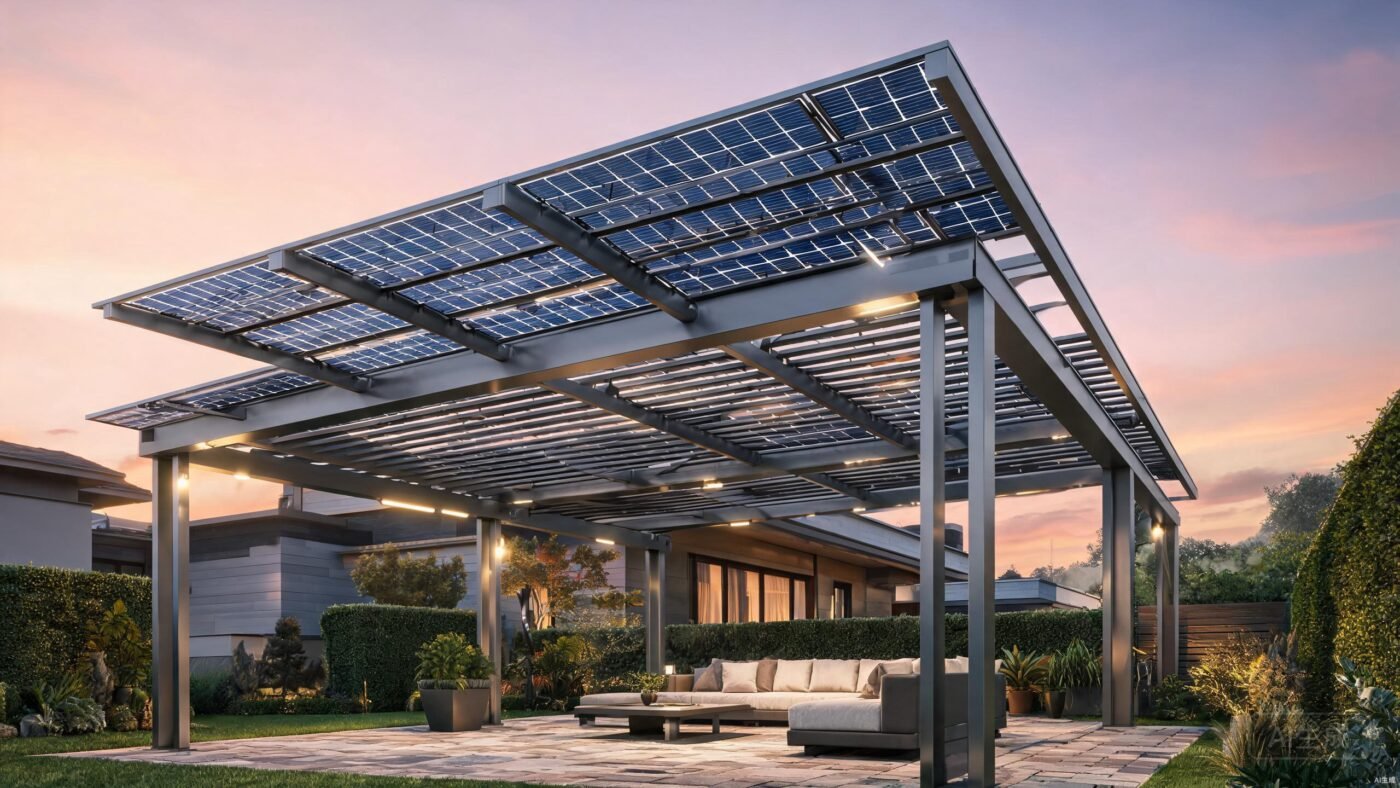
Aluminum pergolas are frequently specified with integrated LED lighting, solar panel mounting interfaces, and motorized louver systems. Each accessory adds load and requires specific mounting provisions in the primary structure. The G100 and G300 series offer optional integrated LED lighting and solar panel mounting interfaces, but these options must be declared at the specification stage. Adding them after the factory has fabricated the main beams is impossible without modification.
Common mistakes include: specifying solar panel arrays without confirming the mounting bracket load rating, adding LED wiring channels without specifying the required conduit pathways in the extrusion, and selecting louver motors that exceed the beam’s load capacity. All accessories must be cross-referenced against the manufacturer’s published integration guide before finalizing the specification.
Mistake 7: Skipping Factory Finish Quality Audits Before Shipment
The final specification mistake is assuming that factory-applied coating will meet project requirements without verification. A proper submittal process should include a request for factory finish inspection reports, color batch consistency documentation, and adhesion test results. FstopMetal, operating since 2003 from its 15,000 square meter facility in Foshan, Guangdong, China, performs quality checks at each production stage. However, the specifying architect or contractor should request these records as part of the submittal review.
Submittal documents to request
- Coating thickness verification report (dry film measurement)
- Color match sample approved against the project palette
- Adhesion cross-cut test results per relevant standard
- Mill test certificates for the aluminum alloy and temper
- Warranty terms specific to the selected coating system
Frequently Asked Questions
What is the minimum order quantity for aluminum pergolas?
The minimum order quantity varies by product series and customization level. Standard series such as the G100 and G200 may have lower thresholds, while fully custom extrusions require larger volumes to justify tooling. Contact the sales team with project details for a specific quotation.
Can FstopMetal handle fully custom pergola designs?
Yes. Custom manufacturing is a core capability with over 20 years of experience. The G100 modern cantilever series, G200 traditional series, and G300 motorized louvered series can all be adapted to non-standard dimensions, colors, and integration requirements.
What is the typical delivery lead time for aluminum pergola projects?
Standard products typically ship within 15 to 30 days. Custom-engineered projects generally require 30 to 60 days depending on complexity, coating selection, and accessory integration. Lead times should be confirmed at the time of order placement.
Does FstopMetal provide installation support for international projects?
Yes. Technical support and installation guidance are provided for international projects. Detailed erection manuals, connection details, and video support are available upon request.
What warranty coverage is available for aluminum pergola systems?
Warranty periods vary by product series and surface treatment. The G100 and G300 series carry a 25-year warranty, while the G200 traditional series offers up to 50 years. Coating warranties range from 20 to 30 years depending on the finish selected. Full warranty terms are provided with each product specification sheet.