




Introduction: The Rise of Energy-Generating Building Envelopes
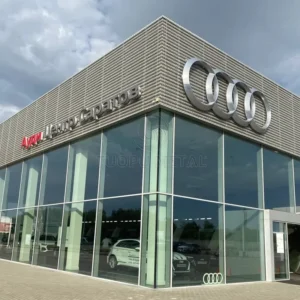
Building-Integrated Photovoltaics (BIPV) represent one of the most significant architectural innovations of 2026. By embedding solar cells directly into aluminum curtain wall panels, buildings can now generate clean electricity while maintaining the sleek, modern aesthetics that architects demand. FstopMetal’s BIPV solar aluminum facade panels combine our 15+ years of aluminum cladding expertise with cutting-edge photovoltaic technology, delivering a dual-purpose envelope that pays for itself.
According to the International Energy Agency, BIPV installations grew by 47% globally in 2025, driven by net-zero building mandates and declining solar cell costs. For commercial property developers, BIPV aluminum facades offer a compelling value proposition: they replace conventional cladding materials while generating revenue through energy savings and potential feed-in tariffs.
How BIPV Aluminum Facade Panels Work
Photovoltaic Cell Integration
FstopMetal’s BIPV panels integrate monocrystalline silicon solar cells between a tempered glass front cover and an aluminum back sheet. The aluminum substrate serves dual functions: structural support for the curtain wall system and a heat-dissipation layer that improves solar cell efficiency by maintaining optimal operating temperatures.
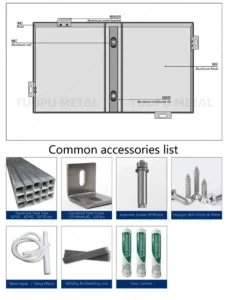
The panels are manufactured in standard curtain wall module sizes (1200mm × 2400mm, 1500mm × 3000mm) and connect to the building’s electrical system via concealed junction boxes integrated into the mullion-transom framework.
Power Generation Performance
Each standard BIPV aluminum panel (1500mm × 3000mm) generates approximately 285-340W under Standard Test Conditions (STC: 1000W/m², 25°C, AM1.5). A typical 10,000m² commercial facade can accommodate approximately 2,200 panels, generating a peak output of 630-748 kWp—enough to offset 25-40% of the building’s annual electricity consumption.
Technical Specifications
| Parameter | Specification |
|---|---|
| Solar Cell Type | Monocrystalline Silicon (21.5% efficiency) |
| Panel Dimensions | 1200×2400mm / 1500×3000mm (custom available) |
| Panel Thickness | 8mm (glass) + 3.0mm (aluminum back sheet) |
| Power Output (per panel) | 185W (small) / 285-340W (large) |
| Open Circuit Voltage (Voc) | 48.5V |
| Short Circuit Current (Isc) | 9.12A |
| Temperature Coefficient (Pmax) | -0.35%/°C |
| Aluminum Alloy | 3003-H14 / 5005-H34 |
| Front Cover | Tempered low-iron glass (91% transmittance) |
| Wind Load Rating | 2.0 kPa (up to 3.5 kPa with reinforced frame) |
| Operating Temperature | -40°C to +85°C |
| IP Rating | IP68 (junction box) |
| Warranty | 25 years (80% power output) |
ROI & Energy Savings Analysis
The financial case for BIPV aluminum facades has strengthened significantly in 2026 due to rising electricity prices and government incentives. Below is a 25-year ROI projection for a 10,000m² commercial office building:
| Financial Parameter | Value |
|---|---|
| Facade Area | 10,000 m² |
| Number of BIPV Panels | ~2,200 panels |
| Total System Capacity | 680 kWp |
| Annual Energy Production | 748,000 kWh/year |
| Electricity Rate (commercial) | $0.14/kWh (avg) |
| Annual Energy Savings | $104,720/year |
| System Cost (materials + installation) | $1,225,000 |
| Government Subsidy (varies by region) | 15-30% of system cost |
| Net System Cost (after subsidy) | $857,500 – $1,041,250 |
| Simple Payback Period | 8.2-9.9 years |
| 25-Year Total Savings | $2,618,000 |
| 25-Year Net Profit | $1,576,750 – $1,760,500 |
Case Study: Shenzhen Green Tower
Project: 32-story commercial office building, Shenzhen, China
Completion: Q3 2025
Facade Area: 14,500 m² BIPV aluminum panels
System Capacity: 986 kWp
The Shenzhen Green Tower was one of the first projects in southern China to adopt BIPV aluminum curtain wall panels across the entire south and west facades. The building achieved a 34% reduction in grid electricity consumption and earned LEED Platinum certification with maximum points in the Energy & Atmosphere category.
Key outcomes after 12 months of operation:
- Annual energy production: 1,084,000 kWh (exceeding design estimates by 4.2%)
- Peak demand reduction: 28% during summer afternoon hours
- CO₂ offset: 922 metric tons/year
- Tenant satisfaction with indoor comfort: 94% positive rating
- Façade maintenance cost: 40% lower than predicted (self-cleaning glass coating)
Installation & Integration Process
Structural Integration
BIPV panels install using the same mullion-transom curtain wall system as conventional aluminum facades. The key difference is the electrical integration: each panel connects to a string inverter or microinverter via weatherproof MC4 connectors routed through the transom extrusions. FstopMetal provides complete electrical engineering drawings alongside structural shop drawings.
Maintenance Requirements
Annual maintenance includes visual inspection of panel surfaces, junction box integrity testing, and thermal imaging to detect any cell degradation. The self-cleaning glass coating (optional) reduces soiling losses by up to 60%, making BIPV facades particularly suitable for urban environments with high particulate matter.
Why Choose FstopMetal for Your BIPV Project
FstopMetal is a leading aluminum curtain wall and metal ceiling manufacturer based in Foshan, China. Our BIPV panel production line operates with IEC 61215 and IEC 61730 certified quality control. We offer:
- Turnkey BIPV facade engineering and manufacturing
- Custom panel sizing to match your architectural design
- Complete electrical system integration documentation
- 25-year power output warranty + 10-year product warranty
- Global shipping and on-site technical support
Contact Us
Ready to transform your building into a power plant? Our engineering team provides free BIPV feasibility assessments for commercial projects worldwide.
WhatsApp: +86 13928608056
Email: sales@fstopmetal.com
Website: www.fstopmetal.com
Request your free quote today and join the energy revolution in building design.
Related Reading
- Aluminum Composite Curtain Walls: Fire-Rated ACM Panels & 2026 Building Code Compliance
- Double-Skin Aluminum Curtain Walls: 2026 Thermal Performance Data & Energy Savings Analysis
- Nano-Coated Aluminum Cladding: The 2026 Self-Cleaning Facade Revolution