

Aluminum Curtain Wall Panel vs Steel: Which Is Better for Museum Atriums?
Aluminum curtain wall panels are generally the stronger choice for museum atriums because they are significantly lighter, resist corrosion naturally, allow complex curved and perforated geometries, offer lower U-values for thermal performance, and contain up to 75% recycled content. Steel remains a viable option where maximum rigidity or a specific industrial aesthetic is required, but it demands more structural support and ongoing protective coatings.
Weight and Structural Implications for Large Atrium Spans
Museum atriums are defined by expansive, column-free interiors and tall glazed volumes. The weight of the cladding system directly affects the structural framework, foundation loads, and overall building cost. Aluminum curtain wall panels, typically fabricated from 6063-T5 or 6063-T6 alloy, offer an exceptional strength-to-weight ratio that steel cannot match at equivalent thicknesses.
Why Weight Matters in Museum Design
- Lighter panels reduce the load on the primary steel or concrete structure, allowing for slimmer columns and longer spans.
- Reduced dead load translates to lower foundation requirements and less material overall in the building frame.
- For retrofit or renovation projects where the existing structure has limited load capacity, aluminum is often the only practical option.
Steel panels, while stronger in absolute terms, are substantially heavier. A steel curtain wall system for the same atrium facade would require a more robust supporting structure, increasing both material costs and construction time. For museum atriums where the design intent is often to create a sense of lightness and transparency, aluminum’s lower density aligns better with the architectural vision.
Corrosion Resistance and Long-Term Durability
Museum atriums are exposed to varying humidity levels, temperature fluctuations, and in some climates, coastal salt air. The cladding system must withstand these conditions without degradation over decades of service.
Aluminum’s Natural Advantage
Aluminum forms a self-passivating oxide layer that protects the base metal from further corrosion. When combined with surface treatments such as powder coating (60–80 microns), anodizing (15–25 microns), or PVDF finishes (25–30 microns), the protection is significantly enhanced. These coating systems are available in a wide range of colors and textures, including wood grain finishes, allowing designers to achieve any aesthetic while maintaining durability.
Steel Requires Active Protection
Steel is susceptible to rust and corrosion unless it is continuously protected through galvanization, painting, or other coating systems. In high-humidity atrium environments, any breach in the protective coating can lead to localized corrosion that spreads over time. This means steel curtain wall panels typically require more frequent inspection and maintenance compared to aluminum equivalents.
| Factor | Aluminum Curtain Wall Panel | Steel Curtain Wall Panel |
|---|---|---|
| Natural corrosion resistance | Yes — self-passivating oxide layer | No — requires protective coating |
| Coating options | Powder coating, anodizing, PVDF, wood grain | Powder coating, galvanization, paint systems |
| Maintenance frequency | Low —常规维护频次低 | Higher — coating inspection and touch-up required |
| Coastal / high-humidity performance | Excellent | Good with proper coating, but risk of degradation at scratches |
Design Flexibility: Curves, Perforations, and Parametric Facades
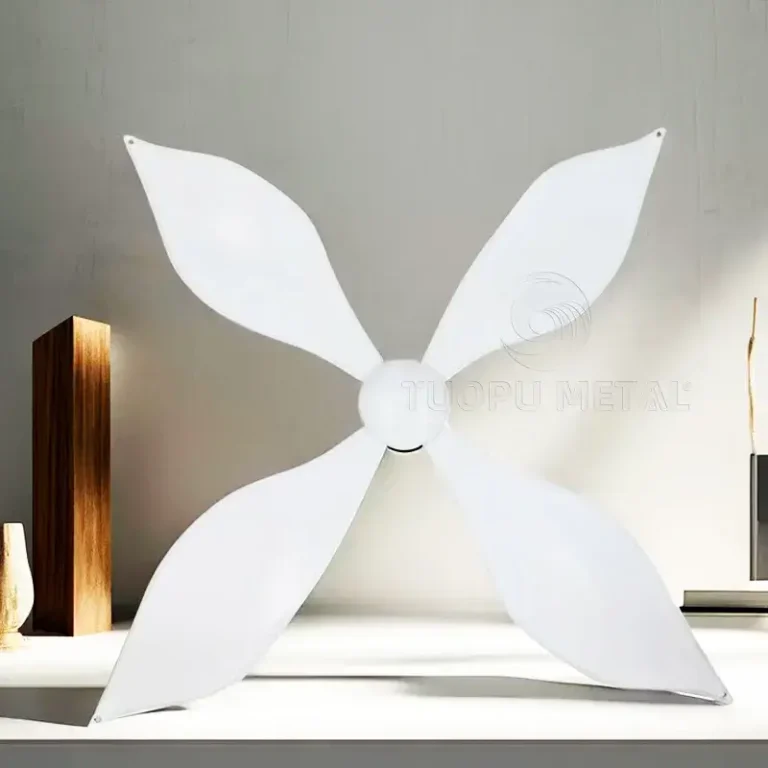
Museum atriums are often architectural statement pieces. The cladding system must support bold, complex geometries — curved facades, parametric patterns, perforated screens, and custom 3D forms. Aluminum curtain wall panels from the AP series are specifically engineered for these applications.
AP Series Capabilities
- AP Series solid panels: Available in multiple thickness options for non-ventilated facade applications.
- AP300 perforated panels: Adjustable perforation rates allow designers to balance privacy, ventilation, and visual permeability — ideal for atrium sunshades and decorative screens.
- AP200 curved panels: Custom radius engineering enables smooth, sweeping curves that define iconic museum facades.
- BIPV solar panels: Building-integrated photovoltaic options allow the atrium facade to generate electricity while serving as a weather barrier.
Steel can also be fabricated into curved and perforated forms, but the process is more energy-intensive, more expensive to tool, and limited in the complexity of radii that can be achieved without additional welding and finishing work. For projects requiring intricate parametric designs, aluminum is the more efficient and cost-effective material choice.
Thermal Performance and Museum Climate Control
Museum atriums house sensitive collections and require precise climate control. The curtain wall system plays a critical role in thermal regulation, and U-value performance is a key differentiator between aluminum and steel.
Aluminum’s Thermal Advantage
FstopMetal’s unitized curtain wall systems achieve U-values as low as 0.8 W/m²K, significantly reducing heat transfer through the facade. Lower U-values mean reduced heating and cooling loads for the atrium space, which directly lowers energy costs and supports the museum’s sustainability goals. Thermal breaks in aluminum framing further improve performance by interrupting conductive heat flow.
Steel’s Thermal Conductivity
Steel is a highly conductive material, meaning it transfers heat and cold more readily than aluminum. Without extensive thermal break systems, steel curtain wall panels can create thermal bridges that increase condensation risk and raise HVAC loads. For a museum atrium where temperature and humidity stability is critical for artifact preservation, aluminum’s superior thermal performance is a significant advantage.
Sustainability and Embodied Carbon
Museums are increasingly held to sustainability standards, and the embodied carbon of facade materials is a key consideration in specification. Aluminum curtain wall panels offer compelling environmental credentials.
Recycled Content and Recyclability
- Aluminum curtain wall panels can contain up to 75% recycled aluminum content.
- Aluminum is 100% recyclable without loss of properties, meaning end-of-life panels can be reprocessed into new products.
- EPD (Environmental Product Declaration) certification is available for select product lines, supporting LEED and BREEAM credit accumulation.
- Carbon-neutral options are available for the aluminum curtain wall system, addressing net-zero embodied carbon targets.
Steel’s Carbon Profile
While steel is also recyclable, primary steel production is energy-intensive and carries a higher embodied carbon footprint than aluminum made from recycled content. For museums with net-zero commitments, aluminum’s recycled content and EPD availability make it the more straightforward choice for meeting sustainability targets.
Fire Compliance and Safety Considerations
Fire safety is a paramount concern in museum design, where large atrium volumes can act as chimneys and collections include irreplaceable assets. Fire rating requirements vary by jurisdiction, and the compliance pathway must be verified through a third-party test report specific to the product and assembly being specified.
Aluminum curtain wall panels, including the AP series solid panels, are available with fire performance testing available upon project confirmation. The non-combustibility of aluminum itself does not automatically translate to a fire rating for the complete assembly — the rating depends on the panel construction, backing materials, and installation details. Architects should request the relevant third-party test report for the specific product configuration before specification. Steel panels also require fire performance verification through independent testing, and the heavier mass of steel can contribute to structural fire resistance in some assemblies. Both materials must be evaluated against the applicable code requirements for the project location.
Acoustic Performance in Atrium Spaces
Museum atriums often combine hard reflective surfaces with high ceilings, creating significant reverberation. While the curtain wall panel itself is not the primary acoustic treatment, perforated aluminum panels can contribute to sound management when combined with appropriate backing materials.
- Perforated aluminum panels paired with acoustic backing (foam or mineral wool) can achieve NRC ratings of 0.85 or higher.
- This is particularly valuable in atrium spaces where speech intelligibility and ambient noise control are design priorities.
- Steel perforated panels can achieve similar acoustic performance, but the heavier weight adds to the structural load discussed earlier.
Specification Decision Framework
The choice between aluminum and steel for a museum atrium curtain wall should be guided by the following criteria:
| Decision Factor | Favor Aluminum | Favor Steel |
|---|---|---|
| Structural load constraints | Lightweight requirement, long spans, retrofit | Heavy-load capacity, short spans |
| Corrosion environment | Coastal, high humidity, low maintenance | Controlled interior environment |
| Design complexity | Curved, perforated, parametric, BIPV | Simple flat panels, industrial aesthetic |
| Thermal performance | Low U-value, thermal break required | Less critical climate control |
| Sustainability targets | High recycled content, EPD, carbon-neutral | Recycled steel available, lower priority |
| Acoustic requirements | Perforated panels with acoustic backing | Similar capability, heavier system |
Conclusion
For museum atriums, aluminum curtain wall panels offer a compelling combination of lightweight strength, design flexibility, thermal efficiency, and sustainability credentials. The AP series — including solid, perforated, curved, and BIPV options — provides architects with a comprehensive toolkit for creating visually striking and technically high-performing facades. Steel remains a valid option for projects with specific structural or aesthetic requirements, but the additional weight, maintenance demands, and thermal bridging challenges make aluminum the more versatile and forward-looking choice for most museum atrium applications.
Project-specific confirmation of technical performance, fire compliance, and coating specifications should be obtained through direct consultation with the manufacturer before final specification.
Frequently Asked Questions
Why is aluminum preferred over steel for museum atrium curtain walls?
Aluminum curtain wall panels are lighter, reducing structural loads and allowing longer spans with slimmer supports. They offer natural corrosion resistance, superior thermal performance with low U-values, and greater design flexibility for curved and perforated geometries. Aluminum also contains up to 75% recycled content and is 100% recyclable, supporting museum sustainability goals.
Can aluminum curtain wall panels achieve the same fire performance as steel?
Fire rating requirements vary by jurisdiction and must be verified by a third-party test report for the specific product assembly. Aluminum curtain wall panels, including the AP series solid panels, have fire performance testing available upon project confirmation. The complete assembly rating depends on panel construction, backing materials, and installation details — architects should request the relevant report before specification.
What surface finish options are available for aluminum curtain wall panels in museum applications?
Aluminum curtain wall panels are available with powder coating (60–80 microns), anodizing (15–25 microns), PVDF finishes (25–30 microns), and wood grain transfer printing. These options provide a wide range of colors, textures, and durability levels suitable for both interior atrium facades and exterior museum cladding.
Do aluminum curtain wall panels support building-integrated photovoltaics for museum atriums?
Yes. The BIPV solar panel option from the AP series integrates photovoltaic generation directly into the curtain wall facade, allowing the atrium envelope to produce electricity while serving as a weather-resistant cladding system. This supports museums pursuing net-zero energy targets.
How does the sustainability profile of aluminum curtain wall panels compare to steel for green building certification?
Aluminum curtain wall panels offer up to 75% recycled content, 100% recyclability, EPD certification for select product lines, and carbon-neutral options. These attributes support LEED and BREEAM credits related to materials and resources as well as energy performance. Steel is also recyclable but typically carries a higher embodied carbon footprint in primary production. EPD and carbon-neutral documentation should be requested for the specific product line to verify certification eligibility.
Talk to Our Team
Planning a project or comparing suppliers? Send us your drawings, panel schedule or quantity list and we will come back with a specification proposal and a budget range for your review.
- Company: TOP METAL & TUORUNDA
- Contact: Jimmy
- WhatsApp: +86-139-2919-8578
- Email: sales2@trdoutdoor.com