


How to Specify Aluminum Honeycomb Panel for Airport Terminals: 2026 Guide
Specify aluminum honeycomb panel for airport terminals by verifying fire compliance through third-party testing, confirming acoustic NRC performance of 0.85+, selecting PVDF or powder-coated finishes for high-traffic durability, and ensuring the core is a genuine aluminum honeycomb structure for maximum rigidity-to-weight ratio. Work with a Foshan-based manufacturer holding ISO 9001, CE, and SGS certification, and always request project-specific technical dossiers before finalizing procurement.
Why Aluminum Honeycomb Panel Is the Preferred Choice for Airport Terminals
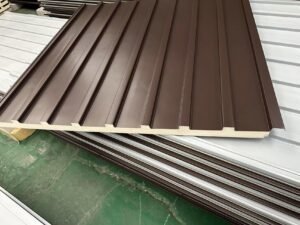
Airport terminals demand cladding and ceiling systems that combine extreme light weight with exceptional flatness and structural rigidity. Aluminum honeycomb panel delivers precisely this combination. The core consists of an expanded aluminum honeycomb structure bonded between two thin aluminum facings, producing a panel that is significantly lighter than solid aluminum sheet of equivalent thickness while resisting deflection under wind load and thermal cycling.
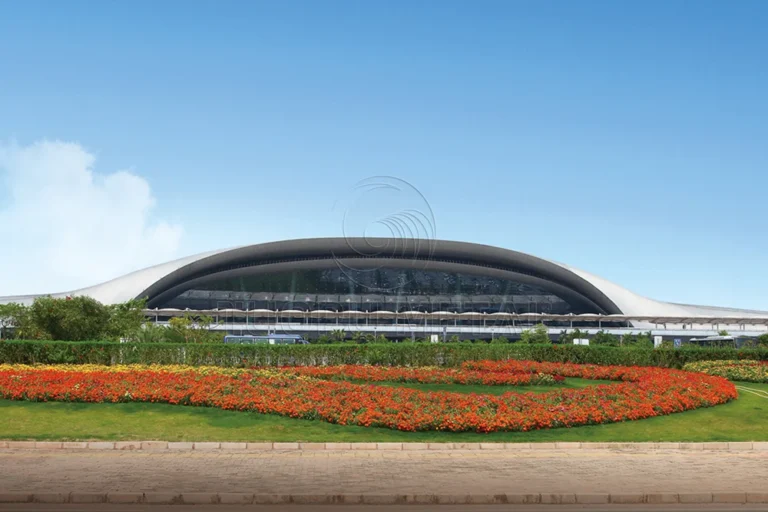
For large-span airport facades and ceiling installations, the reduced dead load translates directly into smaller supporting structures, lower foundation requirements, and faster erection — all critical factors on time-sensitive infrastructure projects. FstopMetal manufactures aluminum honeycomb and custom geometric panels in Foshan, Guangdong, China, and exports to 36+ countries, giving international contractors a single source for complex envelope and interior ceiling solutions.
Fire Compliance and Safety Requirements
Fire performance is the single most consequential specification criterion for airport terminal aluminum panels. Airport buildings fall under stringent fire code regimes in every major jurisdiction, and aluminum cladding and ceiling systems must demonstrate compliance through recognized third-party testing.
Understanding Fire Rating Requirements
- Fire rating requirements vary by jurisdiction — North American projects typically reference ASTM E84 or UL 723 for surface burning characteristics, while European projects require compliance with EN 13501-1 classification.
- Aluminum itself is a non-combustible metal, but the overall panel assembly — including adhesives, core materials, and backing layers — must be evaluated as a complete system.
- Fire rating requirements for airport applications often demand the highest achievable classification. You must verify compliance through a third-party report specific to the panel assembly you are specifying.
What to Request from Your Manufacturer
When evaluating suppliers for airport terminal projects, request the following fire-related documentation before awarding the contract:
- A third-party fire test report for the exact panel construction (core, facing thickness, adhesive, backing) you intend to specify.
- Test standard used (ASTM, EN, or local equivalent) and the testing laboratory accreditation.
- Any project-specific fire engineering justification that the consultant has prepared.
Do not accept a generic material safety data sheet as a substitute for a full fire test report. The approval workflow for airport projects typically requires the fire report to be reviewed and accepted by the local authority having jurisdiction (AHJ) or the project’s fire safety engineer.
Acoustic Performance for Interior Ceiling Applications
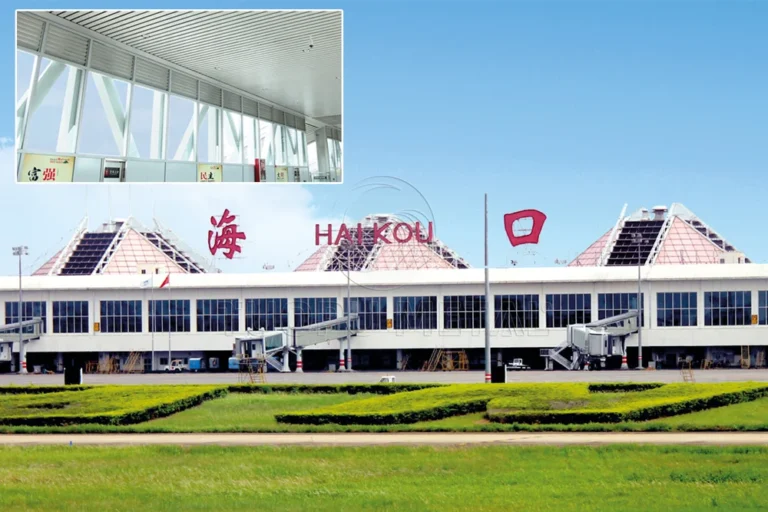
Airport terminal interiors generate extremely high ambient noise levels from announcements, baggage handling, and passenger movement. Aluminum honeycomb ceiling panels with integrated acoustic treatment are essential for maintaining intelligible public address systems and reducing overall reverberation.
FstopMetal offers metal ceiling systems with perforated panels combined with acoustic backing materials, achieving NRC (Noise Reduction Coefficient) ratings up to 0.85+. The honeycomb core provides inherent rigidity that prevents panel sagging over long spans — a common failure mode with less rigid ceiling substrates. Available configurations include open-cell foam or mineral wool fill within the honeycomb cavity for enhanced sound absorption.
| Panel Configuration | Acoustic Performance | Typical Airport Application |
|---|---|---|
| Solid aluminum honeycomb panel | Reflective — requires separate acoustic treatment | Exterior facade, soffit cladding |
| Perforated honeycomb panel with acoustic backing | NRC up to 0.85+ | Terminal ceiling, concourse canopy |
| Perforated honeycomb panel with mineral wool fill | Enhanced NRC, improved STC | High-noise zones, ticketing halls |
| Custom 3D geometric honeycomb panel | Variable — design-dependent | Architectural feature ceilings, branding elements |
Surface Treatment Selection for High-Traffic Environments
Airport terminals are among the most demanding environments for exterior and interior cladding. Panels are exposed to UV radiation, temperature swings, cleaning chemicals, and constant physical contact. Surface treatment selection directly affects long-term appearance retention and maintenance intervals.
Recommended Finishes for Airport Applications
- PVDF (Kynar 500) coating — Typical dry film thickness of 25–30 microns. Superior UV resistance and color retention, making it the preferred choice for exterior airport facades exposed to direct sunlight over decades of service.
- Powder coating — Typical dry film thickness of 60–80 microns. Offers a broader color range and good chemical resistance. Suitable for both interior and exterior applications where extreme UV exposure is not the primary concern.
- Anodizing — Typical film thickness of 15–25 microns. Provides a metallic finish with excellent corrosion resistance. Often specified for interior ceiling applications where a natural aluminum appearance is desired.
- Wood grain transfer — Applied over powder-coated or PVDF substrates. Used when architects specify a warm, natural aesthetic for terminal interiors while retaining the durability of aluminum.
For exterior airport facade applications in high-UV environments, PVDF coating is the industry standard. Interior ceiling panels in climate-controlled terminals may specify powder coating or anodizing depending on the design intent. Warranty ranges for each finish should be confirmed in writing with the manufacturer and should be included as a contract deliverable.
Structural and Dimensional Specifications
When specifying aluminum honeycomb panel for airport terminals, the following structural parameters must be defined in the procurement documents:
- Alloy and temper: 6063-T5 or 6063-T6 aluminum alloy is standard for architectural honeycomb panels. T6 temper provides higher yield strength for long-span applications.
- Panel thickness: Typically ranges from 10 mm to 50 mm depending on span requirements and wind load calculations. Thicker panels resist deflection better but add dead load.
- Facings: Aluminum skin thickness typically 0.5 mm to 1.5 mm per side. Thicker facings improve impact resistance — critical in high-traffic airport environments.
- Honeycomb core density: Core density affects rigidity and shear strength. Higher core density provides better load distribution but increases panel weight slightly.
- Maximum panel dimensions: Determined by manufacturing capability and transportation logistics. Large-format panels reduce joint count and improve facade aesthetics.
FstopMetal offers custom panel geometries including curved and 3D-formed honeycomb panels, which are particularly useful for the complex architectural forms found in modern airport terminal design. The AP series — including flat, perforated, and curved variants — can be engineered to meet project-specific dimensional and structural requirements.
Sustainability and Environmental Product Declarations
Airport terminal projects increasingly require sustainable material specifications. Aluminum honeycomb panels offer several environmental advantages:
- Aluminum is 100% recyclable without degradation of material properties.
- Recycled aluminum content can reach up to 75%, reducing the embodied carbon of the panel.
- EPD (Environmental Product Declaration) certification is available for FstopMetal’s aluminum honeycomb panel systems, providing verified lifecycle environmental data for green building certification programs.
- The lightweight nature of honeycomb panels reduces structural material requirements and transportation emissions compared to heavier cladding alternatives.
For projects targeting LEED, BREEAM, or other green building rating systems, request the EPD and recycled content documentation from the manufacturer early in the specification process.
Procurement and Quality Assurance Workflow
Specifying aluminum honeycomb panel for airport terminal projects requires a structured procurement process to ensure compliance with all technical and regulatory requirements:
- Pre-qualification: Verify that the manufacturer holds ISO 9001, CE, and SGS certification. Confirm export experience to your target market.
- Technical submittal: Request detailed product data sheets, fire test reports, acoustic test reports, and finish specifications for each panel type being considered.
- Sample approval: Obtain physical samples for color, texture, and finish verification before bulk production authorization.
- Factory audit: For large airport projects, conduct or commission a factory quality audit to verify production capabilities and quality control procedures.
- Third-party inspection: Engage an independent inspection agency for pre-shipment quality verification, particularly for surface finish, dimensional tolerance, and packaging integrity.
- Installation support: Confirm that the manufacturer provides installation guidelines and technical support for the project location.
Frequently Asked Questions
What fire test documentation is required for airport terminal aluminum honeycomb panels?
Airport projects require a third-party fire test report for the complete panel assembly — including core, facings, adhesive, and any backing materials — tested to the standard applicable in your jurisdiction (ASTM E84 for North America, EN 13501-1 for Europe). The report must be reviewed and accepted by the project’s fire safety engineer and the local authority having jurisdiction.
Can aluminum honeycomb panels be used for both interior ceilings and exterior facades in airport terminals?
Yes. Aluminum honeycomb panels are specified for both interior ceiling and exterior facade applications in airport terminals. Interior applications typically prioritize acoustic performance with perforated panels and acoustic backing, while exterior applications prioritize UV-resistant finishes such as PVDF coating and structural rigidity for wind load resistance.
What is the typical recycled content in architectural aluminum honeycomb panels?
Architectural aluminum honeycomb panels can contain up to 75% recycled aluminum content. This significantly reduces the embodied carbon of the panel compared to virgin aluminum production and supports sustainability certification requirements for airport terminal projects.
How do I specify custom curved or 3D aluminum honeycomb panels for an airport terminal design?
Custom curved and 3D geometric aluminum honeycomb panels are available through manufacturers with advanced forming capabilities. Provide the architect’s design drawings with radius specifications, panel dimensions, and finish requirements. The manufacturer will engineer the panel construction — including core density, facing thickness, and forming process — to meet the structural and aesthetic requirements of the project.
What certification should I verify before procuring aluminum honeycomb panels for an airport project?
Verify that the manufacturer holds ISO 9001 for quality management, CE marking for European market compliance, and SGS certification for independent quality verification. Additionally, request project-specific test reports for fire performance, acoustic performance, and finish durability. EPD certification should also be requested for projects requiring environmental product declarations.
Talk to Our Team
Planning a project or comparing suppliers? Send us your drawings, panel schedule or quantity list and we will come back with a specification proposal and a budget range for your review.
- Company: TOP METAL & TUORUNDA
- Contact: Jimmy
- WhatsApp: +86-139-2919-8578
- Email: sales2@trdoutdoor.com