

Direct Answer
The cost of clip-in aluminum ceiling tiles is driven primarily by alloy grade, surface treatment type and thickness, acoustic performance requirements, panel geometry and design complexity, and order volume. FstopMetal manufactures these systems in Foshan, China, and pricing varies by project specification rather than a fixed unit rate. Below is a detailed breakdown of each cost driver so architects and procurement managers can make informed trade-off decisions.
Material and Alloy Selection
The base aluminum alloy is the first and most fundamental cost determinant. Clip-in ceiling tiles typically use 6063-series aluminum, which offers a strong balance of formability, surface finish quality, and structural performance. The temper designation — T5 versus T6 — directly affects material cost and mechanical properties.
6063-T5 vs. 6063-T6
- 6063-T5: Air-cooled after extrusion. Sufficient for most interior ceiling applications where panel spans are moderate. Typically the more economical choice for standard tile formats.
- 6063-T6: Solution heat-treated and artificially aged. Higher yield strength, allowing thinner gauges for the same span performance. May reduce material weight and shipping cost but carries a higher base alloy price.
Recycled Content
Aluminum with high recycled content can carry a different cost profile than primary-alloy material. FstopMetal offers panels with recycled aluminum content up to 75%, which may align with sustainability targets and EPD reporting requirements. Projects pursuing green building certification should factor recycled-content options into early cost modeling, as availability and pricing can vary by mill source and order volume.
Surface Treatment and Finish
Surface treatment is one of the largest variable cost drivers in clip-in ceiling tile pricing. The finish determines not only aesthetics but also durability, maintenance requirements, and compliance with project specifications.
| Finish Type | Typical Film Thickness | Cost Position | Best Suited For |
|---|---|---|---|
| Powder Coating | 60–80 microns | Mid-range | General commercial interiors, wide color range |
| Anodizing | 15–25 microns | Premium | High-traffic areas, architectural metallic appearance |
| PVDF (Kynar 500®) | 25–30 microns | Higher end | Environments requiring exceptional color retention and chemical resistance |
| Wood Grain Transfer | Standard | Premium | Warm aesthetic applications where wood appearance is specified |
Key Trade-offs
- Film thickness: Thicker coatings generally improve durability but increase material and processing cost. Specification should match the expected wear environment rather than maximizing thickness across the board.
- Color complexity: Standard RAL colors are typically more economical than custom-matched shades, which require dedicated batch setup and may incur minimum-order thresholds.
- Finish consistency: Projects requiring tight color tolerance across multiple batches should discuss quality control procedures with the supplier before ordering.

Acoustic Performance Requirements
Acoustic performance is a significant cost differentiator in clip-in ceiling tile systems. Panels designed for sound absorption require additional materials and manufacturing steps beyond the base tile.
Acoustic Configurations
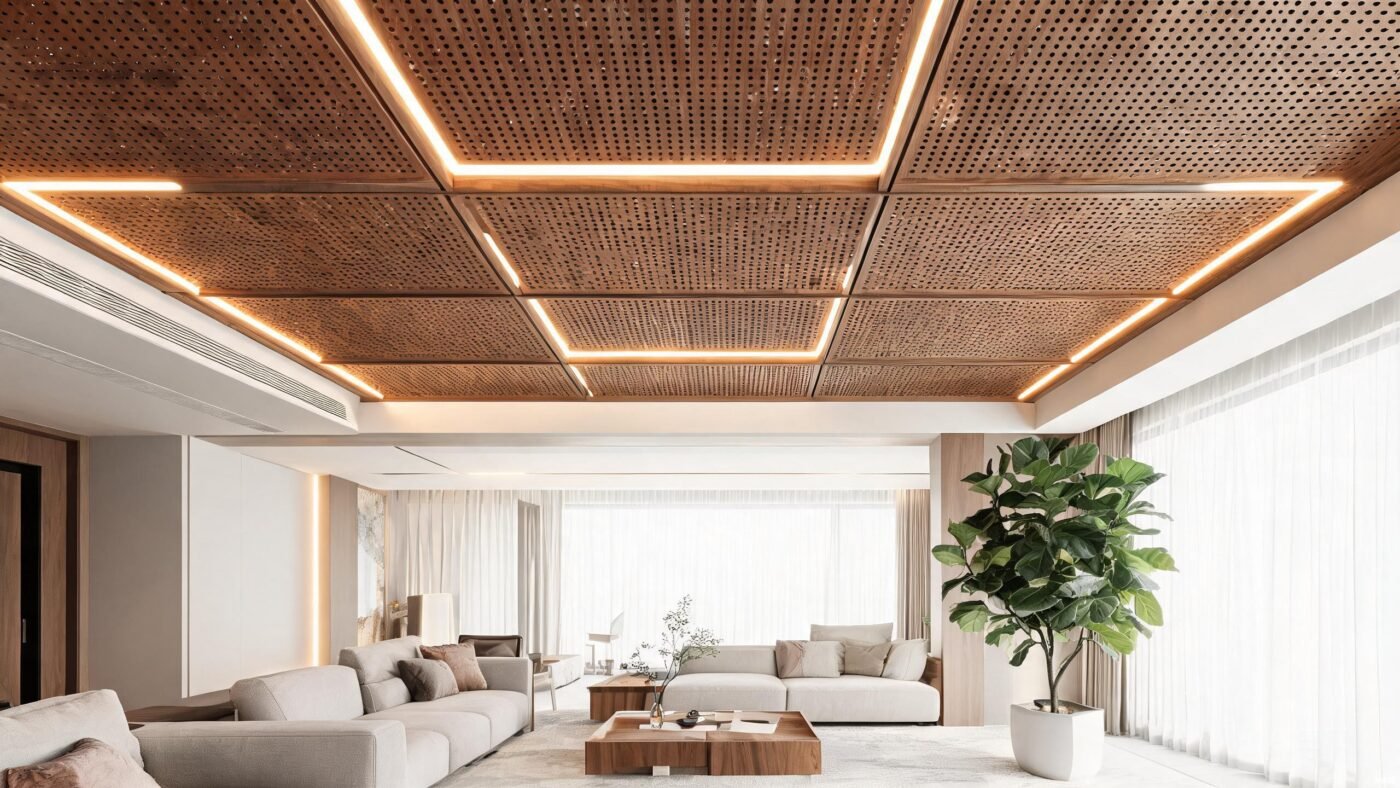
- Perforated panels with acoustic backing: Perforation pattern, open area percentage, and backing material all influence cost. Higher perforation rates generally improve NRC but may reduce structural rigidity, requiring reinforcement.
- Filled cores: Foam or mineral wool fill behind perforated faces adds material cost and processing time but can achieve NRC ratings of 0.85 and above.
- Open-cell / unbacked panels: The most economical acoustic option, providing minimal sound absorption but suitable where acoustics are not a primary specification.
Specification Strategy
Specifying acoustic performance only where required — rather than across the entire ceiling area — can produce meaningful cost savings. Consider zoning: high-absorption tiles in open-plan offices and meeting rooms, standard perforated or solid tiles in circulation areas.
Panel Geometry and Design Complexity
The physical form of the clip-in tile significantly affects manufacturing cost. Simple rectangular panels are the most cost-effective; custom geometries introduce additional tooling, handling, and quality-control expenses.
Cost-Driving Geometric Factors
- Panel size: Larger panels require thicker gauge material or reinforcement to prevent sag, increasing material cost. Standard module sizes benefit from optimized nesting during production.
- Perforation patterns: Custom or parametric perforation designs require dedicated tooling and programming. Standard round, square, or slot patterns are more economical.
- Curved or 3D forms: Curved clip-in panels and蜂窝 (honeycomb) structures involve additional forming steps and may require custom tooling, raising per-unit cost.
- Edge profiles: The clip-in attachment mechanism must be precision-formed. Complex edge geometries for concealed or specialized clip systems add manufacturing time.
Design Optimization Tips
- Standardize panel sizes across zones where design allows.
- Use perforation patterns from the manufacturer’s standard library when possible.
- Coordinate ceiling layout with lighting, HVAC, and access panel locations early to minimize custom-cut pieces and waste.
Order Volume and Project Specifications
Order volume is a major cost lever. Larger projects benefit from economies of scale in material procurement, production scheduling, and logistics. Smaller orders or phased deliveries may carry higher per-unit costs due to setup frequency and reduced nesting efficiency.
Volume-Related Cost Factors
- Production scheduling: Full-container or large-batch orders allow dedicated production runs, reducing changeover time and cost per unit.
- Material procurement: Bulk aluminum coil purchases improve per-kilogram material cost.
- Logistics: Shipping efficiency improves significantly with full-container loads versus partial shipments.
- Customization level: Projects with extensive custom specifications may require separate production scheduling regardless of volume.
Phased Delivery Considerations
For large projects delivered in phases, early coordination with the manufacturer can help align production batches and minimize cost penalties associated with split deliveries. Discuss phased delivery strategies during the quotation stage.
Other Cost Considerations
Fire Compliance
Fire rating requirements vary by jurisdiction and project type. Aluminum substrates themselves are non-combustible, but finish systems and acoustic fill materials may affect overall assembly classification. Fire performance must be verified by a third-party report specific to the installed assembly. Always confirm local code requirements and request relevant test documentation before finalizing specifications.
Sustainability and EPD
Projects with sustainability targets may require Environmental Product Declarations (EPD). FstopMetal offers EPD-compliant options for select product lines. EPD preparation may involve additional documentation and verification costs, which should be factored into the project budget early.
Quality Certifications
Manufacturers holding ISO 9001, CE, and SGS certifications provide a baseline of quality management and compliance verification. These certifications do not directly determine unit price but reduce risk related to quality consistency and regulatory compliance, which can have indirect cost implications for the project.
Frequently Asked Questions
What is the biggest single cost driver for clip-in aluminum ceiling tiles?
Surface treatment type and thickness typically represent the largest variable cost. PVDF and anodized finishes cost more than standard powder coating, and thicker film applications increase material and processing expenses.
Do recycled aluminum content levels affect price?
Yes. Panels with high recycled content (up to 75%) may carry a different price point than primary-alloy equivalents. The impact varies by market conditions and order volume. Projects targeting EPD or green building certification should evaluate this early.
How much do acoustic features add to the unit cost?
Acoustic configurations — perforated panels with backing, foam fill, or mineral wool fill — add material and processing costs compared to solid or open-cell panels. The increase depends on the target NRC rating and fill material. Zoning acoustic panels to high-requirement areas only is a common cost-optimization strategy.
Can I reduce cost without compromising design intent?
Yes. Common strategies include standardizing panel sizes, selecting from existing perforation pattern libraries, using powder coating where PVDF is not specified, and consolidating order volume to benefit from production economies. Coordinate with the manufacturer during the design development phase to identify savings opportunities.
How does order volume impact pricing for clip-in ceiling systems?
Larger orders benefit from reduced per-unit setup costs, better material nesting, and improved shipping efficiency. Phased deliveries or small repeat orders may not achieve the same economies. Discuss order consolidation strategies with your supplier during procurement planning.