


Clip-in aluminum ceiling tile cost is driven by thickness, coating system, perforation design, and order volume rather than a single fixed price per square meter. Typical installed cost ranges vary widely across projects because specification choices—such as NRC-rated acoustic backing, A2 fire-class panels, or custom colors—shift the unit economics significantly.
For architects and procurement managers evaluating clip-in aluminum ceiling tile for commercial and institutional projects, understanding the cost drivers behind each specification is essential to building an accurate budget. FstopMetal, operating since 2003 from its 15,000 m² facility in Foshan, China, supplies clip-in ceiling systems to projects across 36+ countries, and the following breakdown explains what moves the needle on price.
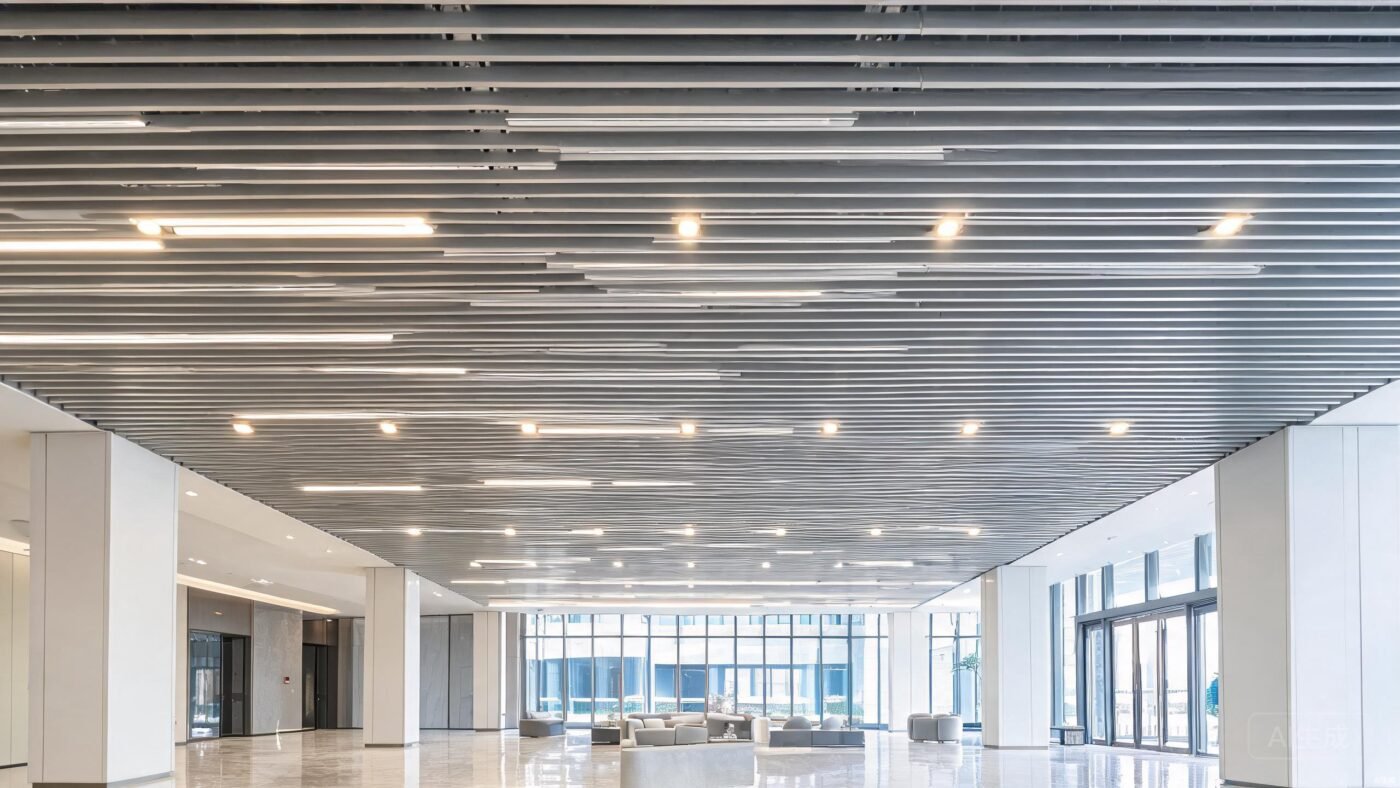
How Clip-In Ceiling Tile Pricing Is Structured
Clip-in aluminum ceiling tiles are priced on a project-specific basis rather than as a commodity with a published list price. The cost structure reflects material inputs, surface treatment selection, fabrication complexity, and logistics. Below are the primary cost drivers that determine your final unit price.
Aluminum Alloy and Gauge
The base material is typically 6063-T5 or 6063-T6 aluminum alloy, a standard architectural grade selected for its formability and strength-to-weight ratio. Panel thickness directly affects both material cost and structural performance—thicker gauges command higher prices but deliver greater rigidity for span applications. Panels incorporating up to 75% recycled aluminum may carry a marginal cost advantage while supporting sustainability targets.
Surface Coating System
The finish you select is one of the largest variables in per-square-meter pricing. Powder coating, the most common option, builds a film thickness of approximately 60–80 microns and carries a typical warranty of 25–30 years. PVDF (Kynar 500) coating provides superior color retention at a 25–30 micron build with a 30-year warranty, but at a higher unit cost. Anodized finishes sit at 15–25 microns with a 20+ year warranty and occupy a different price tier entirely. Wood grain transfer is available as a standard option at a comparable price point to powder coating.
Perforation and Acoustic Configuration
Perforated clip-in tiles introduce fabrication steps—drilling, deburring, and quality inspection—that add to the base panel cost. The perforation rate and pattern complexity further influence pricing. When acoustic performance is specified, additional layers such as foam or mineral wool backing are integrated behind the perforated face, raising the per-square-meter cost but delivering NRC ratings up to 0.85 and above. Non-perforated solid panels remain the most economical configuration.
Order Volume and Project Scale
Unit pricing improves materially as order volume increases. Large-scale institutional projects such as airports, hospitals, and transit hubs benefit from production-line efficiency and reduced per-unit setup costs. Standard products typically ship within 15–30 days, while custom-designed projects with non-standard dimensions, colors, or acoustic requirements generally require 30–60 days depending on complexity.
| Cost Driver | Impact on Price | Typical Range |
|---|---|---|
| Panel thickness | High | Standard to heavy gauge |
| Coating type | High | Powder / PVDF / Anodized |
| Perforation pattern | Moderate | Standard to custom |
| Acoustic backing | Moderate to High | None to NRC 0.85+ |
| Order volume | High | Project-specific |
| Custom colors / finishes | Moderate | RAL / bespoke |
Specification Trade-offs That Affect Total Cost
Choosing the right specification balance requires understanding how each decision compounds across the project. The following trade-offs are common in clip-in ceiling tile procurement.
Acoustic Performance vs. Budget
Solid clip-in panels without perforation or backing represent the lowest cost entry point. Adding perforation for aesthetics increases fabrication cost modestly. Specifying acoustic backing with mineral wool or foam fill to achieve NRC 0.85+ delivers significant value in spaces such as hospitals, classrooms, and open-plan offices, but raises the per-square-meter price. The decision should be guided by the acoustic requirements of each zone rather than applied uniformly across the entire project.
Coating Longevity vs. Upfront Cost
Powder coating at 60–80 microns with a 25–30 year warranty offers strong durability at a competitive price point. PVDF coating at 25–30 microns delivers better long-term color retention and chalk resistance, making it preferable for high-exposure or high-visibility applications where appearance maintenance matters over a 30-year lifecycle. Anodized finishes provide a distinct metallic aesthetic with a 20+ year warranty at a different cost tier.
Standard vs. Custom Geometry
Standard rectangular clip-in modules benefit from optimized tooling and faster production cycles. Custom geometries—honeycomb cores, 3D patterns, or non-standard clip profiles—require dedicated tooling and extended fabrication time, increasing both unit cost and lead time. For projects with repeated spatial modules, standard sizes should be prioritized; custom designs should be reserved for architecturally significant zones where the design intent justifies the premium.
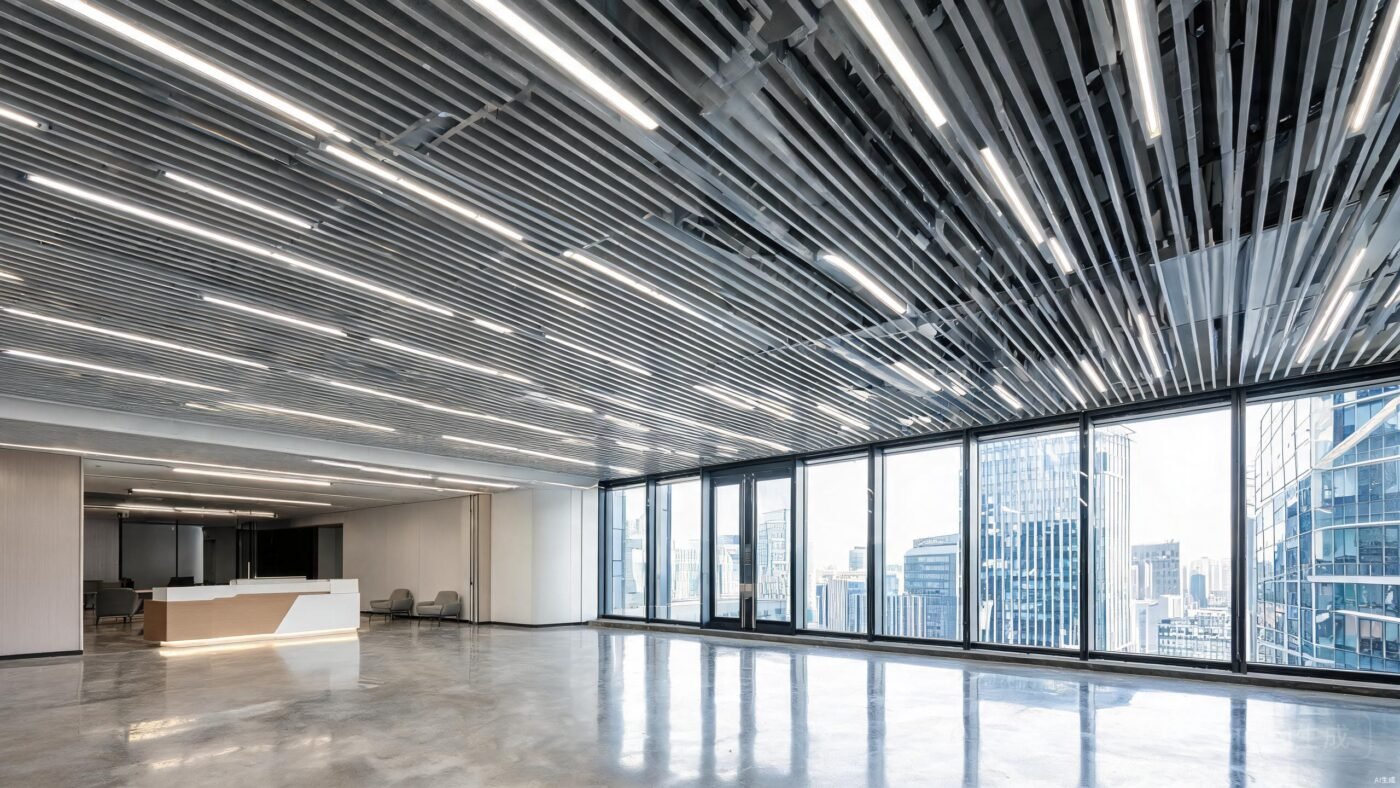
Lifecycle Cost Considerations for Clip-In Ceiling Systems
When evaluating clip-in aluminum ceiling tile cost, lifecycle analysis often reveals a more favorable picture than upfront pricing alone suggests. Aluminum is 100% recyclable at end of life, and the 25–50 year service life across product lines means replacement cycles are minimal compared to alternative ceiling materials. Powder-coated and PVDF-finished panels resist corrosion, fading, and degradation in demanding environments such as healthcare facilities and transit hubs.
Projects targeting sustainability certifications can benefit from EPD (Environmental Product Declaration) certification availability and the high recycled content of up to 75% in the aluminum substrate. These attributes support LEED and BREEAM credit accumulation, which indirectly offset material costs through green building incentives and certification pathways.
How to Obtain an Accurate Cost Estimate
Because clip-in aluminum ceiling tile pricing is project-specific, the most reliable approach is to submit a detailed specification package to the manufacturer. The following information enables a precise quotation:
- Panel dimensions and thickness requirements
- Coating type and RAL color reference
- Perforation pattern and open area percentage
- Acoustic performance targets (NRC rating)
- Estimated square meterage and project timeline
- Any fire rating requirements (e.g., A2 class)
FstopMetal supports custom manufacturing with over 20 years of experience and provides technical support and installation guidance for international projects. Certifications including ISO 9001, CE, and SGS validate the quality management and compliance framework under which these products are manufactured.
Frequently Asked Questions
What is the typical delivery time for clip-in aluminum ceiling tiles?
Standard products ship within 15–30 days. Custom projects with non-standard dimensions, colors, or acoustic requirements typically require 30–60 days depending on complexity.
Does FstopMetal offer EPD certification for ceiling products?
Yes, EPD (Environmental Product Declaration) certification is available for selected aluminum ceiling and facade systems, supporting sustainability reporting for green building projects.
What acoustic performance can clip-in aluminum ceiling tiles achieve?
With perforated faces and acoustic backing materials such as foam or mineral wool, clip-in ceiling tiles can achieve NRC ratings up to 0.85 and above, suitable for demanding acoustic environments.
Can FstopMetal handle custom ceiling designs?
Yes, custom manufacturing is a core capability with over 20 years of experience. Custom options include honeycomb cores, 3D geometric patterns, non-standard clip profiles, and bespoke perforation designs.
What warranty coverage is available for clip-in aluminum ceiling tiles?
Warranty periods vary by product series and surface treatment. Powder-coated and PVDF-finished panels typically carry 25–30 year warranties, while anodized finishes carry 20+ year coverage. Specific warranty terms should be confirmed at the time of quotation.