


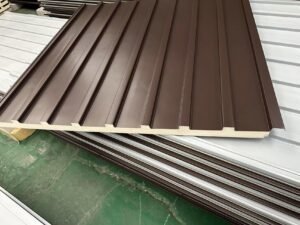
Aluminum Honeycomb Panels in Train Stations: A Direct Overview
Aluminum honeycomb panels are widely used in train stations for ceilings, wall cladding, signage substrates, and partition systems. Their lightweight construction, fire-resistant performance, and acoustic capabilities make them a preferred choice for high-traffic transit environments. FstopMetal, operating since 2003 from Foshan, China, manufactures these panels across its 15,000 m² facility and has supplied projects in 36+ countries. The panels are available with powder-coated, anodized, or PVDF finishes, and can be specified with A2-grade fire ratings where required by local building codes.
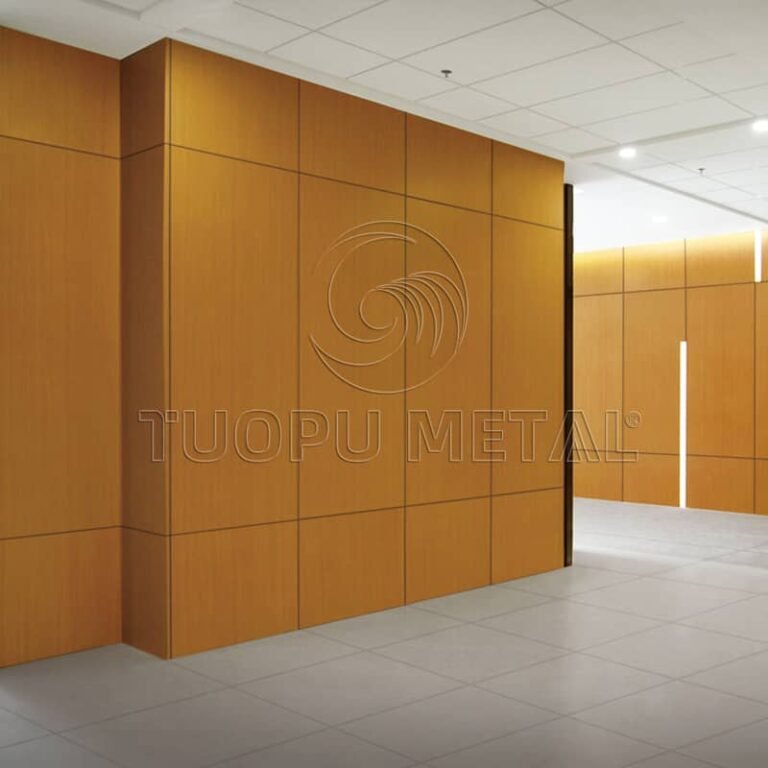
Why Aluminum Honeycomb Panels Are the Standard for Transit Infrastructure
Train stations demand materials that balance structural performance, safety compliance, and long-term durability under heavy public use. Aluminum honeycomb panels meet these requirements through a sandwich construction: two thin aluminum facings bonded to a hexagonal aluminum core. This geometry delivers high stiffness at low weight, which reduces load on supporting structures and simplifies installation in large-span station environments.
Key Performance Drivers
- Weight reduction: Typical panels weigh significantly less than solid aluminum sheets of equivalent rigidity, lowering structural load and handling costs on site.
- Stiffness-to-weight ratio: The honeycomb core resists bending and deflection, critical for large ceiling spans and tall wall panels in station concourses.
- Fire performance: A2-grade non-combustible options are available, meeting stringent European and international fire classification requirements for enclosed public spaces.
- Acoustic control: When paired with perforated facings and sound-absorbing backing, typical NRC values reach 0.85+, reducing reverberation in high-ceiling station halls.
- Corrosion resistance: Powder-coated, anodized, and PVDF finishes provide long-term color retention and weather resistance, with typical warranties ranging from 20 to 30 years depending on the coating system selected.
Sustainability Considerations
Aluminum honeycomb panels contain up to 75% recycled aluminum content and are 100% recyclable at end of life. FstopMetal offers Environmental Product Declarations (EPD) for select product lines, supporting green building certification pathways such as LEED and BREEAM. Low U-value configurations also contribute to reduced building energy consumption over the 25- to 50-year service life typical of these systems.
Top Applications of Aluminum Honeycomb Panels in Train Stations
1. Ceiling Systems in Concourses and Waiting Halls
Station concourses feature high ceilings that amplify noise from announcements, footsteps, and crowd movement. Perforated aluminum honeycomb ceiling panels with acoustic backing absorb sound energy and improve intelligibility of public address systems. The open-grid and perforated designs also allow integration of HVAC diffusers, lighting fixtures, and fire-sprinkler heads within the same plane, maintaining a clean architectural aesthetic.
2. Wall Cladding and Fascia Panels
Interior and exterior wall cladding in train stations benefits from the flatness, dimensional stability, and impact resistance of honeycomb panels. Curved and flat configurations are both available, enabling architects to execute parametric or geometric facade designs without compromising structural integrity. PVDF-coated variants are commonly specified for exterior applications where long-term color stability and weather resistance are priorities.
3. Signage and Wayfinding Substrates
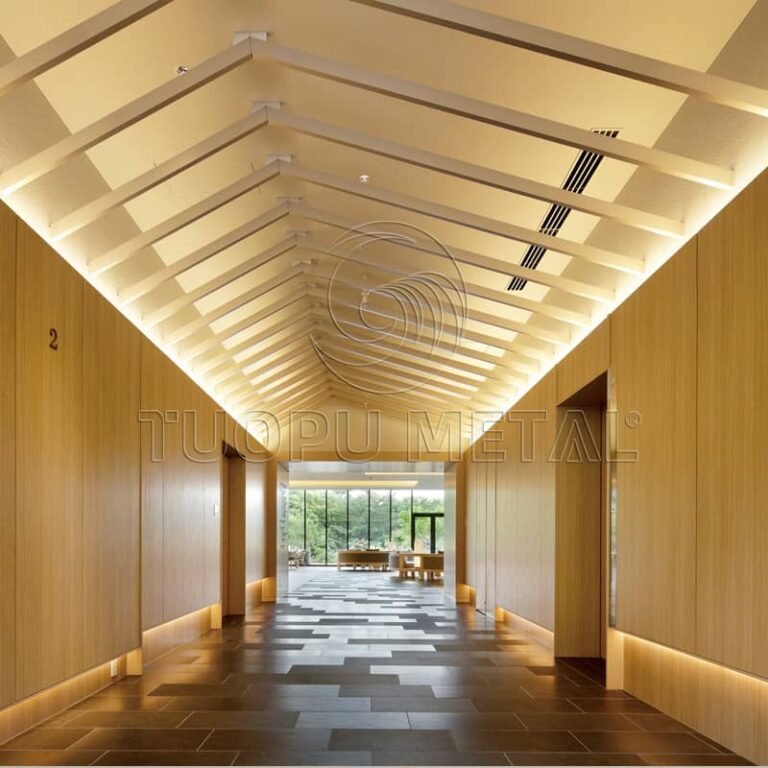
The smooth, rigid surface of aluminum honeycomb panels makes them an ideal substrate for mounted signage, directional panels, and digital display frames. Their lightweight nature simplifies overhead悬挂 installations, and the core structure resists warping that can affect print quality over time. Panels are typically finished in powder coating or wood-grain transfer for warmer aesthetic applications.
4. Partition and Mezzanine Balustrade Panels
Multi-level station designs often incorporate honeycomb panels for mezzanine balustrades, platform edge screens, and interior partition walls. The panels provide visual separation while maintaining sightlines essential for security monitoring. Higher-security installations may specify reinforced configurations to meet anti-climb and anti-cut requirements in high-traffic environments.
5. Platform Canopies and Shelter Elements
Exterior platform canopies and passenger shelters use honeycomb panels for roof decking and side cladding. The combination of low weight and high stiffness allows longer unsupported spans, reducing the number of support columns and preserving open platform space. Solar-ready mounting interfaces can also be integrated into canopy panel designs.
Comparison: Aluminum Honeycomb Panel vs. Alternative Materials
| Property | Aluminum Honeycomb Panel | Solid Aluminum Sheet | Aluminum Composite Panel (ACP) |
|---|---|---|---|
| Weight (typical) | Lightweight — core reduces mass significantly | Heavier for equivalent stiffness | Light, but core material varies by type |
| Fire rating | A2-grade non-combustible options available | Non-combustible | Varies — standard cores are combustible; fire-rated variants exist |
| Flatness retention | Excellent — honeycomb core resists thermal expansion distortion | Good, but thicker gauges required | Prone to bowing over time, especially in exterior applications |
| Acoustic performance | Can be engineered with perforation and backing for NRC 0.85+ | Reflective — requires separate acoustic treatment | Limited inherent acoustic benefit |
| Recyclability | 100% recyclable aluminum | 100% recyclable | Depends on core composition |
| Design flexibility | Curved, perforated, 3D geometric, and custom patterns available | Limited to formed shapes | Mostly flat panels |
| Typical coating warranty | 20–30 years depending on finish system | 20–30 years depending on finish system | Varies by manufacturer and coating |
Specification Guidance for Architects and Specifiers
When specifying aluminum honeycomb panels for train station projects, the following parameters should be addressed to ensure compliance and long-term performance:
- Alloy and temper: 6063-T5 or 6063-T6 is standard for architectural applications, providing a reliable balance of strength and formability.
- Panel thickness: Typical thicknesses range from 10 mm to 50 mm depending on span requirements and load conditions.
- Face sheet gauge: Common facing thicknesses are 0.5 mm to 1.0 mm aluminum alloy on each side.
- Core density: Typical honeycomb core densities range from 40 kg/m³ to 60 kg/m³, affecting stiffness and impact resistance.
- Surface finish: Powder coating (60–80 microns), anodizing (15–25 microns), or PVDF (25–30 microns) are the primary options, each with different maintenance and aesthetic profiles.
- Fire classification: Specify A2-s1,d0 or equivalent for enclosed station environments where non-combustible construction is mandated.
- Acoustic configuration: For ceiling applications in high-noise concourses, specify perforated facing with mineral wool or foam backing to achieve target NRC values.
- Certifications: Verify CE marking for European projects, SGS testing reports for material compliance, and ISO 9001 certification of the manufacturing facility.
Project Delivery and Customization
FstopMetal supports custom engineering for transit projects, including non-standard panel dimensions, custom curvature radii, integrated mounting interfaces, and specialized color matching. Standard products typically ship within 15–30 days, while custom-engineered projects require 30–60 days depending on complexity. Technical support and installation guidance are provided for international projects. The company’s facility in Foshan, Guangdong, China, operates under ISO 9001 quality management standards and holds CE and SGS certifications, with exports to 36+ countries.
Frequently Asked Questions
What fire rating do aluminum honeycomb panels carry for station applications?
A2-grade non-combustible options are available, meeting European fire classification standards for enclosed public buildings. Specific fire rating requirements should be confirmed against the local building code applicable to the project.
Can aluminum honeycomb panels be used for curved station ceilings?
Yes. Custom curvature is available, with radii tailored to the architectural design. The honeycomb core maintains structural integrity even when formed, making it suitable for sweeping concourse ceilings and arched platform canopies.
What is the typical lifespan of aluminum honeycomb panels in a train station environment?
With appropriate coating selection, typical service life ranges from 25 to 50 years. PVDF-coated panels offer the longest color retention, while powder-coated and anodized finishes provide proven durability in interior and exterior station applications.
Do aluminum honeycomb panels meet acoustic requirements for busy station concourses?
When specified with perforated facings and acoustic backing materials, typical NRC values can reach 0.85+, making them suitable for environments where noise reduction and speech intelligibility are critical.
What certifications should specifiers verify when sourcing aluminum honeycomb panels?
Specifiers should verify ISO 9001 for quality management, CE marking for European market compliance, and SGS testing reports for material and performance validation. EPD documentation is available for projects requiring environmental product declarations.