


Aluminum honeycomb panel cost is driven primarily by core thickness, surface treatment type, panel dimensions, and order volume. Unlike solid aluminum sheets, honeycomb panels command a premium due to their superior strength-to-weight ratio and engineering complexity, but they deliver lower total installed cost through reduced structural support requirements and faster installation.
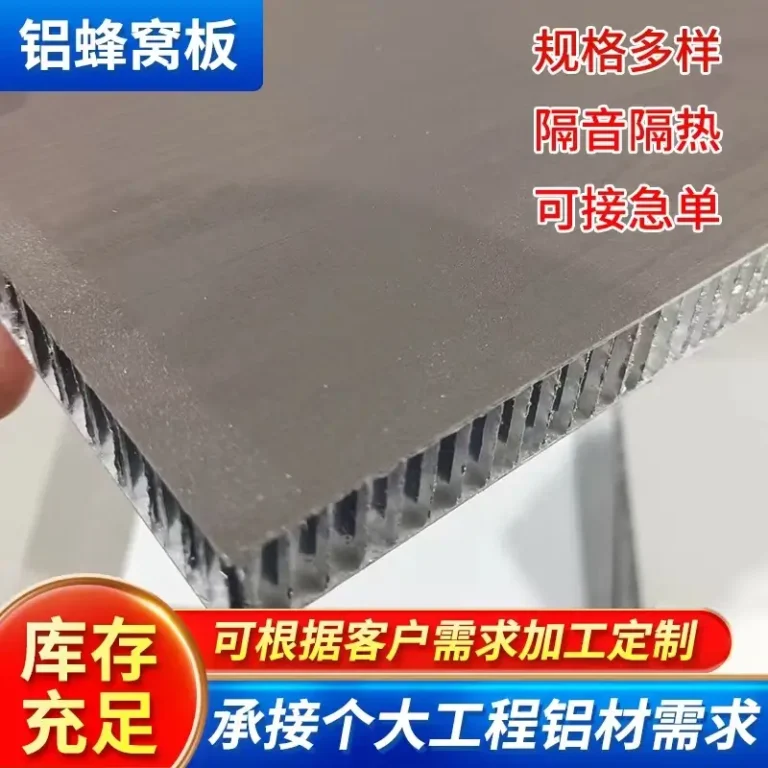
What Are Aluminum Honeycomb Panels and Where Are They Specified?
Aluminum honeycomb panels consist of two thin aluminum face sheets bonded to a hexagonal aluminum core structure, creating an ultra-lightweight yet rigid sandwich panel. The core is typically manufactured from 3003 or 5052 aluminum alloy foil, expanded and bonded into the characteristic hexagonal matrix that gives these panels their exceptional stiffness relative to their weight. This construction philosophy mirrors the principles behind FstopMetal’s custom honeycomb ceiling solutions, which are listed among the bespoke design capabilities alongside 3D geometric patterns.
These panels are specified across a broad spectrum of architectural and industrial applications. In facade systems, they serve as high-performance cladding for commercial and institutional buildings where weight reduction is critical. Interior applications include suspended ceilings, partition walls, and display systems. Transportation sectors such as rail, marine, and aerospace also rely on aluminum honeycomb panels for their combination of light weight and structural integrity. The panels are available with a range of surface treatments including powder coating, PVDF fluorocarbon finishes, and anodizing, each affecting both performance and cost.
Key Cost Drivers for Aluminum Honeycomb Panels
Understanding what influences pricing helps architects and procurement managers make informed specification decisions. The primary cost drivers are outlined below.
Core Thickness and Panel Dimensions
The overall panel thickness, which directly correlates with the honeycomb core depth, is the most significant cost factor. Common thicknesses range from 20 mm to 100 mm, with thicker panels commanding higher prices due to increased material usage and more complex manufacturing. Standard panel sizes also affect cost efficiency — panels cut to non-standard dimensions generate more scrap and require additional handling, increasing the unit cost. Typical panel widths range from 600 mm to 1,200 mm, with lengths extending up to 3,000 mm or more depending on the manufacturing capability.
Face Sheet Material and Gauge
The aluminum alloy grade and thickness of the face sheets influence both mechanical performance and price. 3003-H14 is the most common alloy for architectural applications, offering good formability and corrosion resistance. Face sheet gauges typically range from 0.5 mm to 1.5 mm, with thicker skins providing greater impact resistance and stiffness at a proportionally higher cost. The再生铝 content in the face sheets can reach up to 75%, which may affect pricing depending on recycled aluminum market conditions.
Surface Treatment Selection
The chosen finish significantly impacts both durability and cost. Powder coating, applied at 60 to 80 microns, offers a 25- to 30-year warranty and is the most cost-effective option for most architectural applications. PVDF (Kynar 500) coating, applied at 25 to 30 microns, provides superior color retention and chalk resistance with a 30-year warranty, making it the preferred choice for high-exposure facades but at a higher price point. Anodizing, at 15 to 25 microns, delivers a 20+ year warranty and is suited for interior applications where a metallic finish is desired. Wood grain transfers are available as a decorative option with a 20-year warranty.
Fire Rating Requirements
Fire performance is a critical specification that directly affects cost. A2-class non-combustible cores are available for applications requiring the highest fire safety standards, particularly in Europe under EN 13501-1 classification. Panels with fire-resistant cores and additional fire-rated face sheet treatments carry a premium over standard configurations. For curtain wall applications, 1- to 2-hour fire-rated assemblies are available as optional configurations.
Order Volume and Project Scale
Production efficiency improves substantially with larger order volumes. Standard products typically ship within 15 to 30 days, while custom projects requiring specialized configurations may take 30 to 60 days depending on complexity. Larger orders benefit from optimized production runs, reduced per-unit setup costs, and more favorable logistics arrangements. FstopMetal, operating since 2003 from a 15,000 m² facility in Foshan, Guangdong, China, supports projects across 36+ countries with customization capabilities built on over 20 years of manufacturing experience.
Specification-to-Cost Comparison
The table below illustrates how different specification combinations affect relative cost positioning. No absolute pricing is provided, as costs vary by project scope, market conditions, and specific requirements.
| Specification Level | Core Thickness | Face Sheet | Surface Treatment | Fire Rating | Relative Cost Position |
|---|---|---|---|---|---|
| Entry | 20–30 mm | 0.5 mm 3003-H14 | Powder coating | Standard | Baseline |
| Standard | 40–50 mm | 0.7 mm 3003-H14 | Powder coating | Standard | +15–25% |
| Premium | 50–75 mm | 1.0 mm 3003-H14 | PVDF (Kynar 500) | Standard | +35–50% |
| High Performance | 75–100 mm | 1.5 mm 3003-H14 | PVDF (Kynar 500) | A2 / Fire-rated | +60–80% |
Value Engineering: Reducing Cost Without Compromising Performance
Smart specification choices can reduce aluminum honeycomb panel costs while maintaining or even improving project outcomes. Selecting the minimum core thickness that satisfies structural requirements avoids over-specification. Powder coating is often sufficient for interior applications and sheltered facades, eliminating the premium associated with PVDF finishes. Standard panel sizes minimize waste and production time compared to custom-cut dimensions. Considering the full lifecycle cost rather than upfront material cost is essential — honeycomb panels reduce structural support requirements, lower transportation costs due to their lightweight nature, and can decrease installation time, all of which contribute to a lower total project cost.
The low U-values achievable with honeycomb panel assemblies, as low as 0.8 W/m²K in comparable insulated panel systems, also contribute to operational energy savings over the building lifecycle. With service lives of 25 to 50 years depending on the surface treatment and environmental exposure, aluminum honeycomb panels represent a durable investment that maintains performance well beyond the initial specification period.
Frequently Asked Questions
What is the typical lead time for aluminum honeycomb panels?
Standard products typically ship within 15 to 30 days. Custom projects requiring specialized configurations, non-standard dimensions, or specific fire ratings may take 30 to 60 days depending on complexity and order volume.
Can aluminum honeycomb panels be customized for specific project requirements?
Yes, customization is a core manufacturing capability. Custom options include non-standard panel dimensions, specific core thicknesses, tailored fire ratings, specialized surface treatments, and integrated features such as mounting points or acoustic backing. Manufacturers with over 20 years of experience can accommodate complex specification requirements.
How do aluminum honeycomb panels compare to solid aluminum panels in terms of cost and performance?
Aluminum honeycomb panels carry a higher per-square-meter material cost than solid aluminum sheets of equivalent thickness. However, they deliver superior stiffness-to-weight ratios, allowing for thinner face sheets and reduced structural support requirements. The lighter weight also reduces transportation and installation costs. When evaluated on a total installed cost basis, honeycomb panels can be competitive or even more economical than solid alternatives, particularly for large-format applications.
What certifications should I look for when specifying aluminum honeycomb panels?
Key certifications include ISO 9001 for quality management systems, CE marking for European market compliance, and SGS certification for independent quality verification. For fire safety, A2-class non-combustible ratings under EN 13501-1 are the highest standard. Environmental Product Declarations (EPD) are available for projects pursuing green building certification. Panels incorporating up to 75% recycled aluminum content support sustainability objectives.
What warranty coverage is typically available for aluminum honeycomb panels?
Warranty periods vary by surface treatment and product configuration. Powder-coated panels typically carry a 25- to 30-year warranty. PVDF-coated panels offer up to a 30-year warranty with excellent color retention. Anodized finishes provide 20+ years of protection. Wood grain transfers carry a 20-year warranty. Core material warranties are also available, and some manufacturers offer extended warranty options for premium specification levels.