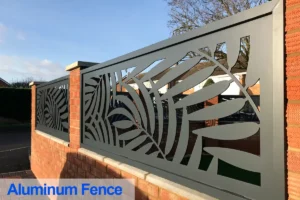
Sourcing aluminum fence panels for a museum atrium requires verifying a supplier’s ISO 9001, CE and SGS certifications, requesting physical material samples, reviewing shop drawings against project tolerances, confirming CNC fabrication capability, and obtaining complete export packing and after-sales documentation before the purchase order is released.
Thank you for reading this post, don't forget to subscribe!What a Museum Atrium Specification Demands from a Fence Panel Supplier
Museum atriums present a distinct procurement challenge: the space combines heavy public foot traffic, high-visibility aesthetics, conservation-grade environmental control and security requirements. An aluminum fence panel installed at atrium level must satisfy the architect’s design intent, meet the local building code and security classification, and perform over the asset’s operational life with minimal maintenance intervention. For a buyer in North America or Europe, that means the supplier must evidence not just product quality but a full traceability chain from raw alloy through surface treatment to installed panel.
FstopMetal, based in Foshan, China, manufactures aluminum fence systems including the A100 classic horizontal-bar series, the B200 decorative series with wrought-iron-inspired detailing, and the C300 high-security series engineered for anti-climb and anti-shear performance. A museum project will typically specify one of these series or a custom variant, and the buyer’s checklist should confirm that the chosen series matches the security and aesthetic requirements before any sample is cut.
- Security classification: Confirm whether the atrium perimeter requires anti-climb geometry or anti-shear reinforcement. The C300 series is specified for the highest security tier; the B200 suits decorative-perimeter zones.
- Alloy and temper: FstopMetal fence panels are fabricated from 6063 or 6063-T5/T6 aluminum. The buyer should verify which temper is proposed and whether the local code accepts it for the intended load and wind conditions.
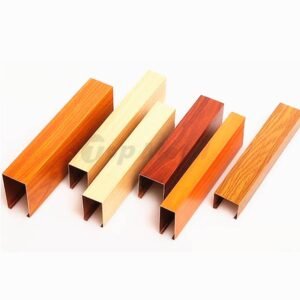
- Surface finish: Available finishes include powder coating at 60–80 microns, anodizing at 15–25 microns, PVDF (Kynar 500) at 25–30 microns, and wood-grain transfer. The atrium’s lighting design and conservation humidity may dictate the most appropriate system.
- Recycled content: FstopMetal offers panels with up to 75 % recycled aluminum. If the museum holds a sustainability charter, request a material declaration confirming the recycled percentage in the batch supplied.
Certifications and Third-Party Test Reports to Request
Before a purchase order is issued, the procurement team should obtain and file the following evidence from the supplier:
| Document | What to Verify |
|---|---|
| ISO 9001 certificate | Quality-management system is maintained and covers the fence series being ordered. Confirm the scope of certification matches the product, not just the company. |
| CE declaration | For European destination projects, confirm the CE mark applies to the specific fence panel model and that the relevant harmonised standard is referenced in the declaration. |
| SGS test reports | Request the latest SGS report covering salt-spray, adhesion and mechanical properties for the chosen surface finish. The report number and date should be legible so the lab can be re-contacted for authenticity. |
| Fire-compliance evidence | Fire-rating requirements vary by jurisdiction. The buyer should confirm with the local authority which classification the atrium envelope must meet, then request the third-party test report from the supplier. Do not rely on a generic “non-combustible” claim without a dated, project-specific report. |
| EPD (if applicable) | If the museum’s sustainability target includes embodied-carbon reporting, ask whether an Environmental Product Declaration is available for the specific alloy and finish combination. |
Ask the supplier to provide original or verifiable copies, not merely a list of certification names. A procurement file that contains only “ISO 9001, CE, SGS” without the corresponding certificates, scope statements and test-report numbers will not survive a contractor audit or a museum governing-board review.
Sample Policy, Shop Drawings and Tolerance Handover
A physical sample is the single most effective quality gate in the sourcing chain. The buyer should request a sample of the exact panel, at the exact finish and color, before approving production. In the sample review, verify:
- Coating thickness and uniformity across the panel face and edges (cross-check against the 60–80 / 15–25 / 25–30 micron ranges stated by the supplier).
- Edge sealing and corner radii—critical in a museum where panels are exposed to handling and cleaning agents.
- Fastener and bracket geometry—confirm that the mounting system is compatible with the atrium’s structural slab and glass-balustrade interface.
Once the sample is approved, the supplier should deliver a full set of shop drawings: panel elevations, section details at every joint, bracket layout, and a tolerance schedule. The buyer’s structural engineer reviews these against the project’s dimensional tolerances (typically ±1 mm for panel width/height and ±0.5 mm for bracket hole spacing on museum-grade installations). FstopMetal’s custom-manufacturing capability means panels can be produced to project-specific dimensions, but the buyer must confirm in writing that the CNC machining and post-fabrication straightness checks are part of the quality plan.
For the C300 or B200 series, request the supplier’s CNC tooling file or at minimum a dimensional inspection report from the last production run. This demonstrates that the tolerance handover between the fabrication shop and the finishing line is controlled, which reduces on-site fitting issues in a high-traffic atrium where rework is costly.
Export Packing, Container Loading and Compliance Documentation
FstopMetal ships to 36+ countries across Asia, the Middle East, Europe, Africa and the Americas. For a museum project, the export logistics checklist includes:
- Corrosion protection in transit: Confirm that panels are wrapped in protective film or kraft paper and separated by corrugated board. The buyer should specify whether the finish is powder-coat, anodized or PVDF, because the packing protocol differs.
- Container loading plan: Request a load diagram showing how panels, brackets and hardware are stacked inside a 20-ft or 40-ft container, with bracing points identified. Over-stacking a coated panel can cause edge chipping.
- Packing list and material declaration: Each container should carry a detailed packing list cross-referenced to the shop-drawing drawing numbers, plus a material test certificate for the alloy batch.
- Customs and import documentation: Confirm that the supplier can provide a commercial invoice, certificate of origin and any product-specific documentation required by the destination country’s customs authority.
Because fire and structural compliance documentation is jurisdiction-specific, the buyer should instruct the supplier to prepare a compliance dossier that mirrors the local code references. The dossier is then handed to the building officer or the museum’s structural consultant for approval before the panels arrive on site.
After-Sales Support and Ongoing Compliance
FstopMetal provides technical support and installation guidance for international projects. For a museum atrium, the buyer should formalise the following in the contract:
- A named after-sales contact and a response-time commitment for on-site or remote technical queries.
- Warranty terms specified per product series and surface finish; the exact warranty scope is agreed in the contract and should be itemised in the annex.
- Lead-time confirmation: delivery depends on specification, surface treatment, order volume and current production scheduling. The buyer should request a dated production schedule and a penalty clause for delay.
- Spare-part and re-order protocol: confirm minimum order quantities for the specific panel and bracket items, and whether the color and finish remain available after the initial project.
If the museum plans future refurbishment or expansion, request that the supplier retain the project’s tooling files and surface-formulation records for a period agreed in the contract, so that replacement panels can be matched without a full re-development cycle.
For project-specific quotations, sample requests or drawing review, contact the sourcing team at TOP METAL & TUORUNDA. Reach Jimmy via WhatsApp at +86-139-2919-8578 or by email at sales2@trdoutdoor.com with the atrium dimensions, security classification and preferred finish.
Frequently Asked Questions
Can FstopMetal produce a custom aluminum fence panel to a museum’s exact atrium dimensions?
Yes. Custom manufacturing is a core capability. The buyer provides the architectural and structural drawings; the supplier confirms feasibility, tolerance limits and a sample plan before production. Project-specific confirmation is required for each custom geometry.
What surface finishes are available for an interior museum atrium environment?
Four systems are offered: powder coating (60–80 microns), anodizing (15–25 microns), PVDF / Kynar 500 (25–30 microns) and wood-grain transfer. The optimal choice depends on the atrium’s lighting, humidity and cleaning-agent specification; the buyer should state these parameters in the project brief so the supplier can recommend the most durable system.
Does FstopMetal hold EPD documentation for its fence panels?
Yes, an Environmental Product Declaration is available for the carbon-neutral aluminum curtain-wall system. For fence panels, the buyer should confirm EPD availability for the specific alloy and finish combination at the quotation stage. Recycled aluminum content can reach 75 %; the exact percentage for a given batch is stated on the material test certificate.
How is fire compliance handled for a museum atrium installation?
Fire-rating requirements vary by jurisdiction. The buyer must identify the local code and the required classification, then request the corresponding third-party test report from the supplier. The report must be dated, project-specific
Talk to Our Team
Planning a project or comparing suppliers? Send us your drawings, panel schedule or quantity list and we will come back with a specification proposal and a budget range for your review.
- Company: TOP METAL & TUORUNDA
- Contact: Jimmy
- WhatsApp: +86-139-2919-8578
- Email: sales2@trdoutdoor.com