The Short Answer
Clip-in aluminum ceiling tile systems are generally better suited for hotel lobbies when long-term aesthetics, moisture resilience, low maintenance, and design flexibility are priorities. Mineral wool ceiling tiles remain a practical choice where upfront budget is tight and baseline acoustic absorption is sufficient. The optimal selection depends on the specific performance profile your project demands.

Acoustic Performance: Hotel Lobby Requirements
Hotel lobbies are high-noise spaces. Guests converse, luggage rolls, doors open and close, and HVAC systems hum continuously. Acoustic comfort directly affects perceived quality and guest satisfaction. Understanding how each system performs under these conditions is essential before specification.
Aluminum Clip-In Ceiling Tile Acoustics
- Perforated aluminum ceiling panels can achieve NRC ratings of 0.85 or higher when combined with appropriate acoustic backing materials such as foam or mineral wool infill.
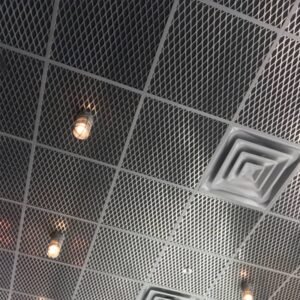
- Open-grid and格栅-style aluminum ceiling systems provide natural air circulation while still contributing to sound management.
- Acoustic performance can be tuned during the design phase by adjusting perforation patterns and selecting suitable backing configurations.
- Solutions such as the AP300 perforated series are engineered for both decorative impact and functional ventilation.
Mineral Wool Ceiling Tile Acoustics
- Mineral wool tiles inherently absorb sound due to their fibrous, porous composition.
- Standard mineral wool ceiling tiles typically deliver moderate NRC values without requiring additional treatment.
- Performance is fixed at the point of manufacture — design-stage customization is limited compared to perforated metal alternatives.
- In highly reverberant lobbies, mineral wool tiles alone may not fully resolve echo issues without supplementary acoustic treatments elsewhere in the space.
Acoustic Comparison
| Attribute | Aluminum Clip-In System | Mineral Wool Tile System |
|---|---|---|
| Baseline acoustic performance | Variable — depends on perforation rate and backing | Inherent — no additional treatment required |
| Maximum achievable NRC | 0.85+ with acoustic backing | Moderate; limited by tile thickness and density |
| Design-stage tuning | Yes — customizable perforation patterns | Limited — fixed product specifications |
| Ventilation compatibility | Open designs support airflow while managing acoustics | Minimal ventilation contribution |
Aesthetics and Design Flexibility
A hotel lobby is the first physical impression guests receive. The ceiling occupies the upper visual field and significantly influences the overall spatial experience. Material choice here carries design weight beyond pure function.
Aluminum Clip-In Ceiling Tile Aesthetics
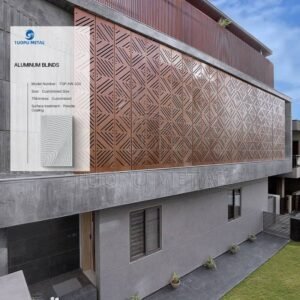
- Available in flat, curved, and custom geometric forms, including蜂窝 and 3D pattern options through the cladding and ceiling product ranges.
- Surface finishes include powder coating, anodizing, wood grain transfer, and PVDF coatings, enabling colors, textures, and metallic effects that match diverse interior design directions.
- Coating thickness ranges such as powder coating at 60–80 microns and PVDF at 25–30 microns provide durable color retention over extended service periods.
- Large panel formats reduce visible grid lines, supporting clean, seamless ceiling planes favored in contemporary luxury interiors.
- Brands such as AP100 for flat panels, AP300 for perforated facades, and G-series pergola components demonstrate the breadth of form-factor options available.
Mineral Wool Ceiling Tile Aesthetics
- Typically limited to standard white or off-white tile surfaces with minimal texture variation.
- Modular grid layouts create visible suspension frameworks that many luxury hospitality designs seek to minimize or conceal.
- Limited color and finish options restrict alignment with bespoke interior palettes.
- Tile edges and seams can become visually dominant over time, particularly as surfaces accumulate wear or discoloration.
Design Comparison
| Attribute | Aluminum Clip-In System | Mineral Wool Tile System |
|---|---|---|
| Finish variety | Powder coat, anodized, PVDF, wood grain, custom | Limited — primarily white |
| Form flexibility | Flat, curved, 3D geometry, honeycomb, parametric | Flat tiles only |
| Grid visibility | Minimal with large-format or concealed clip-in installs | Visible suspension grid typical |
| Bespoke capability | Full design-stage customization available | No customization |
Maintenance, Durability, and Lifecycle Considerations
Hotel lobbies operate continuously. Ceilings are exposed to foot traffic overhead, cleaning regimes, environmental fluctuations, and occasional access for MEP maintenance. Longevity and ease of upkeep materially affect total cost of ownership even though specific pricing figures must be obtained per project.
Aluminum Ceiling Tile Lifecycle
- Aluminum alloys such as 6063-T5 and 6063-T6 provide structural strength suitable for suspended ceiling applications.
- Regenerated aluminum content can reach up to 75%, supporting sustainable procurement criteria and EPD-backed environmental declarations where required.
- Surface coatings resist fading, corrosion, and routine cleaning chemicals common in hospitality environments.
- Individual panels can be removed and reinstalled for access to overhead services without replacing the entire ceiling assembly.
- Regular maintenance frequency is low compared to organic-based ceiling substrates.
- Aluminum is 100% recyclable at end of service life.
Mineral Wool Ceiling Tile Lifecycle
- Susceptible to water damage and sagging if exposed to leaks or high humidity environments.
- Surface staining is more likely and difficult to remediate once absorbed into the fibrous matrix.
- Tile replacement is straightforward but creates visible discontinuities when matching aged installations.
- Fire-resistant properties of mineral wool are inherent to the material composition, though actual fire performance classifications must be verified against third-party test reports for each specific installation scenario.
- Fire rating requirements vary by jurisdiction and must be confirmed through appropriate testing documentation rather than assumed.
- Lower initial acquisition cost but potentially shorter effective service life in demanding hospitality conditions.
Maintenance Comparison
| Attribute | Aluminum Clip-In System | Mineral Wool Tile System |
|---|---|---|
| Moisture resistance | High — unsuitable conditions do not degrade the material | Low — water exposure causes sagging and staining |
| Cleaning compatibility | Compatible with standard hospitality cleaning agents | Limited — aggressive cleaning damages fibers |
| Panel accessibility | Individual panels removable for MEP access | Tiles easily lifted but replacement matching degrades over time |
| Recyclability | 100% recyclable aluminum | Limited recyclability pathways |
| Typical maintenance frequency | Low — periodic inspection sufficient | Higher — stain and damage replacement common |
Thermal and Sustainability Profile
Sustainability credentials increasingly influence specification decisions, especially for international hotel brands with corporate ESG commitments. Aluminum ceiling systems offer measurable environmental advantages aligned with green building certification frameworks.
- Up to 75% regenerated aluminum content reduces primary material extraction impacts.
- EPD certification is available for carbon-neutral aluminum curtain wall and cladding systems, providing transparent lifecycle emission data for LEED, BREEAM, and similar assessment tools.
- Low U-value performance contributes to reduced building energy consumption when integrated into façade and lobby envelope systems.
- Full recyclability at end of life supports circular economy objectives and responsible sourcing documentation required by many international hospitality operators.
- Mineral wool also contains recycled content and is itself recyclable, but the overall sustainability profile of aluminum systems benefits from superior durability and removability in retrofit scenarios.
When to Specify Each System
- Specify aluminum clip-in ceiling tiles when: the project prioritizes design expression, requires customized forms or finishes, operates in humid or variable-climate conditions, demands easy MEP access, and targets long service life with minimal replacement cycles.
- Consider mineral wool ceiling tiles when: budget constraints are decisive, acoustic performance requirements are modest, the ceiling plane is largely hidden from guest sightlines, and rapid standard installation is preferred over bespoke engineering.
Project confirmation with the supplier is recommended to validate performance claims, coating selections, and acoustic configurations against the specific lobby environment and local code requirements.
Get in Touch for Project-Specific Guidance
For detailed product specifications, acoustic configuration options, finish samples, and project quotations tailored to your hotel lobby scope, contact TOP METAL & TUORUNDA. Reach Jimmy via WhatsApp at +86-139-2919-8578 or by email at sales2@trdoutdoor.com.
Frequently Asked Questions
Can aluminum clip-in ceiling tiles meet hotel lobby acoustic requirements?
Yes. Perforated aluminum ceiling panels paired with acoustic backing materials such as foam or mineral wool infill can achieve NRC ratings of 0.85 or higher. The specific configuration should be selected based on the lobby’s noise profile and reverberation targets.
Do aluminum ceiling tiles require more maintenance than mineral wool tiles in hotel lobbies?
No. Aluminum clip-in ceiling systems typically require lower maintenance than mineral wool alternatives. They resist moisture damage, tolerate routine hospitality cleaning agents, and individual panels can be replaced without disturbing adjacent installations.
Is mineral wool ceiling tile suitable for high-humidity hotel lobby environments?
Mineral wool tiles are susceptible to water damage and sagging when exposed to moisture. In high-humidity or climate-variable lobby environments, aluminum ceiling systems offer greater dimensional stability and long-term performance reliability.
What certifications apply to aluminum ceiling systems supplied from Foshan?
FstopMetal products are supported by ISO 9001 quality management certification, CE marking for European market compliance, and SGS verification. EPD certification is available for selected carbon-neutral aluminum product lines. Fire performance must be verified against third-party test reports specific to the chosen configuration and project jurisdiction.
How does the cost of aluminum clip-in ceiling tiles compare to mineral wool ceiling tiles?
Initial material costs for aluminum clip-in systems are typically higher than mineral wool tiles. However, aluminum systems often deliver stronger lifecycle value through lower maintenance frequency, easier service access, design durability, and full recyclability. Exact cost parameters depend on finish selection, perforation specification, acoustic backing, and order volume — contact TOP METAL & TUORUNDA for a project-specific comparison quotation.
Talk to Our Team
Planning a project or comparing suppliers? Send us your drawings, panel schedule or quantity list and we will come back with a specification proposal and a budget range for your review.
- Company: TOP METAL & TUORUNDA
- Contact: Jimmy
- WhatsApp: +86-139-2919-8578
- Email: sales2@trdoutdoor.com