Direct Answer
Aluminum curtain wall panels are widely specified for museum atriums because they combine large-span structural performance, design flexibility for dramatic geometries, and sustainable material credentials. FstopMetal’s AP Series—available in solid, perforated, curved, and BIPV configurations—offers architects a modular toolkit for luminous, low-maintenance atrium envelopes that comply with CE and SGS standards and export to more than 36 countries.
Thank you for reading this post, don't forget to subscribe!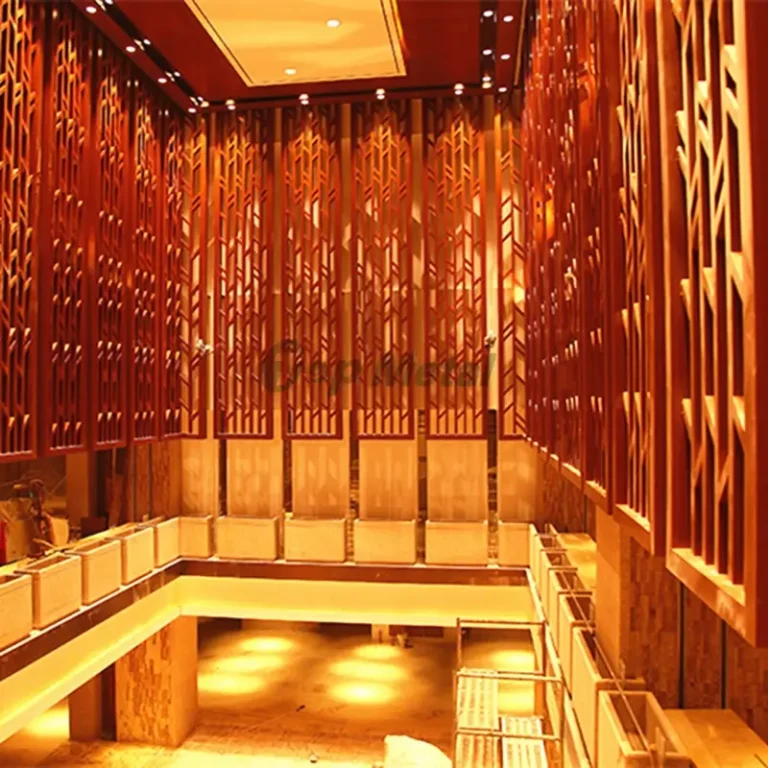
Why Museum Atriums Demand High-Performance Curtain Walls
Museum atriums occupy a unique position in building design. They serve as transitional thresholds between public circulation and curated gallery spaces, which means the facade system behind them must perform on multiple fronts simultaneously: daylight control, thermal insulation, acoustic separation, structural resilience, and aesthetic impact. Aluminum curtain wall panels have become a preferred solution for these environments for several reasons.
- Scale and span capability: Large-format panels reduce joint density across expansive atrium elevations, delivering cleaner sightlines and fewer maintenance access points compared to traditional framing systems.
- Design adaptability: Curved, perforated, and faceted panel configurations allow architects to translate parametric drawings into built form without resorting to custom glass fabrication alone.
- Weight advantage: Aluminum’s strength-to-weight ratio reduces dead load on supporting structures, an important factor when retrofitting historic buildings or working with long-span roof trusses common in atrium designs.
- Sustainability alignment: Museums increasingly prioritize embodied carbon reporting. Aluminum panels can incorporate up to 75% recycled content and carry Environmental Product Declaration (EPD) documentation upon request.
Key Application Scenarios Within Museum Atriums
Skyline Façade Elevation
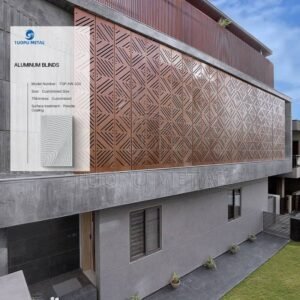
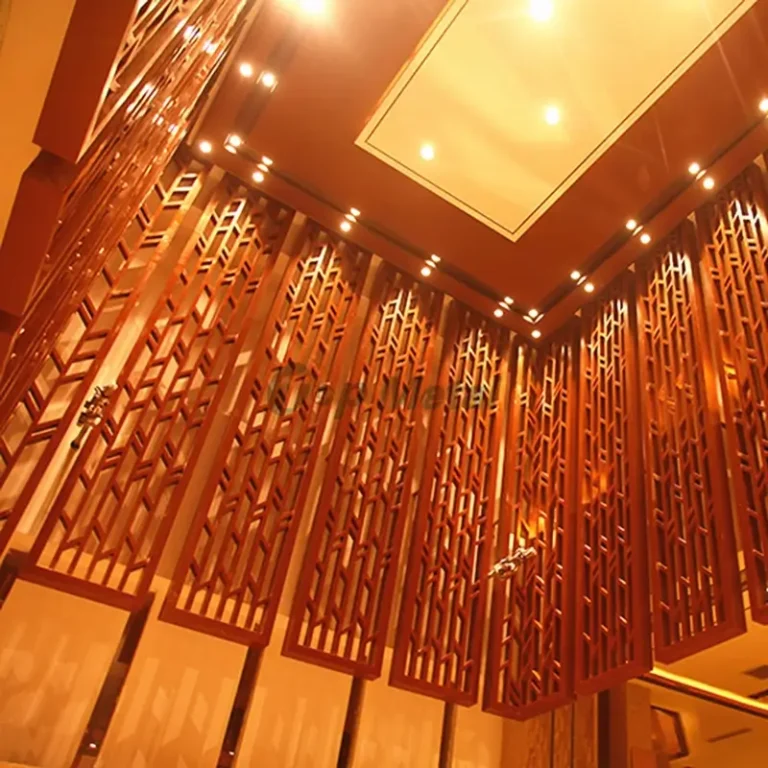
The most visible application is the upper atrium elevation—the tall vertical surface beneath the roof lantern or skylight. Solid AP Series panels here act as a solar-screening layer that moderates interior light levels while maintaining the sculptural presence expected of cultural institutions. Perforated variants introduce additional visual permeability, allowing visitors inside to perceive exterior changes in sky condition without full glazing exposure.
Parametric Canopy and Overhang Systems
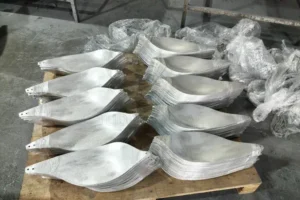
Many contemporary museum designs feature cantilevered canopy elements at the atrium entrance or along the upper perimeter. The AP200 curved panel line is purpose-built for radius-customized installations where the panel forms part of a flowing, non-linear geometry. This eliminates the need for segmented flat panels at joints and produces a seamless architectural expression.
BIPV-Integrated Atrium Screens
Buildings pursuing net-zero operational targets often integrate Building-Integrated Photovoltaics into atrium screening elements. FstopMetal’s BIPV aluminum curtain wall panels enable solar generation within the façade itself rather than treating photovoltaics as an add-on component. This approach preserves the intended aesthetic while contributing to the building’s energy balance.
Acoustic Buffer Zones
Atriums adjacent to exhibition halls benefit from the acoustic damping properties achievable through perforated panel assemblies combined with mineral wool or foam backing. Noise from public gathering areas can be attenuated before reaching sensitive gallery environments. NRC ratings up to 0.85+ are achievable with appropriate infill configurations.
Comparative Analysis: Solid vs. Perforated vs. Curved Panels
| Attribute | AP Series Solid Panel | AP300 Perforated Panel | AP200 Curved Panel |
|---|---|---|---|
| Primary use | Full envelope coverage | Screening / ventilation | Curvilinear geometries |
| Ventilation rate | Non-ventilated | Adjustable via hole pattern | Variable by design |
| Optical effect | Opaque, monolithic surface | Dappled light transmission | Continuous form without joints |
| Structural span | High rigidity option | Medium duty | Custom-engineered per radius |
| Fire compliance note | Fire rating requirements vary by jurisdiction; must be verified against a third-party test report relevant to the project location before specification. | ||
| Surface finish options | Powder coating, anodizing, PVDF, wood-grain transfer — thickness values per process specifications; warranty scope subject to contract terms. | ||
Specification Considerations for Architects and Specifiers
Thermal Performance Targets
U-values as low as 0.8 W/m²K are achievable with integrated insulated cavity construction, which reduces heating and cooling loads in climate-sensitive museum environments. Specifiers should align thermal performance targets with local code requirements and the museum’s climate control priorities for artifact preservation.
Surface Finish Selection
| Finish Type | Typical Thickness Range | Ideal Application Context |
|---|---|---|
| Powder Coating | 60–80 microns | General exterior exposure, broad color range |
| Anodizing | 15–25 microns | Natural metallic aesthetics, high abrasion resistance |
| PVDF (Kynar 500) | 25–30 microns | High UV exposure environments, long-term color retention |
| Wood Grain Transfer | Standard | Biophilic design integration, warm-tone facades |
Warranty duration for each finish should be confirmed at the time of procurement. Surface selection also affects cost structure—PVDF finishes carry a premium over powder-coated alternatives, while anodized options fall between the two depending on alloy temper and post-treatment requirements.
Recycled Content and EPD Reporting
For projects pursuing LEED, BREEAM, or similar sustainability certifications, the availability of recycled aluminum content data and EPD documentation is critical. Panels incorporating up to 75% recycled aluminum can contribute toward materials and resources credit pathways. Confirm EPD availability with the supplier prior to specification to avoid late-stage substitution issues.
Panel System Integration
Unitized curtain wall systems offer factory-pre装配 advantages that can reduce on-site installation time significantly compared to stick-system approaches. For museum atrium projects with tight program schedules, unitized solutions provide predictable quality control since finishing operations occur in a controlled manufacturing environment rather than at height on scaffolding.
Why FstopMetal Is a Viable Source for Museum Projects
FstopMetal operates from Foshan, Guangdong, China, and supplies aluminum curtain wall systems, metal ceilings, fencing, pergolas, and custom cladding to clients across 36+ countries. The company holds ISO 9001, CE, and SGS certifications. Custom manufacturing capability—including radius customization for curved panels, bespoke perforation patterns, and BIPV integration—is available as a core competency rather than an afterthought.
Material options include 6063 and 6063-T5/T6 tempers, selected based on structural span requirements and finish compatibility. All product specifications, including fire performance classification, should be verified through project-specific third-party testing reports aligned with the jurisdictional authority having jurisdiction.
Cost Drivers and Specification Trade-offs
When evaluating aluminum curtain wall panels for a museum atrium, budget considerations center on several interdependent variables rather than a single unit price. Key drivers include panel thickness and gauge selection, surface finish type and micron thickness, degree of geometric complexity (flat panels are more economical than double-curved forms), inclusion of BIPV integration, and order volume relative to factory scheduling capacity. Specifiers can achieve meaningful cost optimization by standardizing panel dimensions across repetitive facade zones and reserving custom profiles for focal architectural features where design intent demands distinction.
Frequently Asked Questions
What aluminum alloy grades are used for museum curtain wall panels?
FstopMetal primarily specifies 6063 aluminum alloy in T5 or T6 tempers for curtain wall applications. These tempers provide the required yield strength for large-span panel performance while remaining compatible with all major surface finishing processes. Material selection should be finalized during the shop-drawing phase based on engineered load calculations for the specific atrium elevation.
Can perforated aluminum panels meet museum daylighting requirements?
Perforated AP300 panels are designed to balance daylight penetration with solar heat gain reduction. The perforation rate and pattern can be tuned to achieve desired visible light transmittance values. Acoustic backing materials may also be incorporated within the panel cavity to support noise attenuation between the atrium and adjacent gallery spaces.
How is fire rating compliance determined for aluminum curtain wall assemblies?
Fire rating requirements for curtain wall assemblies vary by jurisdiction and building classification. FstopMetal panels’ fire performance must be verified against a third-party test report relevant to the project’s governing code. Specifiers should request current test documentation and confirm acceptance with the localAuthority Having Jurisdiction (AHJ) before final procurement.
Does FstopMetal offer EPD-certified aluminum panels for green building certification?
Yes. EPD-compliant documentation is available for qualifying panel products.再生铝含量最高可达75%, which supports materials sustainability credits under major green building rating systems. Confirm EPD scope and database registration status at the time of ordering to ensure it meets the specific certification pathway your project is targeting.
What is the minimum order requirement for a custom museum curtain wall project?
Minimum order quantities vary by product series and configuration. Custom perforation patterns, curved radii, and BIPV-integrated panels may carry different procurement thresholds than standard flat stock. Contact TOP METAL & TUORUNDA directly for project-specific quantity guidance and current factory scheduling availability.
Project Inquiry
To discuss specifications, surface finishes, or EPD documentation for your museum atrium curtain wall project, contact TOP METAL & TUORUNDA. Reach out to Jimmy via WhatsApp: +86-139-2919-8578 or email sales2@trdoutdoor.com.
Talk to Our Team
Planning a project or comparing suppliers? Send us your drawings, panel schedule or quantity list and we will come back with a specification proposal and a budget range for your review.
- Company: TOP METAL & TUORUNDA
- Contact: Jimmy
- WhatsApp: +86-139-2919-8578
- Email: sales2@trdoutdoor.com