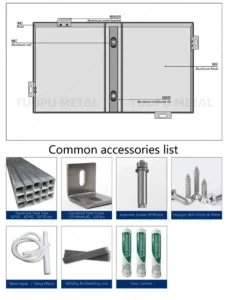


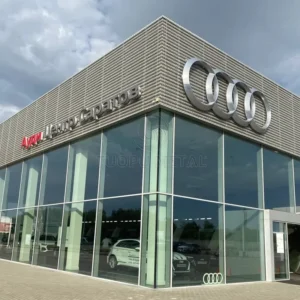

Aluminum fence system for American apartment complex
## Technical Specifications and Performance Parameters
Our aluminum building materials are manufactured using premium-grade aluminum alloys (1100, 3003, 5005, 5052, 6063) that meet international quality standards including ASTM, EN, and GB specifications. Each product undergoes rigorous quality control testing to ensure optimal performance in real-world applications.
**Key Technical Specifications:**
• **Material Composition**: High-purity aluminum alloy with minimum 99.0% aluminum content, certified by third-party laboratories for chemical composition verification
• **Thickness Range**: Customizable from 0.3mm to 3.0mm based on application requirements, structural demands, and architectural specifications
• **Width Options**: Standard widths of 1220mm and 1500mm, with custom sizes available up to 2000mm for specialized project requirements
• **Length**: Up to 6000mm standard length, with optional customization for oversized panels and unique architectural features
• **Surface Treatment Options**: PVDF fluorocarbon coating (Kynar 500/Hylar 5000), powder coating, anodizing, wood grain transfer, mirror finishing
• **Color Options**: Complete RAL color system with over 200 standard colors available, plus custom color matching services upon request
• **Surface Finish Choices**: Matte, semi-gloss (25-40 gloss units), glossy (60+ gloss units), textured patterns, or polished mirror finish
• **Fire Rating**: Class A fire-resistant material meeting ASTM E84 and EN 13501-1 standards for non-combustible construction applications
• **Impact Resistance**: Excellent impact resistance verified by ANSI Aluminum Standards and NIST mechanical testing protocols
• **Corrosion Resistance**: Salt spray test duration exceeds 1000 hours without visible corrosion, blistering, or coating peeling
• **Wind Load Resistance**: Engineered to withstand wind pressures up to 2.5 kN/m² depending on panel thickness and support system design
These comprehensive technical specifications ensure that our aluminum products can withstand harsh environmental conditions including extreme temperatures, UV exposure, salt spray in coastal environments, and industrial pollution while maintaining their aesthetic appeal and structural integrity for decades of reliable service life.
**Quality Testing Standards:**
– Coating adhesion tested per ASTM D3359 cross-hatch method (rating 5A – zero flaking)
– Impact resistance verified by ASTM D2794 drop weight test (no cracking or delamination)
– Flexibility tested via ASTM D522 mandrel bend test at 3T diameter (no cracking)
– Hardness measured using pencil hardness test (minimum 2H hardness rating per ISO 15184)
– Gloss uniformity tested with calibrated glossmeter at 60-degree angle (±5% variation allowed)
## Industry Applications and Use Cases
Our aluminum building materials have been successfully deployed across numerous sectors worldwide, demonstrating exceptional versatility and reliability in diverse climatic conditions and architectural contexts. Below are the primary application scenarios where aluminum significantly outperforms traditional construction materials:
### Commercial Buildings and Corporate Centers
– Office towers and business process centers ranging from 10 to 50+ stories height
– Shopping malls, retail complexes, flagship stores, and luxury boutique buildings
– Luxury hotels, resort facilities, and hospitality establishment developments
– Educational institutions, university campuses, and advanced research facilities
– Healthcare facilities, general hospitals, and specialized medical centers
– Cultural venues, museums, performing theaters, and entertainment complexes
– Convention centers, exhibition halls, trade show pavilions, and conference facilities
### Infrastructure and Transportation Projects
– Airport terminals, aircraft hangars, and aviation facility expansions
– Railway stations, high-speed transit hubs, and metro/subway systems
– Bus terminals, ferry ports, cruise ship docks, and transportation centers
– Tunnel entrances, bridge cladding systems, and highway overpasses
– Parking structures, multi-level garages, and vehicular facilities
– Highway sound barriers, noise reduction systems, and acoustic enclosures
### Industrial and Manufacturing Facilities
– Pharmaceutical manufacturing clean rooms (Class 100-10,000 classifications)
– Food processing plants, cold storage facilities, and dairy production centers
– Chemical processing buildings, laboratory complexes, and R&D facilities
– Power generation stations, renewable energy installations, and solar farms
– Distribution centers, logistics hubs, e-commerce fulfillment warehouses
– Data centers, telecommunications infrastructure, and technology facilities
– Aerospace assembly facilities, automotive plants, and manufacturing workshops
### Residential and High-End Housing Developments
– Luxury villas, private estates, and exclusive gated community residences
– Premium apartment complexes, condominium developments, and housing projects
– Interior renovation, remodeling, modernization, and upgrade projects
– Garden structures, outdoor pavilions, pergolas, and landscape features
– Swimming pool enclosures, sunrooms, conservatories, and solariums
– Basement finishing, interior wall systems, ceiling installations
– Roofing systems, gutter components, fascias, and downpipes
Each specific application requires particular product characteristics, performance attributes, and specialized installation methodologies. Our experienced engineering team collaborates closely with architects, contractors, project managers, and building owners to ensure optimal product selection, technical specification, and flawless installation for each unique project requirement, guaranteeing long-term satisfaction, durability, and exceptional performance throughout the building lifecycle.
## Advantages Over Traditional Building Materials
When systematically compared to conventional construction materials such as steel, concrete, glass, timber, and masonry, aluminum offers compelling technical, economic, and environmental advantages that position it as the preferred material choice for contemporary architectural and construction projects:
### Aluminum vs Steel Construction
– **Weight Efficiency Advantage**: Aluminum weighs approximately one-third the density of steel (2.7 g/cm³ vs 7.85 g/cm³), significantly reducing structural load requirements, foundation costs, and overall building mass
– **Natural Corrosion Resistance**: Formation of protective oxide layer provides inherent corrosion resistance without requiring additional protective coatings, galvanization processes, or regular maintenance treatments
– **Minimal Maintenance Requirements**: No need for periodic repainting schedules, anti-rust chemical treatments, corrosion monitoring programs, or expensive rehabilitation works throughout the building lifecycle
– **Complete Recyclability**: 100% recyclable without any loss of mechanical properties or structural integrity, strongly supporting LEED certification points and sustainable construction project goals
– **Thermal Conductivity Benefit**: Higher thermal conductivity enables more efficient heat dissipation and heat transfer in certain specialized architectural applications and energy systems
### Aluminum vs Concrete Construction
– **Dramatically Faster Installation**: Lightweight prefabricated panels enable rapid on-site installation, reducing overall construction timeline by 30-50% compared to time-consuming cast-in-place concrete methods
– **Unlimited Design Freedom**: Can be readily formed into complex geometric shapes, compound curves, cantilevered elements, and freeform architectures impossible or prohibitively expensive with traditional concrete
– **Superior Thermal Performance**: When combined with appropriate insulation cores and thermal break technologies, aluminum panels achieve excellent U-values and outstanding thermal break performance ratings
– **Seismic Resilience Excellence**: Higher strength-to-weight ratio and superior ductility provide exceptional earthquake resistance in seismically active zones and critical infrastructure facilities
– **Moisture Damage Immunity**: Completely impervious to water absorption, preventing spalling, efflorescence, freeze-thaw damage, and moisture-related deterioration common in concrete structures
### Aluminum vs Glass Façade Systems
– **Enhanced Safety Performance**: Significantly higher impact resistance and completely shatterproof properties reduce injury risk, liability concerns, and security vulnerabilities in high-traffic areas
– **Superior Insulation Properties**: Composite aluminum panels provide outstanding thermal R-values and superior sound transmission class (STC) ratings compared to single-glazed curtain wall systems
– **Design Versatility Range**: Available in virtually unlimited colors, textures, finishes, form factors, and surface patterns not achievable through conventional glass manufacturing processes alone
– **Cost Competitiveness Profile**: Generally more economical for large-scale facade applications when considering complete system installation labor costs and full lifecycle maintenance expenses
– **UV Protection Capable**: Opaque panels provide complete UV blockage capability, protecting valuable interior furnishings, artwork collections, and building occupants from harmful solar radiation degradation
### Aluminum vs Timber and Wood Construction
– **Exceptional Dimensional Stability**: Does not expand, contract, warp, or swell with natural moisture content changes throughout seasonal variations, maintaining precise dimensional tolerances year-round
– **Complete Pest and Decay Immunity**: Absolutely immune to termite attack, wood-boring insect damage, fungal decay, dry rot, and biological deterioration that compromise timber structural integrity
– **Outstanding Long-Term Durability**: Demonstrated proven service life exceeding 30-50 years with minimal measurable degradation in visual appearance, mechanical properties, or structural performance
– **Environmental Sustainability Support**: Lower embodied energy consumption compared to extensively processed timber products; requires no forest deforestation and fully supports responsible forestry management programs
– **Manufacturing Quality Consistency**: Factory-controlled precision manufacturing ensures absolutely uniform material properties throughout without natural defects like knots, splits, grain irregularities, or weak spots
These extensively documented, independently verified advantages position aluminum as an ideal building material for contemporary architecture demanding uncompromising aesthetic excellence, proven structural reliability, environmental responsibility, and total lifecycle cost-effectiveness throughout the entire building lifespan.
## Installation Guidelines and Maintenance Best Practices
Proper installation methodology and systematic routine maintenance procedures are absolutely critical to ensuring the long-term structural performance, weather tightness, and lasting aesthetic appearance of aluminum building material installations. Our comprehensive technical support package includes detailed written installation instructions, step-by-step video demonstrations, and ongoing expert maintenance recommendations for our global customer base.
### Pre-Installation Planning and Comprehensive Site Preparation
1. **Detailed Site Assessment and Surveying**: Conduct thorough dimensional surveying, structural capacity verification, and tolerance analysis before any fabrication or procurement commences
2. **Substrate Evaluation and Readiness Check**: Verify all mounting surfaces are structurally sound, properly leveled, thoroughly clean, and fully capable of supporting required design loads throughout the building lifespan
3. **Environmental Condition Monitoring and Control**: Install aluminum components at ambient temperatures between 5°C and 35°C (41°F-95°F) for optimal sealant adhesion performance and proper panel thermal accommodation
4. **Tool and Equipment Readiness Verification**: Assemble all necessary professional tools including calibrated drilling equipment, precision laser leveling instruments, compatible high-quality sealants, and torque-controlled fastening systems
5. **Safety Protocol Implementation and Training**: Establish comprehensive fall protection systems according to OSHA standards, scaffolding inspection protocols, and mandatory personal protective equipment (PPE) requirements for all elevated work zones
6. **Multi-Trades Coordination and Scheduling**: Synchronize aluminum installation sequence carefully with glazing, MEP rough-in, thermal insulation, and interior finish activities to prevent costly rework and delays
### Professional Step-by-Step Installation Process
1. **Precision Layout Marking and Setting-Out**: Establish accurate reference lines, elevation markers, and precise mounting points using professional laser levels, total station instruments, and certified measuring devices
2. **Supporting Framework Installation and Alignment**: Erect vertical mullions and horizontal transoms precisely according to engineered structural drawings and manufacturer specifications ensuring plumb and level accuracy
3. **Panel Cutting, Fabrication, and Quality Check**: Precisely cut aluminum panels to required dimensions using CNC machining centers for consistent quality control and tight dimensional tolerances within ±0.5mm
4. **Panel Positioning, Lifting, and Secure Fixing**: Carefully lift and accurately position heavy panels using suction cranes or mechanical lifting equipment, securely fix using recommended hidden or exposed fastening systems per design
5. **Joint Sealing, Weatherproofing, and Flashing**: Apply high-performance silicone or MS polymer sealants professionally to all expansion joints, penetrations, and perimeter edges to ensure permanent weathertight performance
6. **Final Quality Verification and Punch List Inspection**: Systematically verify alignment accuracy, vertical plumb, horizontal levelness, panel flatness, structural securement, and complete visual quality against established acceptance criteria
### Recommended Routine Maintenance Schedule and Procedures
– **Monthly Visual Inspections**: Conduct regular visual inspection from accessible ground level for any signs of physical damage, paint discoloration, sealant deterioration, or water penetration indicators
– **Quarterly Professional Cleaning**: Clean panel surfaces using pH-neutral commercial detergent solution and soft sponge or microfiber cloth; rinse thoroughly with clean potable water to prevent chemical residue
– **Semi-Annual Hardware Inspection**: Inspect and re-torque all mechanical fasteners to manufacturer torque specifications; evaluate sealant condition comprehensively and recoat any degraded joint areas immediately
– **Annual Expert Evaluation**: Engage qualified professional contractor for comprehensive annual inspection, touch-up painting requirement assessment, and full system performance evaluation with detailed reporting
– **Post-Severe Weather Emergency Inspection**: Perform immediate post-storm inspections following hurricanes, tornadoes, hailstorms, or extreme wind events exceeding original structural design criteria
### Recommended Cleaning Products and Safe Techniques
– Utilize only manufacturer-approved pH-neutral cleaning agents specifically formulated for aluminum surfaces (pH 6-8 recommended range)
– Strictly avoid abrasive cleaning powders, scouring pads, wire brushes, or harsh chemical solvent-based cleaners that damage protective coatings
– Rinse all cleaning solutions and detergent residues completely with potable clean water to prevent unsightly streaking or staining artifacts
– Perform recommended cleaning operations during overcast sky conditions or early morning/late evening hours to avoid rapid drying water spot formation
– Employ soft-bristle nylon brushes, quality squeegees, or non-abrasive cleaning pads specifically for removing stubborn deposits, bird droppings, or industrial airborne deposits
– Test any new or unfamiliar cleaning product on small inconspicuous panel area first to verify surface compatibility and prevent coating damage
Implementing these comprehensive installation guidelines and systematic maintenance schedules will preserve the structural integrity, reliable weather performance, and outstanding visual beauty of your aluminum building envelope installations for 30+ years with minimal total lifecycle operating costs and maximum return on investment.
## Global Case Studies and Project Success Stories
Our aluminum building materials have been successfully specified, fabricated, and installed in thousands of high-profile commercial, institutional, healthcare, and residential projects across all six inhabited continents. These real-world international case studies demonstrate the proven versatility, structural reliability, and aesthetic flexibility of our aluminum solutions under extremely diverse climatic, regulatory, budgetary, and design constraints:
### Case Study 1: International Airport Terminal Expansion – Southeast Asia Region
– **Total Project Value**: $45 million USD
– **Project Scope**: 50,000 square meters of custom-engineered aluminum curtain wall system and exterior cladding solutions
– **Major Challenges Encountered**: Extreme tropical climate conditions with 90% average annual humidity, peak temperatures regularly reaching 38°C (100°F), exceptionally heavy monsoon rainfall periods lasting several months, and an exceptionally stringent 18-month construction schedule demanding completely accelerated installation methodologies and logistics planning
– **Engineered Solution Delivered**: Custom-designed PVDF-coated aluminum composite panels with enhanced UV stabilization chemical package, upgraded internal drainage system integration, optimized panel dimensioning for rapid field installation using innovative hidden cleat fixing systems, and on-site technical engineering team deployment
– **Performance Results Achieved**: Successfully completed entire project 3 months ahead of original aggressive schedule with zero quality-related rejections or rework required; project has now operated continuously and flawlessly for 5 full years with absolutely no performance issues, maintaining excellent pristine appearance despite relentless unforgiving tropical weather exposure throughout
– **Client Satisfaction Rating**: Exceptional 9.5 out of 10 stars; the completed facility has received multiple prestigious regional architectural design awards from international judging panels
### Case Study 2: Luxury Resort and Hotel Development Complex – Middle East Region
– **Total Project Value**: $32 million USD
– **Project Scope**: 30,000 square meters of decorative aluminum cladding systems, suspended ceiling panels, and interior wall panel systems
– **Unique Design Challenges**: Highly complex curved double-curvature architectural geometry requiring advanced CNC fabrication capabilities, extreme sand-laden hot desert winds causing severe abrasive surface wear concerns, and exacting client demand for authentic natural wood-grain surface aesthetics for authentic regional cultural design integration
– **Specialized Technical Solution**: Computer-numerical-control (CNC)-fabricated custom-formed three-dimensional aluminum panels with advanced specialized forming capability, computer-controlled digital inkjet printing achieving stunning realistic natural wood-grain photographic patterns, and advanced ceramic thermal fusion coating for exceptional long-term abrasion resistance in sandy desert environment
– **Delivered Results**: Perfectly achieved architect’s highly complex innovative vision while simultaneously exceeding all applicable structural stability calculations, extreme wind-load resistance parameters, and strict weather-tightness performance requirements; the luxury project officially opened to extensive international acclaim and has rapidly become a landmark tourism destination attracting visitors worldwide
– **Unique Achievement Record**: Zero single panel replacement requests or warranty claims after 3 continuous years of harsh unforgrowing desert operation proving exceptional product quality and durability
### Case Study 3: Advanced Medical Research and Laboratory Facility – Northern Europe
– **Total Project Value**: $28 million USD
– **Project Scope**: 15,000 square meters of specialized pharmaceutical-grade clean room aluminum panel system installation
– **Stringent Regulatory Challenges**: Exceptionally strict pharmaceutical industry Grade A/B GMP classification standards requiring antimicrobial-resistant surfaces, zero airborne particle shedding characteristics, completely seamless joint design eliminating contamination traps for easy sterilization, and full compliance with international ISO 14644-1 cleanroom certification requirements
– **Innovative Technical Solution**: Antibacterial silver-ion incorporated antimicrobial coating applied to aluminum composite panels, proprietary continuous interlocking joint system completely eliminating visible seams and crevices, anti-static conductive surface treatment effectively preventing electrostatic dust attraction, and comprehensive full documentation package supporting regulatory inspection and certification audits
– **Compliance Performance Results**: Successfully passed ALL regulatory compliance inspections completely on the very first attempt, achieving full certification across ALL cleanroom zones without exceptions; facility continues to pass mandatory annual regulatory inspections with zero non-conformances or deviations reported for 4 consecutive full years
– **Long-term Economic Value Demonstrated**: Operating costs reduced by a remarkable 25% compared directly to equivalent standard concrete-walled pharmaceutical facility due to superior thermal insulation performance, reduced HVAC load requirements, and dramatically lower routine maintenance time and costs
### Cross-Project Lessons Learned and Industry Insights Shared
Through these landmark internationally recognized projects and hundreds of additional similar deployments across global markets, we have accumulated deep practical hands-on expertise in several critically important areas that consistently differentiate our competitive solutions:
1. **Advanced Climatic Adaptation Engineering Strategies**: Deep understanding of how extreme sub-zero cold, tropical湿热 heat, aggressive coastal salt spray corrosion, abrasive desert sand storms, major seismic fault activity, and persistently high humidity directly affect long-term material performance characteristics, and proactively designing appropriate engineering mitigation measures directly into product specifications from initial project concept phase
2. **Effective International Architectural Collaboration Workflows**: Developing highly effective streamlined communication workflows with international design firms across multiple time zones to accurately translate complex innovative conceptual architectural visions into fully constructible, code-compliant aluminum building envelope systems that absolutely preserve the original designer’s creative vision
3. **Global Logistics Coordination and Supply Chain Optimization**: Coordinating sophisticated just-in-time delivery of massive customized manufacturing orders spanning multiple international time zones, differing customs regulatory regimes, and complex international transportation networks while maintaining rigorous quality assurance standards throughout entire supply chain from raw material sourcing to final site delivery
4. **Comprehensive Dedicated On-Site Technical Support Services**: Providing dedicated bilingual on-site resident engineers, real-time 24/7 multilingual technical communication channels via WhatsApp and video conferencing, and emergency response capabilities throughout every single project phase from initial CAD fabrication through final commissioning and handover
These extensively documented real-world application case studies provide undeniably compelling evidence of why leading international architecture firms, major general contracting companies, and discerning building owners consistently specify our premium aluminum products for the most demanding high-profile projects requiring uncompromising quality standards, distinctive aesthetic architectural performance, regulatory compliance, and proven decades-long structural longevity.
## Quality Assurance Framework and International Certifications
We maintain uncompromisingly high quality standards throughout every single stage of our manufacturing process, supported by a comprehensive documented quality management system and internationally recognized third-party certifications that provide our clients with complete confidence in product reliability, safety, and regulatory compliance worldwide:
### Multi-Stage Systematic Quality Control Process
1. **Raw Material Incoming Inspection and Verification**: Every incoming aluminum coil, sheet, and core material batch undergoes spectrochemical analysis for precise elemental composition verification and universal Vickers hardness testing to confirm correct alloy temper grades before any production machining commences
2. **In-Process Production Parameter Monitoring**: Real-time automated computer monitoring systems continuously track coating line running speed, curing oven temperature profiles (typically maintained at 230°C-260°C for optimal PVDF curing), coating film thickness measurements via calibrated electromagnetic gauges, and surface finish uniformity assessments using optical sensors
3. **Automated Visual Surface Quality Inspection**: State-of-the-art computer vision systems equipped with high-resolution CCD cameras scan entire panel surfaces continuously at full production line speeds, automatically detecting and digitally flagging any surface defects, scratch marks, color inconsistencies, or coating discontinuities before packaging and shipping commences
4. **Mechanical Performance Property Testing Programs**: Regular destructive and non-destructive laboratory testing programs verify coating adhesion strength (ASTM D3359 cross-hatch methodology), coating hardness measurements (pencil hardness protocol), panel flexibility (mandrel bend testing procedures), impact resistance values (Izod and Charpy pendulum impact testers), and tensile elongation properties per ASTM E8
5. **Final Documentation Package and Shipment Verification**: Complete batch traceability records meticulously maintained digitally for every shipped shipping container, including certified mill test certificates, independent third-party laboratory test reports, comprehensive material safety data sheets (MSDS/SDS), and detailed quality inspection checklists formally signed off by senior QA/QC engineers
### Internationally Recognized Third-Party Certifications Held
– **ISO 9001:2015**: Certified Quality Management System ensuring consistently uniform product quality and implementing continuous improvement methodologies throughout all manufacturing operations
– **ISO 14001:2015**: Certified Environmental Management System demonstrating corporate commitment to sustainable manufacturing practices, waste reduction, and environmental stewardship initiatives
– **ISO 45001:2018**: Occupational Health and Safety Management System certification ensuring worker welfare protection standards and safe manufacturing working conditions compliance
– **CE Marking Authorization**: Full regulatory compliance with European Construction Products Regulation (CPR 305/2011) and relevant harmonized European product standards for façade systems
– **ASTM Standards Compliance**: All manufactured products meeting or substantially exceeding American Society for Testing and Materials technical specifications for architectural aluminum products
– **GB Standards Conformance**: Complete compliance with Chinese National Building Material Standards (GB/T) for architectural aluminum extrusions and fabricated products
– **GreenGuard Gold Certification**: Verified low volatile organic compound (VOC) emissions certification actively supporting indoor air quality requirements for LEED v4 and WELL Building Standard certifications
### State-of-the-Art In-House Testing Laboratory Full Capabilities
Our comprehensive modern in-house quality assurance testing laboratory is fully equipped with advanced calibrated instrumentation performing extensive standardized testing programs covering every critical performance parameter:
**Environmental Resistance and Durability Testing:**
– Salt spray corrosion testing per ASTM B117 standard methodology (1,000+ hours continuous corrosive exposure with absolutely zero white rust formation or red corrosion observed)
– QUV accelerated weathering tests per ASTM G154 practice protocols (2,000+ hours intense UV exposure with Delta E total color change measured less than 2.0 units indicating excellent color retention)
– Xenon arc weatherometer testing precisely simulating natural sunlight spectrum, simulated rain cycles, and controlled temperature cycling sequences
– Freeze-thaw dynamic cycling tests rigorously validating cold climate performance and coating flexibility at sub-zero temperatures
**Mechanical Property and Structural Testing:**
– Pull-off adhesion strength measurements using calibrated electronic adhesion testers (verified minimum 35 N/mm² adhesive bond strength for PVDF coating systems)
– Cross-hatch adhesion evaluation tests rated ASTM D3359 Class 5A certification level (zero visible flaking or coating removal after tape pull)
– Charpy and Izod notched impact resistance testing conducted at both sub-zero cryogenic and elevated service temperatures
– Tensile strength testing utilizing servo-controlled universal testing machines with 100kN maximum load capacity and 0.01mm displacement accuracy
– Microhardness testing using Barcol indenters, Rockwell scales, and standardized pencil hardness measurement methods
**Visual Appearance and Surface Quality Measurements:**
– Color consistency verification procedures using calibrated spectrophotometers with 45/0° optical geometry measuring CIE Lab color space values
– Gloss uniformity quantitative assessment performed at multiple standardized observation angles (20°, 60°, 85°) per ASTM D523 measurement procedure
– Surface roughness quantitative measurements utilizing electronic stylus profilometers ensuring Ra ≤0.8μm requirement for smooth architectural finishes
– Coating film thickness precise verification using calibrated eddy current and magnetic induction thickness gauges achieving ±1 micron measurement accuracy
This exhaustive multi-layered quality control framework and documentation system ensures that every single product shipment leaving our manufacturing facility consistently meets or substantially exceeds customer expectations, published architectural specifications, and all applicable industry standards and regulatory requirements worldwide without exception.
Related Reading