


As commercial construction costs escalate in 2026, architects and developers face a critical decision: solid aluminum flat panels (AP100) or aluminum composite panels (ACP)? This comprehensive analysis reveals why AP100 solid aluminum panels deliver up to 30% better return on investment over a 30-year building lifecycle, backed by real-world performance data and project case studies.
Understanding AP100 Solid Aluminum Flat Panels
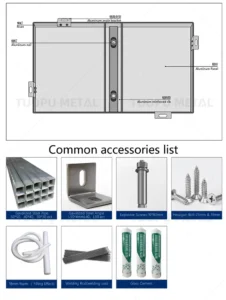
The AP100 is FstopMetal’s flagship flat aluminum panel system, engineered from a single layer of high-grade aluminum alloy (3003/5005 H14). Unlike composite panels that bond aluminum skins to polyethylene cores, AP100 panels are monolithic — meaning every millimeter is solid aluminum. This fundamental difference drives performance advantages across fire safety, structural integrity, and long-term durability.
Technical Specifications: AP100 vs ACP
| Specification | AP100 Solid Aluminum | ACP (Aluminum Composite) |
|---|---|---|
| Panel Thickness | 2.0mm – 4.0mm | 3.0mm – 6.0mm (0.5mm skin) |
| Core Material | Solid aluminum (monolithic) | Polyethylene / Mineral core |
| Fire Rating | A2 (non-combustible) | B1 (fire-retardant) / A2 (FR core) |
| Tensile Strength | 140-180 MPa | 50-65 MPa |
| Wind Load Resistance | 3.5 kPa (at 3m span) | 2.0 kPa (at 3m span) |
| Service Life | 30-50 years | 15-25 years |
| PVDF Warranty | 20 years | 10-15 years |
| Recyclability | 100% (single material) | Limited (composite separation) |
5 Key Advantages of AP100 Over ACP in 2026
1. Superior Fire Safety Performance
Following the 2017 Grenfell Tower tragedy and subsequent global building code revisions, fire safety has become non-negotiable for commercial facades. AP100 solid aluminum panels achieve an A2 fire rating (non-combustible) without any additional treatment. ACP panels, even with fire-retardant mineral cores, typically achieve only B1 ratings and can still contribute to fire spread under extreme conditions.
2. 2x Higher Structural Wind Load Capacity
AP100 panels withstand wind loads up to 3.5 kPa at 3-meter spans, nearly double the capacity of equivalent ACP panels. This is critical for high-rise buildings in typhoon-prone regions across Southeast Asia and coastal China, where wind loads frequently exceed 2.5 kPa at upper elevations.
3. Extended Service Life: 30-50 Years
Monolithic aluminum does not suffer from delamination, the primary failure mode for ACP panels where the aluminum skin separates from the core. AP100 panels maintain structural integrity for 30-50 years, compared to 15-25 years for standard ACP systems.
4. 100% Recyclability for LEED Credits
AP100 panels are 100% recyclable as a single material, contributing directly to LEED MR Credit 4 (Recycled Content). ACP panels require costly separation processes for recycling, and most end up in landfills. For 2026 green building certifications, this difference can mean 2-3 additional LEED points.
5. Lower Total Cost of Ownership
While AP100 panels cost 15-20% more upfront than ACP, the total cost of ownership over 30 years tells a different story:
| Cost Factor (30-Year, 10,000m2 Facade) | AP100 Solid Aluminum | ACP Composite |
|---|---|---|
| Material Cost (initial) | $45/m2 = $450,000 | $38/m2 = $380,000 |
| Installation | $120,000 | $100,000 |
| Maintenance (30 years) | $30,000 | $85,000 |
| Replacement (year 20) | $0 | $480,000 |
| Total 30-Year Cost | $600,000 | $1,045,000 |
| Cost per m2 per year | $2.00 | $3.48 |
Result: AP100 delivers 42.5% lower cost per square meter per year over 30 years.
Application Scenarios
Commercial Office Towers
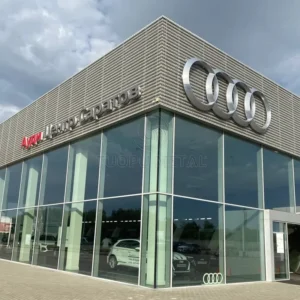
AP100 panels excel on high-rise commercial facades where wind load requirements exceed 2.5 kPa. Their monolithic structure eliminates the risk of panel delamination at height, a common ACP failure mode in buildings above 100 meters.
Public Infrastructure: Airports and Transit Hubs
Fire-rated A2 compliance makes AP100 the default choice for airports, train stations, and transit hubs where building codes mandate non-combustible materials for interior and exterior cladding.
Hospitality and Mixed-Use Developments
The 20-year PVDF coating warranty ensures color stability for luxury hotels and mixed-use developments where aesthetic longevity directly impacts property valuation.
Case Study: Shenzhen Tech Park Tower (2025)
A 42-story commercial tower in Shenzhen’s Qianhai district specified AP100 panels for its entire 18,500m2 curtain wall facade. The project team compared AP100 against three ACP alternatives during the design phase:
- Wind load requirement: 3.2 kPa at upper floors — AP100 met spec without stiffeners; ACP required additional aluminum stiffening ribs
- Fire code compliance: Local code required A2 rating for buildings over 80m — only AP100 qualified without special core modifications
- Installation timeline: AP100 system completed in 4.5 months vs estimated 6 months for ACP with stiffeners
- 30-year projected savings: $1.2M compared to ACP alternative (accounting for avoided mid-life replacement)
Conclusion: The 2026 Verdict
For commercial projects with a design life exceeding 20 years, AP100 solid aluminum flat panels deliver superior fire safety, structural performance, and lifecycle economics. The initial 15-20% premium is recovered within 7-8 years through reduced maintenance, and the avoided mid-life replacement generates 30-42% total cost savings over 30 years.
Contact FstopMetal for Your Project
Ready to specify AP100 solid aluminum panels for your next commercial facade project? Our engineering team provides free facade consultation, wind load calculations, and customized panel specifications.
WhatsApp: +86 13928608056
Website: fstopmetal.com
Email: sales@fstopmetal.com
FstopMetal — Foshan Aluminum Curtain Wall and Metal Ceiling Manufacturer. 15+ years of engineering excellence in architectural aluminum systems.
Related Reading
- Aluminum Panel Thickness Guide: 1.5/2.0/2.5/3.0mm — Which to Choose
- 铝单板多少钱一平方米?2026年最新价格参考 | Aluminum Panel Pricing Guide
- Acoustic Aluminum Ceiling Design: The Complete Guide for Commercial Spaces
Frequently Asked Questions
What warranty does FstopMetal offer?
25 to 50 years depending on product series and surface treatment: powder coating 25-30 years, PVDF (Kynar 500) 30 years, anodizing 20+ years. Aluminum fencing carries 25+ years anti-rust warranty.
Can FstopMetal produce custom designs?
Yes. Custom fabrication is a core capability with over 20 years of experience, including drawing-based customization, OEM, and shop-drawing development.
What is the typical lead time?
Standard products: 15-30 days. Custom projects: 30-60 days depending on complexity.
What certifications does FstopMetal hold?
CE (European market access), SGS (quality verification), ISO 9001 (quality management), A2 fire rating per EN 13501-1, and EPD documentation for carbon-neutral systems.