Direct Answer
When sourcing aluminum fence panels for stadium concourses, buyers should confirm sheet thickness tolerance (typically ±0.15 mm for 2–3 mm plate), flatness deviation (≤2 mm per meter), and angle accuracy of mitered or formed junctions (≤±0.5°). Request third-party test reports covering mechanical properties under ASTM B221 or EN 755, surface coating thickness measured by eddy-current gauge, and a pre-shipment sample approval workflow before authorizing full production.
Why Tolerance Verification Matters on Stadium Concourses
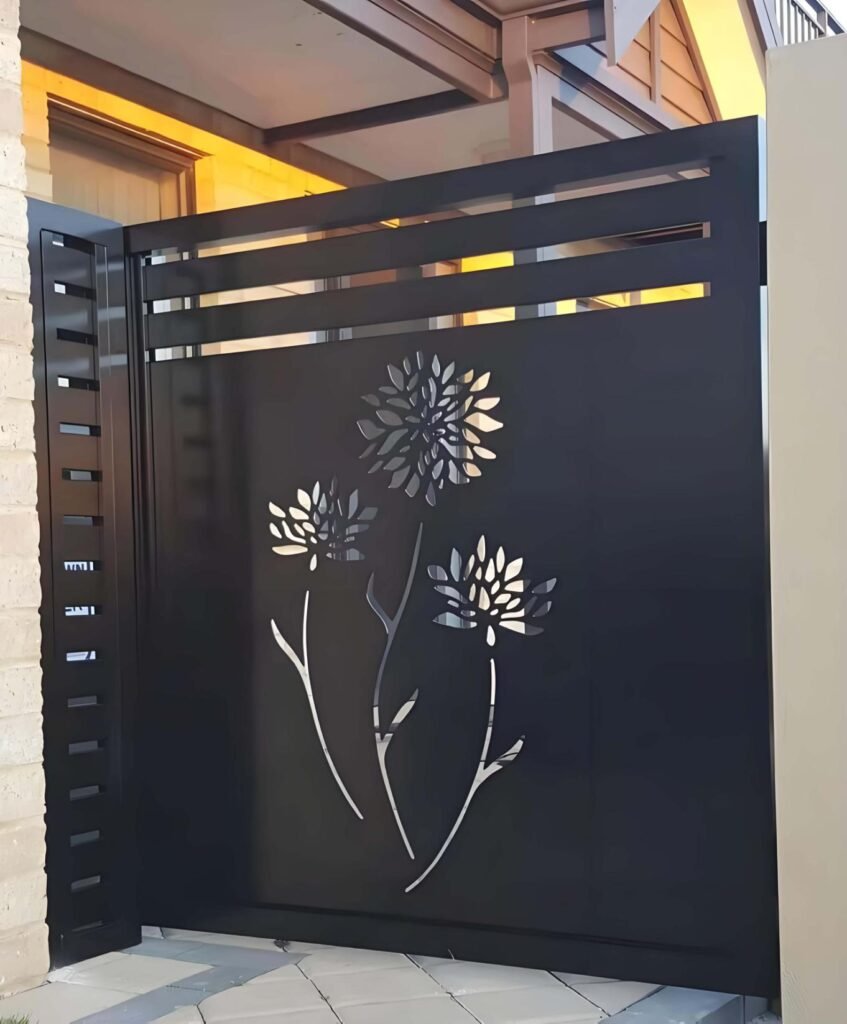
Stadium concourse fencing operates under higher pedestrian impact loads and tighter visual standards than standard commercial facades. Aluminum fence panels must maintain dimensional consistency across large batch runs because panel-to-panel gaps, rail alignment, and post socket locations are all field-sensitive. A supplier that cannot hold consistent tolerances will create on-site rework, delayed handover, and costly field modifications.
Buyers should treat factory tolerance data as a procurement gate, not an afterthought. Below is a practical checklist organized by the specification categories most likely to appear in a stadium concourse tender document.
Checklist: Mechanical and Dimensional Tolerances to Confirm
The following items should be verified against the supplier’s published capability and independent test records before issuing a purchase order.
- Base alloy and tempers: Confirm whether panels are supplied in 6063-T5 or 6063-T6. Both are standard architectural grades; the temper designation directly affects yield strength and formability.
- Sheet/plate thickness tolerance: For nominal thicknesses in the 2–3 mm range commonly used on concourse balustrades, request the mill tolerance band (for example ±0.15 mm) and evidence it is measured per ASTM B209 or EN 485.
- Flatness: Ask for maximum allowable deviation per linear meter—commonly ≤2 mm—and how it is verified during cutting and forming.
- Length and width tolerance: Typical bands are ±1.0 mm for lengths up to 4 m; longer runs require explicit definition.
- Hole position and diameter tolerance: Perforated or fastener-hole layouts should be held to ±0.5 mm to ensure consistent assembly on site.
- Angle and bend tolerance: For formed edges and mitred corners, demand ≤±0.5° to prevent visible misalignment when panels are installed end-to-end along a concourse run.
- Surface Coating thickness: Verify quoted micrometre ranges for each finish type—powder coating at 60–80 µm, anodizing at 15–25 µm, and PVDF at 25–30 µm—and confirm measurement methodology (eddy-current or magnetic induction gauge).
| Tolerance Parameter | Typical Target Range | Reference Standard |
|---|---|---|
| Sheet thickness | ±0.15 mm (2–3 mm plate) | ASTM B209 / EN 485 |
| Flatness | ≤2 mm / m | Supplier declaration + inspection report |
| Length / width | ±1.0 mm (up to 4 m) | Project drawing call-out |
| Hole position | ±0.5 mm | CNC programming record |
| Bend / miter angle | ≤±0.5° | First-article inspection report |
| Powder coat thickness | 60–80 µm | ISO 4624 / supplier QA procedure |
| Anodized layer | 15–25 µm | ASTM B221 compliance check |
| PVDF coating | 25–30 µm | Supplier QA documentation |
Process Capabilities to Evidence Before Ordering
Numeric tolerances mean little without manufacturing processes that can reliably reproduce them. When evaluating FstopMetal or any aluminum fence panel producer for a stadium project, request the following process credentials rather than accepting generic capability statements.
Shop Drawing and CNC Fabrication Control
- Digital shop drawings generated from the project model should include GD&T call-outs that map directly to the tolerance table above.
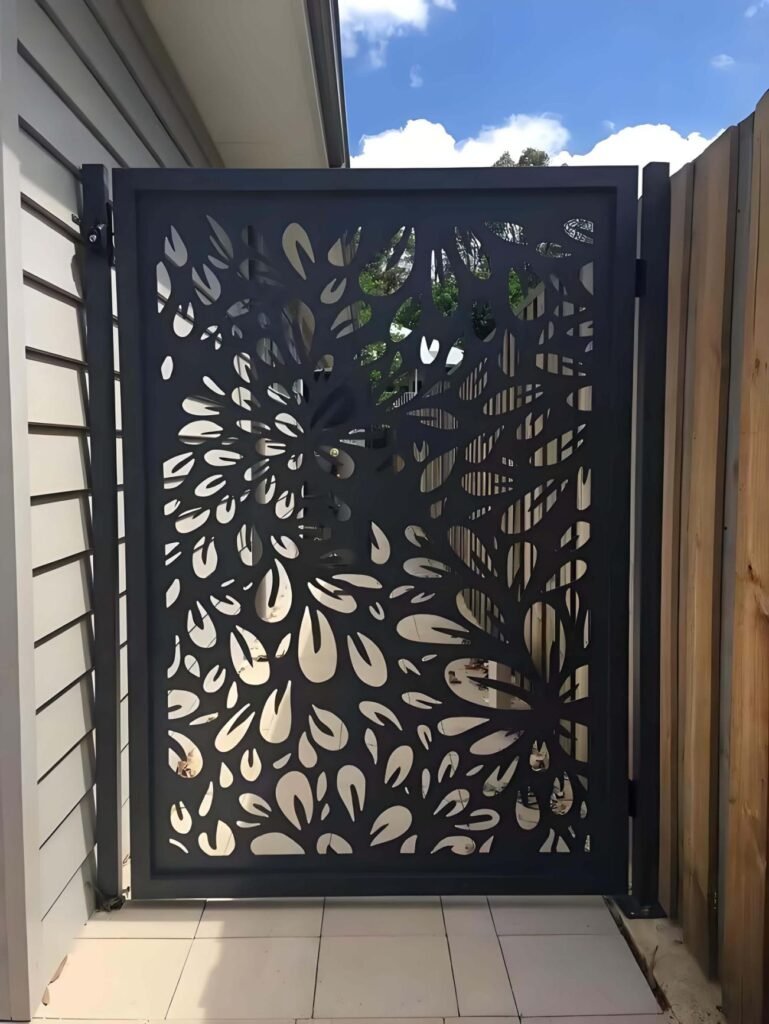
- CNC punching, drilling, and cutting centres should be capable of holding the ±0.5 mm hole-position band consistently across the full panel lot.
- As-built measurement records for the first article of each panel type must be provided before mass production begins.
Surface Treatment Quality Assurance
- Powder coating lines should be equipped with spray trajectory automation and film-thickness monitoring to stay within the 60–80 µm target for coated panels.
- Anodizing baths require regular bath-analysis logs; request the supplier’s control chart intervals.
- PVDF (Kynar 500-based) coatings are specified where long-term colour stability and chalk resistance are critical; confirm the manufacturer and batch traceability of the resin.
- Movement木纹转印 finishes should reference a signed colour match against the approved physical sample panel.
Third-Party Testing and Certification Records
- Request current CE documentation demonstrating conformity with the relevant European product standard for aluminum extrusions and fabricated profiles.
- SGS third-party test reports should cover tensile strength, yield strength, and elongation for the specific alloy and temper being supplied.
- ISO 9001 certification confirms the supplier operates an audited quality management system; ask to see the certificate scope and expiry date during due diligence.
- Fire-rating requirements vary by jurisdiction and must be verified by a third-party report for the exact panel assembly, substrate alloy, and surface finish intended for the concourse application—do not accept a class label without the accompanying test documentation.
Pre-Shipment Verification and Export Packing Checks
A stadium concourse order often spans multiple container loads delivered over several weeks. Consistency across shipments depends on what the supplier verifies before goods leave the factory floor in Foshan.
- Pre-shipment inspection should include random thickness sampling across multiple sheets, flatness checks on representative panels, and coating adhesion testing per the applicable ISO pull-off method.
- Export packing for long fence rails and perforated panels should use crated or corner-protected cartons that prevent edge deformation during ocean transit.
- Container loading plans must specify stacking height limits and dunnage placement so lower-tier panels are not compressed out of tolerance.
- Accompanying documentation should include a material test certificate, coating thickness report, and packing list matched to the shipment number.
If your project requires an environmental product declaration for embodied-carbon reporting, confirm whether FstopMetal can supply EPD-certified panels, since the company indicates carbon-neutral aluminum curtain wall systems carry EPD compliance. This may also extend to ancillary aluminum fence products depending on the specific line and recycled-alloy content, which can reach up to 75 percent for certain series.
Sample Policy and Approval Workflow
Before committing to full-volume production, establish a written sample-and-approval protocol with the supplier.
- Prototype sample: A single full-size panel representing the chosen alloy, temper, finish, and fabrication sequence. This becomes the visual and dimensional baseline.
- Measurement audit: Record thickness at five points, flatness along both diagonals, hole positions against the shop drawing, and coating thickness at three locations per panel face.
- Written sign-off: Both parties should initial the measurement sheet and retained sample. Any deviation from the agreed tolerance band should be documented as a non-conformance before mass production authorization.
- Second-article inspection: For orders exceeding one container, request that the supplier produce and measure a second-article panel midway through the first production run to verify process stability.
For project-specific configuration—whether the stadium calls for C300 high-security anti-climb fence panels, A100 classic horizontal-rail designs, or B200 decorative profiles inspired by forged-iron aesthetics—confirm the supplier’s flexibility to adjust panel geometry, perforation patterns, and mounting hardware layouts while maintaining the declared tolerances.
Contact for Project Confirmation
To obtain current tolerance tables, third-party test reports, and a formal quotation aligned to your stadium concourse specification, contact TOP METAL & TUORUNDA. Reach Jimmy via WhatsApp at +86-139-2919-8578 or email sales2@trdoutdoor.com to discuss alloy selection, surface-finish choice, container load planning, and sample-approval procedures.
Frequently Asked Questions
How do I verify a supplier’s posted tolerance numbers are real?
Ask for current SGS or equivalent third-party test reports and a first-article inspection record signed by the supplier’s quality manager. Cross-check the reported values against the project shop drawing before approving production.
What alloy and temper should I specify for stadium concourse aluminum fence panels?
6063-T5 and 6063-T6 are the standard architectural choices. The factory accepts inquiries for specific projects, and Jimmy at TOP METAL & TUORUNDA can recommend the optimal combination based on required strength, formability, and finish durability.
Can FstopMetal produce custom perforated or curved aluminum fence panels for a stadium design?
Yes. Custom manufacturing is core capability. AP300 perforated panels offer adjustable open-area ratios, and curved or radius variants can be engineered to project drawings. Confirm exact dimensions and hole layouts with the sales team before prototyping.
Which certifications should I require in the tender package?
Request proof of ISO 9001 for quality management, CE documentation for European-market conformity, and SGS test reports covering mechanical properties and coating performance. Fire-compliance documentation should be provided as a third-party report matching local code requirements.
What happens if panels arrive out of tolerance?
A well-run supplier will document deviations in the pre-shipment inspection and propose corrective action—re-work, replacement panels, or adjusted mounting hardware—at its own cost. Obtain the non-conformance handling policy in writing before shipment.
Talk to Our Team
Planning a project or comparing suppliers? Send us your drawings, panel schedule or quantity list and we will come back with a specification proposal and a budget range for your review.
- Company: TOP METAL & TUORUNDA
- Contact: Jimmy
- WhatsApp: +86-139-2919-8578
- Email: sales2@trdoutdoor.com