


Direct Answer
Perforated aluminum panels are widely used in shopping malls for acoustic treatment, decorative facades, ventilation integration, daylight control, and spatial division. The AP300 perforated panel series from FstopMetal offers adjustable perforation rates and multiple surface finish options, making it suitable for high-traffic retail environments that demand both aesthetics and performance.
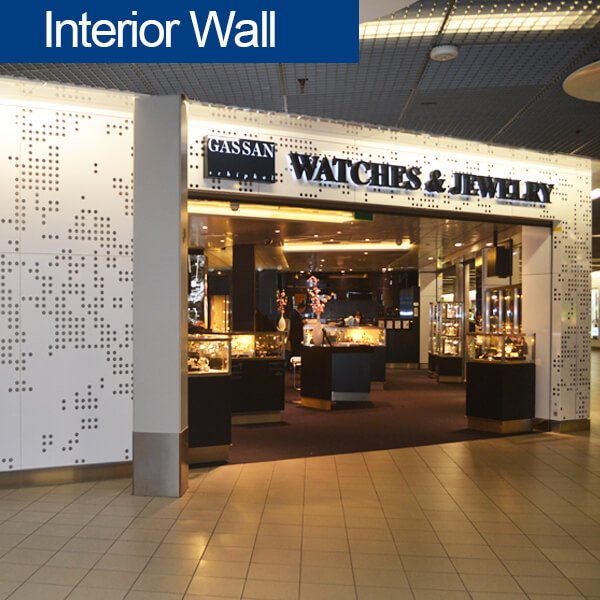
Why Perforated Aluminum Panels Are a Preferred Choice for Shopping Malls
Shopping malls combine large open volumes, high foot traffic, and complex mechanical systems. Perforated aluminum panels address these conditions because they are lightweight, durable, and versatile. The material can be formed into flat or curved panels, and the perforation pattern can be customized to balance visibility, airflow, and acoustic absorption in a single solution.
FstopMetal manufactures perforated aluminum panels from 6063-T5/T6 alloy, a standard architectural-grade material that provides reliable strength and formability. Surface treatments include powder coating, anodizing, and PVDF finishes, each offering different levels of color stability and weather resistance. For interior mall applications, powder-coated and PVDF-finished panels are commonly specified.
Another factor driving adoption is sustainability. The panels can contain up to 75% recycled aluminum content, and the material is 100% recyclable at end of life. Environmental Product Declarations are available for projects requiring EPD documentation, which is increasingly requested by mall developers pursuing green building certification.
Top Applications of Perforated Aluminum Panels in Shopping Malls
1. Acoustic Treatment in Food Courts and Atriums
Food courts and multi-story atriums are among the noisiest zones in a shopping mall. Hard surfaces such as glass, concrete, and metal reflect sound, creating a reverberant environment that degrades the shopper experience. Perforated aluminum panels paired with acoustic backing materials can achieve NRC ratings of 0.85 or higher, significantly reducing reflected noise.
The perforations allow sound waves to pass through the panel and reach the absorptive material behind it, while the panel itself acts as a protective face layer. This configuration is commonly installed on ceilings above food courts, mezzanine railings, and feature walls in atrium spaces.
2. Decorative Facades and Brand Signage
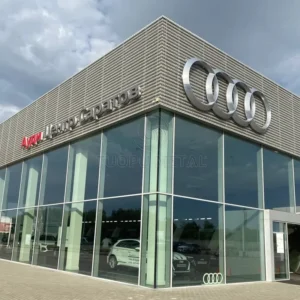
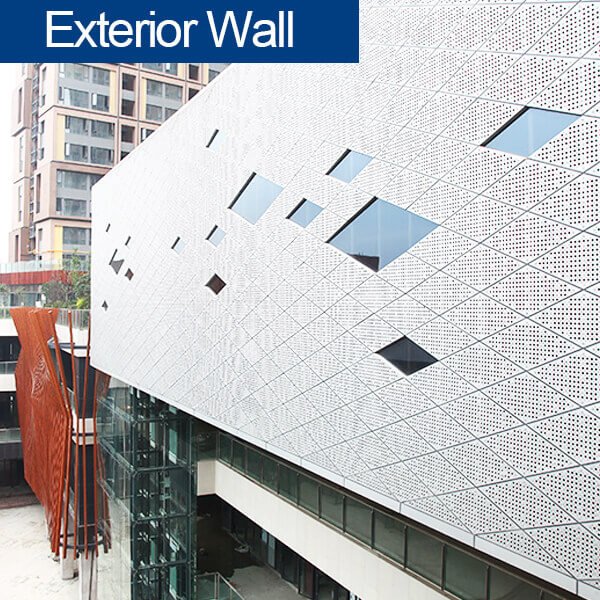
Perforated panels are used as decorative cladding on mall facades, entrance canopies, and interior feature walls. The perforation pattern can be designed to incorporate logos, geometric motifs, or parametric designs that align with the mall’s branding. Different perforation densities create visual depth and shadow effects that change throughout the day.
The AP300 perforated panel series from FstopMetal is specifically engineered for this application, offering adjustable perforation rates to meet varying design intentions. Panels can be finished in custom RAL colors through powder coating or PVDF application, ensuring brand consistency across the facility.
3. Ventilation and HVAC Integration
Shopping malls require substantial ventilation to maintain air quality for large occupant loads. Perforated aluminum panels are installed as grilles, diffuser covers, and ventilation louvers because the open area of the perforation allows air to pass freely while concealing mechanical equipment behind the facade.
Unlike solid panels, perforated versions do not obstruct airflow, making them suitable for covering HVAC return air openings, mechanical room enclosures, and concealed ductwork. The panels maintain a clean architectural appearance while providing functional ventilation access for maintenance personnel.
4. Daylight Control and Shading Systems
Perforated panels are used as exterior sunshades and interior light diffusers in mall design. When applied as a screen over glazed facades or skylights, the perforation pattern controls solar heat gain and reduces glare without completely blocking natural light. This is particularly valuable in malls with large glass curtain wall systems.
Parametric perforation designs can be calculated to provide higher shading density on south and west exposures while allowing more light through on north-facing elevations. This approach reduces cooling loads and contributes to lower operational energy costs for the facility.
5. Spatial Division and Wayfinding
Open-plan mall layouts benefit from visual division without the acoustic and spatial constraints of solid walls. Perforated aluminum panels serve as room dividers, tenant boundary markers, and wayfinding elements that maintain visual connectivity between zones. The partial transparency of perforated panels allows sightlines to remain open, which supports both security monitoring and the sense of spaciousness that mall designers prioritize.
Comparison of Perforated Aluminum Panel Specifications for Mall Applications
| Specification | Typical Range | Application Note |
|---|---|---|
| Alloy | 6063-T5 / 6063-T6 | Standard architectural grade |
| Surface Thickness — Powder Coating | 60–80 microns | Interior and exterior use |
| Surface Thickness — Anodizing | 15–25 microns | Natural metallic finish |
| Surface Thickness — PVDF | 25–30 microns | High color retention, exterior facades |
| Acoustic Performance (NRC) | Up to 0.85+ | With perforated panel + acoustic backing |
| Recycled Content | Up to 75% | Varies by product line |
| Perforation Rate | Adjustable | Customized per project requirement |
| Shape Options | Flat, curved, custom | Curved panels available on request |
Cost Considerations for Perforated Aluminum Panels in Mall Projects
The cost of perforated aluminum panels for shopping mall applications is influenced by several specification variables rather than a single unit price. Key cost drivers include the alloy temper selected, the surface treatment process, the perforation pattern complexity, panel thickness, and the level of custom fabrication required.
Powder-coated panels typically represent a mid-range option for interior mall applications. PVDF-finished panels carry a higher cost due to the premium resin system and longer cure cycle, but they offer superior color retention and chalk resistance, which is relevant for exterior facade installations. Anodized panels fall between these two in cost and are chosen for their natural metallic appearance and corrosion resistance.
Custom perforation patterns and curved panel geometries increase fabrication time and tooling requirements, which raises the overall project cost. Standard round or slot perforations in flat configurations are more economical. Project scale also affects pricing — larger orders benefit from optimized production runs. For a detailed cost estimate tailored to a specific mall project, contact the sales team directly.
How FstopMetal Supports Mall Projects
FstopMetal operates from Foshan, Guangdong, China, and exports to 36 or more countries. The company holds ISO 9001, CE, and SGS certifications. Custom manufacturing is a core capability, and the AP300 perforated panel series is designed to accommodate project-specific perforation rates, finishes, and geometries.
For architectural and contracting teams evaluating perforated aluminum panels for a shopping mall project, FstopMetal provides technical support including panel specification guidance, acoustic performance data, and EPD documentation where required. The company also offers installation support for international projects.
To discuss project requirements, reach out to Jimmy at TOP METAL & TUORUNDA via WhatsApp at +86-139-2919-8578 or by email at sales2@trdoutdoor.com.
Frequently Asked Questions
What is the typical NRC rating for perforated aluminum panels used in shopping malls?
Perforated aluminum panels paired with acoustic backing can achieve NRC ratings up to 0.85 or higher. The exact rating depends on the perforation rate, panel thickness, backing material, and air cavity depth behind the panel.
Can perforated aluminum panels be used for exterior mall facades?
Yes. PVDF-finished perforated aluminum panels are suitable for exterior applications due to their high color retention and weather resistance. The perforation pattern and panel geometry can also be designed to function as sunshades and ventilation screens.
What surface finish options are available for mall interior applications?
FstopMetal offers powder coating, anodizing, and PVDF finishes. Powder coating is the most common choice for interior applications and provides a wide range of color options. Anodizing delivers a natural metallic appearance, while PVDF is selected for exterior facade applications requiring maximum durability.
Is custom perforation patterning available for brand or wayfinding designs?
Yes. Custom perforation patterns, including logos and parametric designs, are available. The AP300 series supports adjustable perforation rates and pattern customization to meet specific architectural and branding requirements.
Does FstopMetal provide documentation for green building certification?
Yes. EPD (Environmental Product Declaration) documentation is available for applicable product lines. The panels also contain up to 75% recycled aluminum content and are 100% recyclable, which can support credit requirements under certification systems such as LEED and BREEAM.
Talk to Our Team
Planning a project or comparing suppliers? Send us your drawings, panel schedule or quantity list and we will come back with a specification proposal and a budget range for your review.
- Company: TOP METAL & TUORUNDA
- Contact: Jimmy
- WhatsApp: +86-139-2919-8578
- Email: sales2@trdoutdoor.com