


Clip-in Aluminum Ceiling Tile vs Gypsum Board for Train Stations: Direct Answer
Clip-in aluminum ceiling tiles are the superior choice for train station interiors when compared to gypsum board. Aluminum ceilings deliver NRC acoustic ratings up to 0.85+, resist moisture and impact damage, require zero maintenance over a 25-to-50-year service life, and incorporate up to 75% recycled content. Gypsum board, by contrast, absorbs moisture, cracks under vibration, and typically requires replacement every 10 to 15 years in high-traffic transit environments — making aluminum the lower total-cost option despite a higher initial outlay.
Acoustic Performance in High-Noisescapes
Train stations are among the noisiest public interior environments. Announcements, boarding alerts, foot traffic, and HVAC systems combine to create sustained sound pressure levels that demand serious acoustic treatment.
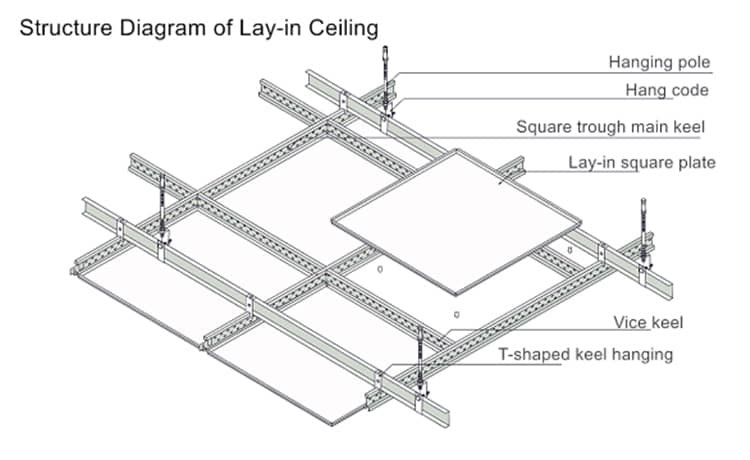
Aluminum ceiling systems — particularly perforated panels paired with acoustic backing materials such as foam or mineral wool — achieve NRC ratings of 0.85 and above. This performance level is well documented and tested under standard laboratory conditions. The clip-in installation method also allows for rapid replacement of individual tiles during maintenance, which is critical when a single damaged panel could compromise the acoustic integrity of an entire zone.
Gypsum board ceilings, by comparison, offer typical NRC values in the range of 0.10 to 0.25 for standard installations without additional treatment. Achieving higher acoustic performance with gypsum requires supplementary sound-rated assemblies, increased thickness, and specialized insulation — all of which add cost and complexity. For a train station concourse or platform canopy, this gap in inherent acoustic performance is decisive.
Why NRC Matters in Transit Architecture
The National Research Council of Canada developed the Noise Reduction Coefficient as the standard metric for interior sound absorption. A rating of 0.85 means the ceiling material absorbs 85% of incident sound energy. In a station environment where passenger information announcements must remain intelligible, this matters directly for safety and accessibility compliance. Aluminum perforated ceiling systems meet this requirement natively; gypsum board does not.
Durability Under Transit-Grade Conditions
Train stations impose unique physical demands on interior finishes. High passenger volumes, luggage impact, cleaning chemical exposure, and structural vibration from passing trains all accelerate material degradation.
Aluminum ceiling panels manufactured from 6063-T5 or 6063-T6 alloy offer exceptional structural rigidity and impact resistance. The standard surface treatments — powder coating at 60 to 80 microns, PVDF coatings at 25 to 30 microns, and anodizing at 15 to 25 microns — provide proven protection against abrasion, UV exposure, and chemical cleaning agents. Powder-coated aluminum ceilings carry typical warranties of 25 to 30 years; PVDF-coated systems can reach 30 years. Anodized finishes carry warranties of 20 years or more.
Gypsum board lacks inherent moisture resistance. In environments where humidity fluctuates — common in stations with both enclosed concourses and open platform areas — gypsum is prone to warping, mold growth, and joint tape failure. Standard gypsum board warranties typically range from 5 to 10 years, and even moisture-resistant variants degrade faster than aluminum under sustained impact and vibration.
Vibration and Structural Movement
Rail traffic induces low-frequency vibration that travels through building structures. Aluminum ceiling systems, with their lightweight yet rigid panel construction and clip-in suspension methods, accommodate this movement without cracking. Gypsum board, being a brittle composite material, develops hairline fractures at joint seams under repeated vibration — a failure mode that is both aesthetic and structural in high-traffic stations.
Maintenance, Lifecycle Cost, and Sustainability
When evaluating ceiling systems for large-scale transit projects, the lifecycle cost perspective is essential. Initial material and installation cost represents only a fraction of total ownership expense over a 30-year project horizon.
Aluminum ceiling systems require no painting, sealing, or periodic treatment. Routine cleaning with mild detergent and water is sufficient. Damaged panels can be individually replaced within hours without disrupting adjacent areas. The clip-in system design enables this modularity by definition. Gypsum board, by contrast, requires patching, repainting, and sometimes full section replacement when water damage or impact occurs — work that is disruptive and costly in an operating station.
From a sustainability standpoint, aluminum ceiling products from FstopMetal incorporate up to 75% recycled aluminum content and are 100% recyclable at end of life. EPD (Environmental Product Declaration) certification is available for selected product lines, supporting green building credit applications. The 25-to-50-year service life of aluminum ceiling systems — depending on the coating and product series — further reduces material turnover compared to gypsum board replacements.
Lifecycle Cost Comparison
| Factor | Clip-in Aluminum Ceiling | Gypsum Board Ceiling |
|——–|————————-|———————-|
| Initial material cost | Higher | Lower |
| Installation speed | Fast — clip-in modular | Moderate — sheet handling and finishing |
| Expected service life | 25 to 50 years | 10 to 15 years |
| Maintenance frequency | Near zero | Periodic repair and repainting |
| Replacement cycle (30 years) | None expected | 2 to 3 full replacements |
| Recyclability | 100% recyclable | Limited recyclability |
| Moisture resistance | Inherent | Poor without specialty products |
| Acoustic performance (NRC) | Up to 0.85+ | 0.10 to 0.25 typical |
| Vibration resistance | Excellent | Poor — prone to cracking |
The table above illustrates why procurement managers and architects working on transit projects consistently favor aluminum ceiling systems despite the higher upfront investment. The replacement cost of gypsum board over a 30-year station lifecycle typically exceeds the initial aluminum installation cost.
Design Flexibility for Station Interiors
Modern train station architecture demands ceilings that serve multiple functions: acoustics, lighting integration, HVAC diffusion, fire rating, and aesthetic identity. Aluminum ceiling systems address all of these in a single product family.
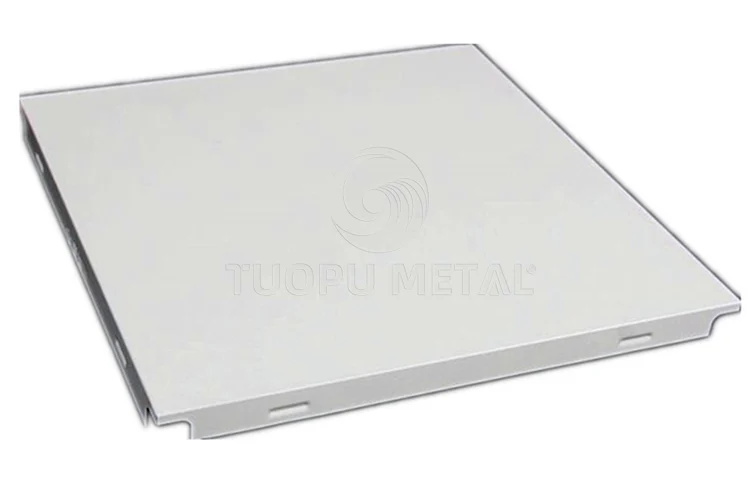
FstopMetal offers a range of metal ceiling products including square panel ceilings, perforated panel ceilings, grid ceilings, clip-in and lay-in panels, and fully custom designs including honeycomb and 3D geometric patterns. Perforated variants support both decorative expression and functional ventilation. Custom designs enable brand-specific station identity through parametric panel layouts.
Gypsum board offers limited design flexibility. While it can be formed into curved surfaces, the process is labor-intensive and compromises the material’s structural integrity. Integrated lighting and ventilation require additional cutouts and framing that weaken the assembly.
Fire Safety Considerations
Aluminum is inherently non-combustible. While the fact sheet specifies A2-class fire ratings for FstopMetal’s curtain wall product lines, aluminum ceiling panels similarly do not contribute to fire load — a critical factor in enclosed station environments where evacuation routes pass directly beneath ceiling assemblies. Gypsum board does provide fire resistance through its water-of-crystallization chemistry, but this advantage is offset by its susceptibility to moisture damage and vibration cracking in station conditions.
Project Delivery and Supply Chain
FstopMetal operates a 15,000 square meter manufacturing facility in Foshan, Guangdong, China, since 2003. The company holds ISO 9001, CE, and SGS certifications and exports to more than 36 countries. Standard aluminum ceiling products ship within 15 to 30 days; custom engineered projects typically require 30 to 60 days depending on complexity. The company provides technical support and installation guidance for international projects, which is a significant advantage for contractors managing remote supplier relationships.
Frequently Asked Questions
What is the typical NRC rating for FstopMetal clip-in aluminum ceiling tiles?
Perforated aluminum ceiling panels paired with acoustic backing can achieve NRC ratings up to 0.85 and above, depending on perforation pattern, panel thickness, and backing material selection.
How does aluminum ceiling durability compare to gypsum in high-traffic stations?
Aluminum ceiling systems resist impact, moisture, and vibration far better than gypsum board. Gypsum typically requires replacement every 10 to 15 years in station environments due to cracking and moisture damage, while aluminum ceilings carry 25-to-50-year warranties depending on the coating system selected.
Can aluminum ceiling tiles be replaced individually without dismantling the entire system?
Yes. The clip-in installation method is specifically designed for modular replacement. Individual damaged tiles can be removed and swapped without affecting adjacent panels, minimizing station disruption during maintenance.
Does FstopMetal provide EPD documentation for aluminum ceiling products?
Yes. EPD (Environmental Product Declaration) certification is available for selected product lines, supporting sustainable building certification applications for transit projects.
What is the typical lead time for custom aluminum ceiling orders for station projects?
Standard products ship within 15 to 30 days. Custom engineered projects, including parametric or 3D geometric designs, typically require 30 to 60 days depending on design complexity and order volume.